

Newborn Stages
  • Home
  • Baby

    Development & Growth

    Newborn icon

    Newborn (0–4 Weeks)

    Feeding, sleep & first-week care

    1-2 months baby icon

    1-2 Months

    First smiles & tummy time

    3-6 months baby icon

    3-6 Months

    Rolling, giggles & grabbing

    7-9 months baby icon

    7-9 Months

    Sitting, crawling & first foods

    10-12 months baby icon

    10-12 Months

    Standing & first steps

    VIEW ALL
    Baby feeding icon
    Baby Feeding
    Breastfeeding
    Baby Food Recipes
    Bottle Feeding
    VIEW ALL
    Baby sleep icon
    Baby Sleep
    Sleep Problems
    Basics & Bedtime Routines
    VIEW ALL
    Baby basics icon
    Baby Basics
    Newborn Daily Care
    Essentials
    Activities & Playtime
    VIEW ALL
  • Toddler

    Development & Growth

    13-18 months toddler icon

    13-18 Months

    Walking & first words

    19-24 months toddler icon

    19-24 Months

    Talking & pretend play

    2-3 years toddler icon

    2-3 Years

    Big feelings & potty training

    VIEW ALL
    Toddler feeding icon
    Toddler Feeding
    Eating & Nutrition
    Healthy Food Recipes
    Toddler Breastfeeding
    VIEW ALL
    Toddler sleep icon
    Toddler Sleep
    Problems & Concerns
    Basics & Bedtime Routines
    VIEW ALL
    Toddler care and training icon
    Care & Training
    Playtime & Education
    Everyday Care & Training
    VIEW ALL
  • Free Tools
    • Newborn Checklist
    • Baby Handover Sheet
    • Baby Food Checker
    • Baby Sleep Schedule
  • Health & Safety
    • Everyday Wellness
    • Common Health Concerns
    • Disabilities and Chronic Conditions
    • Mental Health
    • Playtime
    • Safety & First Aid
  • Gear & ProductsReviews

    Gear & product reviews

    • Parenting books & courses
    • Beds & sleep products
    • Toys
    • Nursing & feeding
    • Strollers & accessories
    • Car seats & accessories
    • Health & safety products

    Latest reviews

    Best Baby Food Maker (2026): 4 Steamer-Blenders Compared, Including the One We Used

    Best Humidifier for Baby (2026): 5 Cool-Mist Picks + Safe Nursery Setup

    Dad/Partner Picks: Baby Products Men Actually Love (and Use)

    Best Under $30 Baby Toys That Feel Premium!

    Top 5 Travel Strollers of 2026 — Lightweight, Foldable & Airline-Approved!

    See all gear reviews →

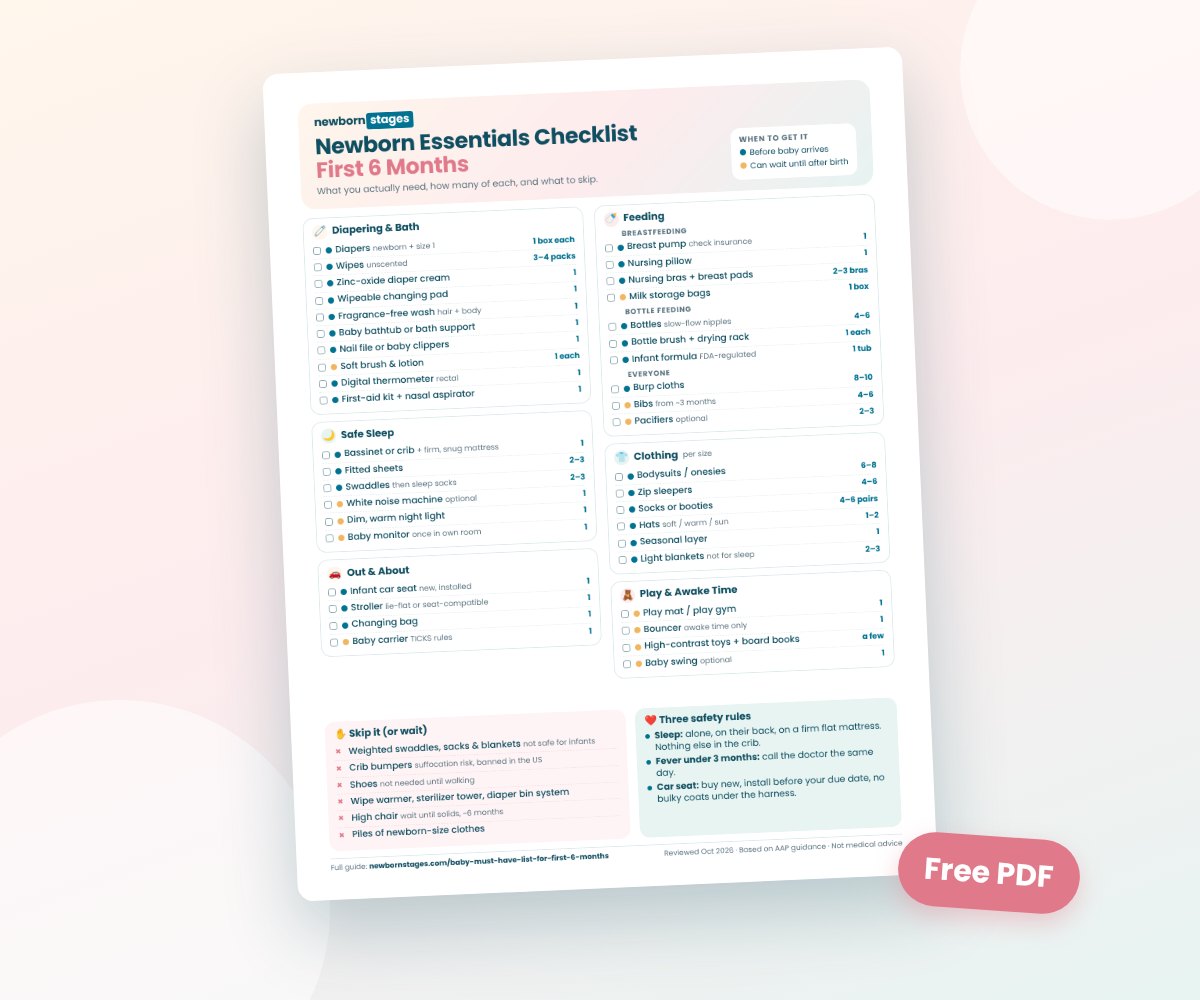
    Preview of the newborn shopping list checklistFree toolBuild your newborn shopping listMark what you have and need, then save your own list as a PDF.Start my list →
  • General Parenting
No Result
View All Result
Newborn Stages
No Result
View All Result

Home » Baby Sleep » Baby Sleep Schedule by Age: Naps, Awake Times and Bedtime from Newborn to 3 Years

Baby Sleep Schedule by Age: Naps, Awake Times and Bedtime from Newborn to 3 Years

Written by: Iordanis Konstantilakis
November 24, 2026
in Baby Sleep, Sleep Problems
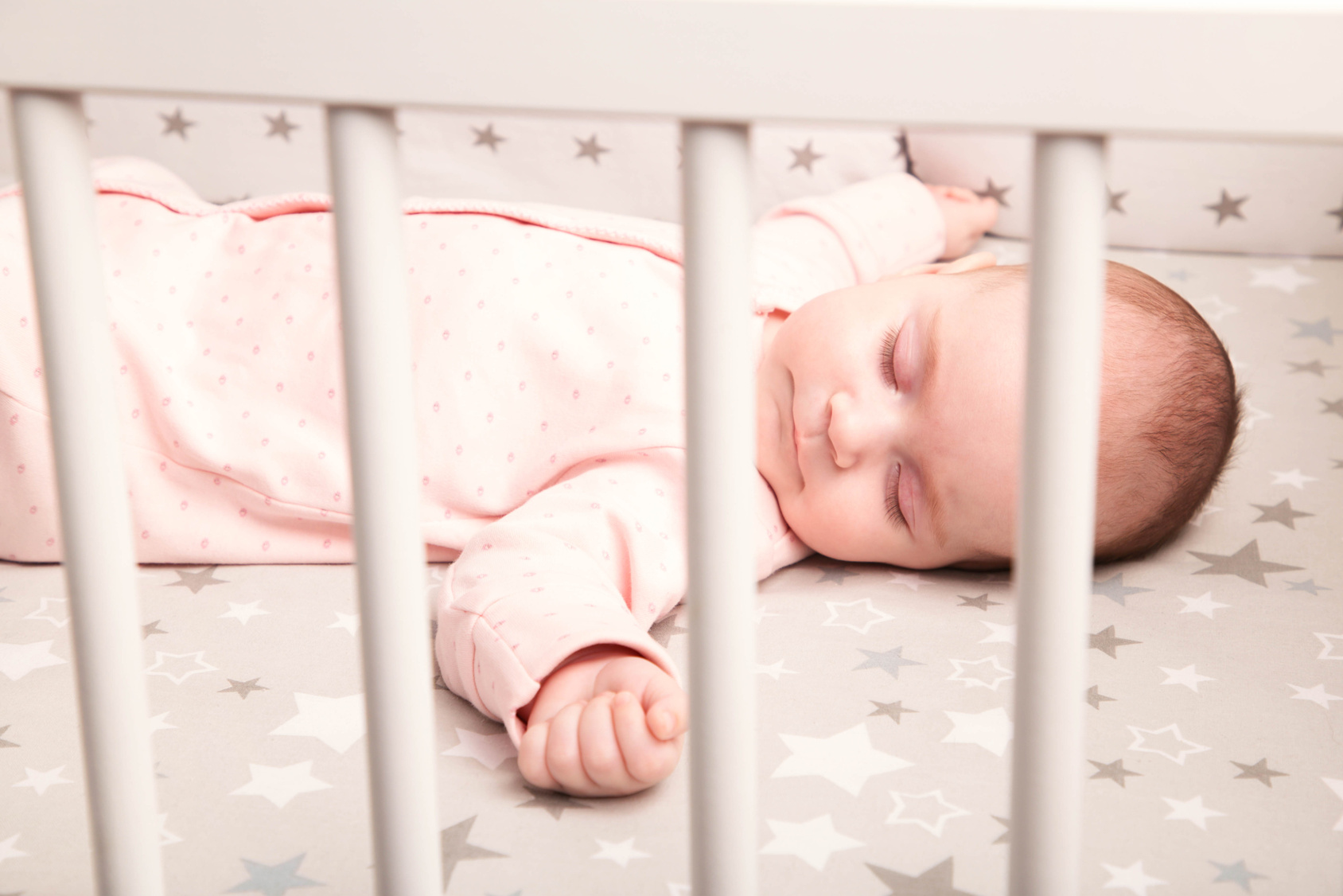
Baby sleeping on their back in an empty white crib
Key Takeaways
  • Baby sleep needs depend on age: newborns sleep 16 to 17 hours a day in short bursts without a fixed schedule, while babies from about 4 months need 12 to 16 hours in 24 hours with 2 to 3 naps.
  • Most toddlers move to one afternoon nap by about 18 months and need 11 to 14 hours, and three year olds need 10 to 13 hours with one short nap or none.
  • For newborns, awake times are only 30 to 60 minutes in the first month and 1 to 2 hours from 1 to 3 months, so watch for sleepy cues like yawning and eye rubbing and teach day from night with light and noise.
  • The guide offers a free tool and sample days starting at 7:00 a.m., based on AASM, AAP, Cleveland Clinic and other sources, but the ranges are typical rather than strict targets, so consult a pediatrician if worried.

Last reviewed: November 24, 2026 · Based on guidance from the American Academy of Sleep Medicine, the American Academy of Pediatrics, KidsHealth, Mayo Clinic, Cleveland Clinic and the NHS.

Quick answer: A baby sleep schedule depends on age. Newborns sleep on and off around the clock and are too young for a fixed schedule. From about 4 months, most babies take 2 to 3 naps a day and need 12 to 16 hours of sleep in 24 hours. Most toddlers move to one afternoon nap by about 18 months and need 11 to 14 hours. Three year olds need 10 to 13 hours, with one short nap or none. Use the free tool below to build a sample day for your child’s age and wake-up time.

If you have ever wondered when the next nap should be, or whether bedtime is too early or too late, you are not alone. There is no single correct schedule, but there are well-sourced ranges for how much sleep children need, how many naps they take and how long young babies can comfortably stay awake. This guide puts those numbers in one place, with a sample day for every age from birth to 3 years.

Free tool

Baby Sleep Schedule by Age

Choose your child’s age and the time they wake up. You’ll get a sample day with naps and bedtime, plus how much sleep is recommended at that age. The numbers follow guidance from the American Academy of Sleep Medicine, the AAP, KidsHealth, Mayo Clinic and Cleveland Clinic.
1. Your child’s age
2. Morning wake-up time
3. Naps
This is a sample day, not a medical recommendation. Every child is different, and a healthy baby may need more or less sleep than the sample shows. Talk to your pediatrician if you are worried about your child’s sleep. Last checked against the sources listed above on November 24, 2026.

Baby Sleep Chart by Age

These are typical ranges, not targets your child must hit. Total sleep comes from the American Academy of Sleep Medicine and KidsHealth. Awake times come from Cleveland Clinic, which lists them up to 12 months.

AgeTotal sleep in 24 hoursNapsAwake time between sleeps
0 to 3 months14 to 17 hoursSleeps on and off, day and night30 to 60 minutes (first month), 1 to 2 hours (1 to 3 months)
4 to 6 months12 to 16 hours2 to 31.25 to 2.5 hours (3 to 4 months), 2 to 4 hours (5 to 7 months)
7 to 9 months12 to 16 hours2, sometimes 32.5 to 4.5 hours
10 to 12 months12 to 16 hours23 to 6 hours
13 to 17 months11 to 14 hours1 or 2Varies
18 months to 2 years11 to 14 hours1Varies
3 years10 to 13 hours1 or noneVaries

The sample days below all start with a 7:00 a.m. wake-up. They are the same ones the tool above produces, so you can shift them to your own morning there.

Newborn Sleep Schedule (0 to 3 Months)

Newborns do not have a schedule yet. According to the American Academy of Pediatrics, newborns sleep about 16 to 17 hours a day but may sleep only 1 or 2 hours at a time, and babies do not have regular sleep cycles until about 4 months of age.

What you can do is watch the clock loosely. Cleveland Clinic lists awake times of 30 to 60 minutes in the first month and 1 to 2 hours from 1 to 3 months. So a 6 week old who woke at 7:00 a.m. will probably be ready to sleep again between 8:00 and 9:00 a.m. Sleepy cues include yawning, rubbing eyes and staring off.

The NHS suggests teaching day from night from the start: open the curtains and keep things lively in the day, and keep lights low and voices quiet at night. If your baby resists sleep, see why newborns fight sleep.

4 to 6 Month Old Sleep Schedule

Around 4 months, sleep starts to become more regular. KidsHealth says babies this age take at least two naps, with about 3 to 4 hours of daytime sleep on average, and that by 6 months most sleep 9 hours or longer at night with brief awakenings. Some still need a night feed.

  • 7:00 a.m. Wake up
  • 9:00 to 10:30 a.m. Nap 1
  • 12:30 to 2:00 p.m. Nap 2
  • 4:15 to 5:00 p.m. Nap 3 (short)
  • 7:00 p.m. Bedtime routine
  • 7:30 p.m. Bedtime

From 4 months, the AAP suggests putting your baby down drowsy but awake, so they learn to fall asleep on their own. If sleep suddenly gets worse at this age, read about the 4 month sleep regression.

7 to 9 Month Old Sleep Schedule

Most babies now nap twice a day. KidsHealth notes that naps at this age can last from 30 minutes to 2 hours and that night sleep is usually a stretch of 9 to 12 hours. If your baby still takes a late-afternoon nap, Mayo Clinic suggests dropping it at around 9 months.

  • 7:00 a.m. Wake up
  • 9:30 to 11:00 a.m. Nap 1
  • 2:00 to 3:30 p.m. Nap 2
  • 6:30 p.m. Bedtime routine
  • 7:00 p.m. Bedtime

Night waking and crying when you leave the room are common now and are linked to separation anxiety. See our guide to the 8 month sleep regression, and the 9 month old feeding schedule for meals around these naps.

10 to 12 Month Old Sleep Schedule

Two naps are still typical. Mayo Clinic notes that some babies start to drop the morning nap between 10 and 12 months, while KidsHealth says most toddlers move to one nap by about 18 months, so there is a wide normal range.

  • 7:00 a.m. Wake up
  • 10:00 to 11:15 a.m. Nap 1
  • 2:30 to 4:00 p.m. Nap 2
  • 7:00 p.m. Bedtime routine
  • 7:30 p.m. Bedtime

13 to 17 Month Old Sleep Schedule

KidsHealth says toddlers aged 1 to 2 need about 11 to 14 hours of sleep a day, including one or two naps. A toddler who fights the morning nap is probably ready for just an afternoon nap.

With two naps:

  • 7:00 a.m. Wake up
  • 10:00 to 11:00 a.m. Nap 1
  • 2:45 to 4:00 p.m. Nap 2
  • 7:30 p.m. Bedtime

With one nap:

  • 7:00 a.m. Wake up
  • 12:00 to 2:00 p.m. Nap
  • 7:30 p.m. Bedtime

18 Month to 2 Year Old Sleep Schedule

Most toddlers are down to one nap a day by 18 months. According to Mayo Clinic, most children keep an afternoon nap of 1 to 2 hours until about age 3.

  • 7:00 a.m. Wake up
  • 12:30 to 2:30 p.m. Nap
  • 7:00 p.m. Bedtime routine
  • 7:30 p.m. Bedtime

If bedtime becomes a battle around this age, see the 18 month and 2 year sleep regression.

3 Year Old Sleep Schedule

Children aged 3 to 5 need 10 to 13 hours of sleep in 24 hours, including naps. KidsHealth notes that many preschoolers give up the afternoon nap, and that those who still nap usually sleep for about an hour. If your child no longer naps, plan some quiet time in the day and consider an earlier bedtime.

  • 7:00 a.m. Wake up
  • 1:00 to 2:00 p.m. Nap, or quiet time with books
  • 8:00 p.m. Bedtime with a nap, or 7:30 p.m. without one

What Are Wake Windows?

A wake window is simply the time a baby is awake between sleeps, from the moment they wake until they are put down again. Cleveland Clinic gives the ranges in the chart above and stresses that babies are individuals: a wake window can differ from one baby to the next, and from one nap to the next.

Use the ranges as a rough guide and watch your baby. Yawning, rubbing eyes, blinking more and staring off are common signs that it is time to sleep. The Cleveland Clinic table stops at 12 months, which is why the chart shows “varies” for toddlers.

How to Make a Sleep Schedule Work

  • Keep a simple bedtime routine. The NHS suggests steps such as a bath, night clothes, a story, dim lights and a goodnight cuddle.
  • Put your baby down drowsy but awake from about 4 months, as the AAP advises.
  • Keep naps at about the same time each day, and not too close to bedtime.
  • Turn screens off at least an hour before bed for toddlers and preschoolers.
  • Follow safe sleep rules for every sleep. Place babies on their back until age 1, on a firm, flat surface, with no blankets, pillows or soft toys in the crib. A baby who falls asleep in a car seat should not be left to sleep there; see how long a baby can be in a car seat.

From a Dad of Two

Sleep was the hardest part of the first weeks for us, especially with our first child. Our first needed a lot of holding before falling asleep, and car rides. Our second fell asleep easily. That is why every schedule on this page is a sample, not a rule.

When to Talk to Your Pediatrician

Schedules vary a lot between healthy children. Talk to your pediatrician if your child regularly sleeps much more or much less than the range for their age, or if you have any question about their sleep. KidsHealth lists signs that a child may not be getting enough sleep: looking tired or rubbing their eyes in the day, being cranky or moody (especially later in the day), struggling to get up in the morning, or being unusually hyperactive or inattentive.

Frequently Asked Questions About Baby Sleep Schedules

Can I put my newborn on a sleep schedule?

Not yet. Babies do not have regular sleep cycles until about 4 months, so newborns sleep on and off around the clock. Follow your baby’s sleepy cues and use short awake times as a guide.

How many naps should my baby take?

From about 4 months, most babies take 2 to 3 naps a day. Between 7 and 12 months, two naps are typical. Most toddlers move to one afternoon nap by about 18 months, and many 3 year olds nap once or not at all.

When do babies go from two naps to one?

Most toddlers move to one afternoon nap at around 18 months, and some do it sooner. A toddler who keeps fighting the morning nap is probably ready for one nap.

How long should a nap last?

It varies. At 8 to 12 months, naps can last from 30 minutes to 2 hours. Until about age 3, most children nap for 1 to 2 hours in the afternoon. Preschoolers who still nap usually sleep for about an hour.

When do children stop napping?

Many children give up the afternoon nap between 3 and 5 years, and by age 5 most have stopped. When the nap goes, quiet time in the day and an earlier bedtime can help.

What are wake windows by age?

They are the typical times a baby stays awake between sleeps: 30 to 60 minutes in the first month, 1 to 2 hours at 1 to 3 months, 2 to 4 hours at 5 to 7 months, 2.5 to 4.5 hours at 7 to 10 months and 3 to 6 hours at 10 to 12 months. They are guides, not rules.

The Bottom Line

A good sleep schedule fits your child’s age and your family, not the other way round. Newborns need flexibility, babies from 4 to 12 months need 12 to 16 hours with two or three naps, toddlers need 11 to 14 hours with one or two naps, and 3 year olds need 10 to 13 hours. Use the tool at the top of this page to build a sample day, then adjust it to the child in front of you.

This article is for general information and isn’t a substitute for medical advice. Always contact your pediatrician with questions about your baby’s health and sleep.

10 Sources

Newborn Stages uses trusted sources, including government health agencies, children’s hospitals and pediatric organizations, to support the facts in our articles. Read our editorial policy to learn how we research, fact-check and keep our content accurate.

  1. American Academy of Sleep Medicine. Recommended Amount of Sleep for Pediatric Populations: A Consensus Statement.
  2. HealthyChildren.org, American Academy of Pediatrics. Getting your baby to sleep.
  3. Cleveland Clinic. Wake windows by age.
  4. KidsHealth (Nemours). Naps.
  5. KidsHealth (Nemours). Baby sleep: 4- to 7-month-olds.
  6. KidsHealth (Nemours). Baby sleep: 8- to 12-month-olds.
  7. KidsHealth (Nemours). Toddler sleep: 1- to 2-year-olds.
  8. KidsHealth (Nemours). Sleep and your preschooler.
  9. Mayo Clinic. Baby naps: Daytime sleep tips.
  10. NHS. Helping your baby to sleep.

Iordanis Konstantilakis

Iordanis "Danis" Konstantilakis is a dad of two (a 9-year-old boy and a 5-year-old girl) and the founder of Newborn Stages. He has been reading and writing about baby and toddler development since 2016, and started this site in 2020 to give new parents the clear answers he couldn't find at 2am. By day he builds websites at weDigitalPLUS. He's a parent, not a doctor: every health article here is checked against the AAP, CDC, NHS and other trusted medical sources, linked in the article, and re-checked when guidance changes.

Preview of the newborn shopping list checklistFree toolBuild your newborn shopping listMark what you have and need, then save your own list as a PDF.Start my list →
Previous Post

Teething Symptoms in Babies: First Signs, Teething Chart & Safe Relief

You Might Also Like

Baby sleeping on their back in a sleep sack in an empty crib with a fitted sheet, next to the parents' bed
Safety & First Aid

SIDS (Sudden Infant Death Syndrome): Causes, Risk by Month & How to Lower the Risk

November 18, 2026
Parent holding a yawning newborn in a softly lit nursery at bedtime
Sleep Problems

Newborn Fighting Sleep? Why It Happens and How to Help

November 18, 2026
Tired 18 month old toddler sitting awake in a crib at night rubbing one eye
13-18 Months

18 Month Sleep Regression (and 2 Year Old): Signs, How Long It Lasts & What Helps

November 24, 2026
8 month old baby in a sleep sack standing in the crib at night during a sleep regression
Sleep Problems

8 Month Sleep Regression (and 9–10 Months): Signs, How Long It Lasts & a Sample Sleep Schedule

November 24, 2026
Baby sleeping safely on their back in a sleep sack in a winter nursery, with a room thermometer on the shelf
Baby Sleep

How to Dress a Baby for Sleep in Winter: Safe Layers, TOG Chart & Room Temperature

November 18, 2026
Close-up of a sleeping newborn with a slight smile, hands tucked under one cheek
Newborn Daily Care

Why Does My Baby Smile in Their Sleep? The Science Behind Newborn Sleep Smiles

November 6, 2026

Newborn Stages offers clear, well-sourced parenting information from a parent who has been there. Our mission is to help new parents find answers they can trust.

  • About us
  • Contact us
  • Advertise
  • Sitemap
  • Privacy Policy
  • Terms & Conditions
  • Disclaimer
  • Editorial Policy
  • Affiliate Disclosure
Facebook-f Instagram

Kindly take note that all the information is for educational purposes only and not a substitute for professional health services.

  • Checklist
  • Handover Sheet
  • Food Checker
  • Sleep Schedule
  • All Free Tools
  • Development Stages
  • Feeding
  • Sleeping
  • Health & Safety
  • Product Reviews
©2026 www.newbornstages.com. All Rights Reserved.
No Result
View All Result
  • Home
  • Baby
    • Baby Development
      • Newborn (0–4 Weeks)
      • 1-2 Months
      • 3-6 Months
      • 7-9 Months
      • 10-12 Months
    • Baby Feeding
      • Breastfeeding
      • Bottle Feeding
      • Baby Food Recipes
    • Baby Sleep
      • Sleep Problems
      • Bedtime Routines & Sleep Basics
    • Baby Basics
      • Newborn Daily Care
      • Activities & Playtime
  • Toddler
    • Toddler Development
      • 13-18 Months
      • 19-24 Months
      • 2-3 Years
    • Toddler Sleep
      • Basics & Bedtime Routines
      • Problems & Concerns
    • Toddler Feeding
      • Healthy Food Recipes
      • Eating & Nutrition
      • Toddler Breastfeeding
    • Toddler Care & Training
      • Everyday Care & Training
      • Playtime & Education
  • Free Tools
    • Newborn Checklist
    • Baby Handover Sheet
    • Baby Food Checker
    • Baby Sleep Schedule
  • Health & Safety
    • Common Health Concerns
    • Disabilities and Chronic Conditions
    • Everyday Wellness
    • Mental Health
    • Safety & First Aid
  • Gear & Products
    • Parenting Books – Courses
    • Infant & Toddler Beds & Sleep products
    • Toys
    • Nursing & Feeding
    • Health & Safety
    • Strollers & Accessories
    • Car Seats & Accessories
  • General Parenting

© 2026 www.newbornstages.com. All Rights Reserved.