

Last reviewed: November 23, 2026 · Based on guidance from the American Academy of Pediatrics, the FDA, Cleveland Clinic and the NHS.
Quick answer: The most common teething symptoms are drooling, swollen and tender gums, chewing on everything, fussiness and poor sleep. Most babies get their first tooth somewhere between 4 and 10 months, often around 6 months. Teething does not cause a high fever or diarrhea, so if your baby has those, look for another cause. Soothe sore gums with a clean finger or a firm rubber teething ring chilled in the fridge, and skip numbing gels and teething necklaces.
One day your baby is soaking every bib and gnawing on their fist, and the next they are up three times a night. Teething gets blamed for a lot, and some of it is fair. This guide covers the real signs of teething, when the first teeth usually show up, a simple teething chart, the safest ways to ease the pain and the symptoms that mean something else is going on.
What Are the Signs of Teething?
Teething is the process of baby teeth pushing up through the gums. According to the American Academy of Pediatrics, babies are born with all 20 primary teeth already in their jaws, and some babies feel discomfort as early as 3 months.
Common teething symptoms include:
- Drooling. Often much more than usual, which can lead to a rash on the chin or around the mouth.
- Swollen, red or tender gums where the tooth is coming through.
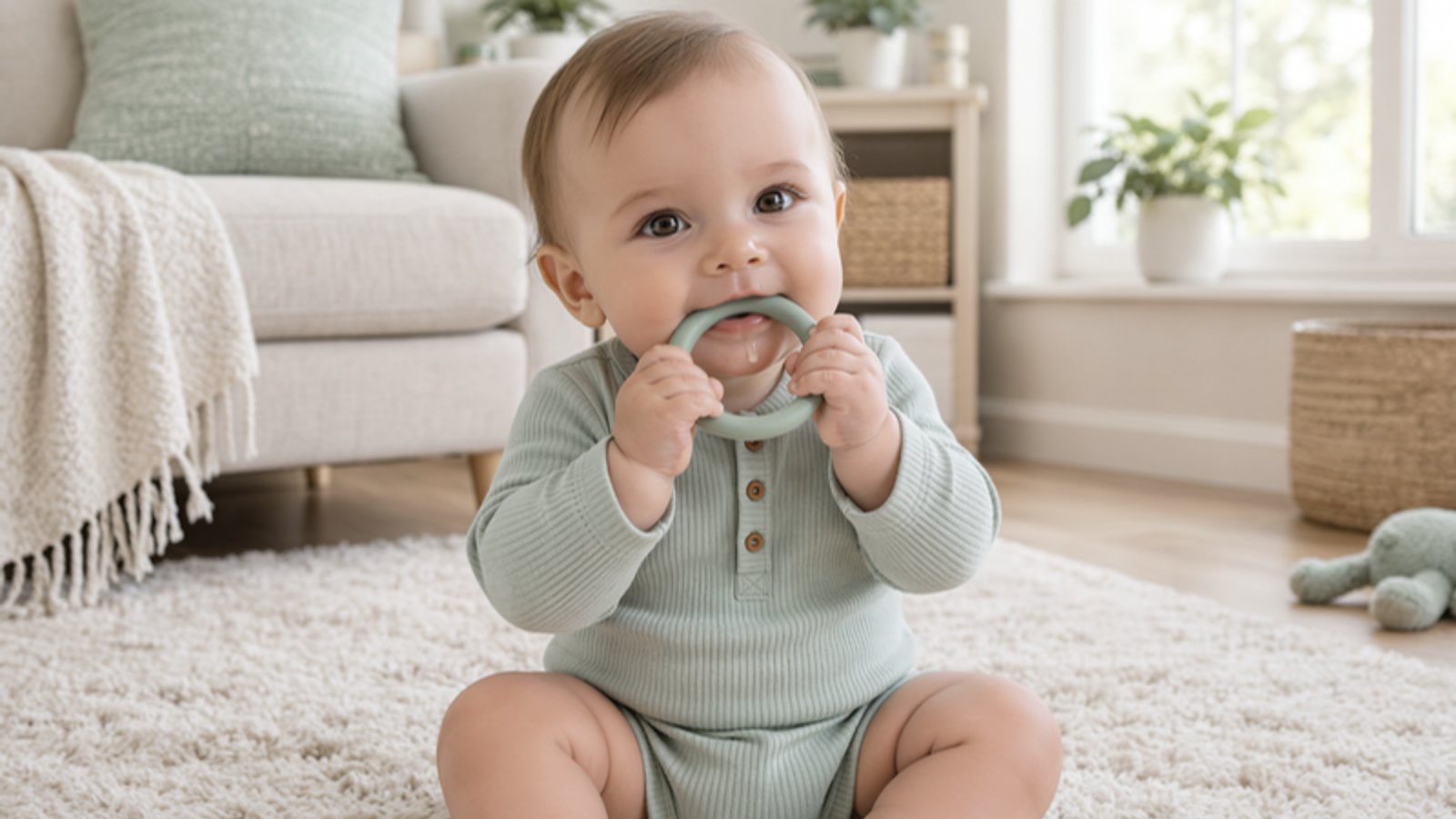
- Chewing and biting on hands, toys and anything else they can reach.
- Fussiness and irritability, especially when a tooth is close to breaking through.
- Poor sleep or more night waking than usual.
- Less interest in feeding for a short time.
- A flushed cheek or rubbing an ear on the same side as the new tooth.
The NHS lists the same signs, including a slightly raised temperature that stays below 38°C (100.4°F), one flushed cheek and rubbing the ear. Every baby is different. Some babies cut teeth with almost no fuss, while others are miserable for days.
When Do Babies Start Teething?
The AAP says babies typically start teething by about 4 to 7 months old, and the AAP’s teething pain guide notes that first teeth usually appear between 6 and 10 months. There is a wide normal range. The NHS says most babies start around 6 months, but some start before 4 months and some after 12 months, and a few are even born with a tooth.
Late teeth are usually nothing to worry about, but if your baby still has no teeth around their first birthday, read our guide on when to worry about baby teeth not coming in.
Teething Chart: When Each Baby Tooth Comes In
The two front teeth usually come first, either the bottom or top pair, followed by the opposite front teeth. The first molars come next, then the canines. This chart shows the typical age range for each tooth, based on the eruption timetable from Cleveland Clinic:
| Tooth | Upper teeth | Lower teeth |
|---|---|---|
| Central incisors (front teeth) | 8 to 12 months | 6 to 10 months |
| Lateral incisors (next to the front teeth) | 9 to 13 months | 10 to 16 months |
| First molars | 13 to 19 months | 14 to 18 months |
| Canines (eye teeth) | 16 to 22 months | 17 to 23 months |
| Second molars | 25 to 33 months | 23 to 31 months |
Most children have all 20 baby teeth by around 2 and a half to 3 years old. Treat the chart as a guide, not a deadline. Teeth often come in a little earlier or later, and the order can vary.
Teething or Something Else? Fever, Diarrhea and Crying
This is where teething gets blamed for too much. Knowing what teething does not cause helps you spot an illness that needs attention.
Can teething cause a fever?
Teething may cause a slight rise in temperature, but not a true fever. Cleveland Clinic explains that a fever above 100.4°F (38°C) is not due to teething, and the AAP’s teething pain guide goes further, calling fever a false symptom of teething. If your baby has a fever, look for another cause, such as a cold, an ear infection or another virus.
If your baby is younger than 3 months and has a rectal temperature of 100.4°F (38°C) or higher, call your pediatrician right away. Our guide to what counts as a fever in babies explains how to take a temperature and when to go to the ER.
Does teething cause diarrhea?
No. The AAP says teething does not change the way your baby’s gut works, and the NHS says there is no evidence that teething causes diarrhea. Call your pediatrician if diarrhea lasts more than a day.
Does teething cause constant crying?
Teething can make babies fussy, but according to the AAP it doesn’t cause excessive crying. If your baby is crying for long stretches and you can’t settle them, have them checked.
| Usually teething | Probably not teething: call your pediatrician |
|---|---|
| Drooling and chewing | Fever above 100.4°F (38°C) |
| Swollen, tender gums | Diarrhea that lasts more than a day |
| Fussiness that comes and goes | Vomiting |
| Rash on the chin from drool | A rash on the body |
| Mild sleep changes | Crying you can’t soothe, or a baby who seems sick |
How to Soothe a Teething Baby Safely
The FDA recommends simple, drug-free comfort first: gently rub or massage your baby’s gums with a clean finger, or give them a firm teething ring made of rubber. These options help most babies:
- Rub the gums. Wash your hands and gently massage the sore spot with your fingertip for a minute or two.
- Offer a firm rubber teether. Choose a solid one, not a liquid-filled ring.
- Chill it in the fridge, not the freezer. The NHS says some teething rings can be cooled in the fridge first, but never put one in the freezer, because a frozen ring can damage your baby’s gums. The FDA gives the same advice: a teether that is too hard can hurt the gums.
- Try a cold, damp washcloth. The AAP suggests a clean, damp washcloth chilled in the freezer, but don’t let your baby chew directly on anything frozen solid.
- Wipe away drool often. Keeping the chin and neck dry helps prevent drool rash.
- Offer cold water after 6 months. For babies over 6 months, the AAP says cold water in a sippy cup can help.
- Ask about pain medicine. If your baby is very uncomfortable, ask your pediatrician whether acetaminophen is OK and how much to give. Don’t give any medicine without checking the right dose for your baby’s age and weight.
Wondering whether early drooling means a tooth is on the way? Our guide to why your 4 month old is drooling so much explains what’s normal.
Teething Remedies to Avoid
Some popular teething products are not safe for babies. Skip these:
- Numbing gels and liquids with benzocaine. The FDA warns that benzocaine products should not be used for teething pain in children because they can cause methemoglobinemia, a serious and sometimes fatal condition that lowers the oxygen in the blood.
- Lidocaine products. The FDA says lidocaine should not be used to treat teething pain in infants and young children, as it can cause heart problems, severe brain injury and even death.
- Homeopathic teething tablets and gels. The FDA lists homeopathic teething tablets among products with risks, and the AAP warns against those containing belladonna.
- Teething necklaces and bracelets. Amber, wood, marble or silicone teething jewelry carries serious risks of choking and strangulation, according to both the FDA and the AAP. Never tie a teething ring or anything else around your baby’s neck.
- Liquid-filled teethers and frozen-solid toys. These can break or be too hard on the gums.
- Alcohol of any kind, which the AAP says is not safe for babies.
Gifts and stocking stuffers often include teethers. Our safe toys guide covers what to look for in baby toys and chew toys.
Caring for New Baby Teeth
As soon as the first tooth breaks through, it’s time to start brushing. The AAP recommends a soft child’s toothbrush and a smear of fluoride toothpaste the size of a grain of rice, twice a day. Don’t let your baby fall asleep with a bottle, because milk sitting on the teeth can lead to cavities.
The AAP also advises a first dental visit within 6 months after the first tooth comes in, and no later than 12 months of age, whichever comes first. For step-by-step tips, see our guide on when to start brushing your baby’s teeth.
When to Call the Doctor
Call your pediatrician right away if your baby:
- Is under 3 months old and has a temperature of 100.4°F (38°C) or higher
- Has a fever above 100.4°F (38°C) at any age, since teething does not explain it
- Seems very sick, is hard to wake, or won’t feed
- Has fewer wet diapers than usual, or signs of dehydration
Call during office hours if your baby:
- Has diarrhea that lasts more than a day, vomiting or a rash on the body
- Is fussy or crying and you can’t comfort them
- Has no teeth by around 12 months, or you have questions about how their teeth are coming in
Trust your instincts. If something feels off, it’s always OK to call.
Frequently Asked Questions About Teething Symptoms
What are the first signs of teething?
The first signs are usually extra drooling, chewing on hands and toys, and swollen or tender gums. Some babies also get fussy, sleep worse or rub one ear or cheek. Discomfort can start as early as 3 months, well before the first tooth appears.
When do babies start teething?
Most babies start teething between 4 and 7 months, and the first tooth often appears around 6 months. The normal range is wide: some babies start before 4 months and some after 12 months. The bottom front teeth usually come first.
Can teething cause a fever?
Teething can cause a slight rise in temperature, but not a true fever. A temperature above 100.4°F (38°C) is not due to teething, so look for another cause such as a cold or ear infection. If your baby is under 3 months old with a temperature of 100.4°F or higher, call your pediatrician right away.
Does teething cause diarrhea?
No. Teething does not change how your baby’s gut works, and there is no evidence that it causes diarrhea. Call your pediatrician if diarrhea lasts more than a day or your baby shows signs of dehydration.
How long does teething last?
Teething goes on in stages until all 20 baby teeth are in, usually by around 2 and a half to 3 years old. Symptoms tend to come and go as each tooth comes through. The front teeth usually come first, and the back molars come last.
Are teething gels and amber necklaces safe?
No. The FDA warns against benzocaine and lidocaine teething products because they can cause serious harm, and the AAP says numbing gels usually aren’t helpful anyway. Amber and other teething necklaces or bracelets can cause choking and strangulation. A firm rubber teething ring chilled in the fridge is a safer choice.
The Bottom Line
Drooling, sore gums, chewing and fussiness are the classic teething symptoms, and most babies get their first tooth between 4 and 10 months. Teething doesn’t cause a high fever, diarrhea or nonstop crying, so call your pediatrician if you see those. Comfort your baby with gum rubs and a firm teether chilled in the fridge, avoid numbing gels and teething necklaces, and start brushing with a rice-grain smear of fluoride toothpaste as soon as the first tooth appears.
This article is for general information and isn’t a substitute for medical advice. Always contact your pediatrician with questions about your baby’s health.
6 Sources
Newborn Stages uses trusted sources, including government health agencies, children’s hospitals and pediatric organizations, to support the facts in our articles. Read our editorial policy to learn how we research, fact-check and keep our content accurate.
- American Academy of Pediatrics (HealthyChildren.org). Teething Pain Relief: How to Soothe Your Baby’s Discomfort.
- American Academy of Pediatrics (HealthyChildren.org). When Does Teething Start?.
- U.S. Food and Drug Administration (FDA). Safely Soothing Teething Pain in Infants and Children.
- Cleveland Clinic. Teething (Teething Syndrome): Symptoms & Tooth Eruption Chart.
- NHS. Baby teething symptoms.
- NHS. Tips for helping your teething baby.