


Last reviewed: October 27, 2026 · Based on guidance from the American Academy of Pediatrics, Mayo Clinic, Cleveland Clinic and the NHS.
Quick answer: Croup is a viral infection that makes the voice box and windpipe swell, so a baby or toddler gets a loud, barking cough that sounds like a seal, a hoarse voice, and sometimes a high-pitched, squeaky sound when breathing in (called stridor). It’s most common between 6 months and 3 years, usually starts with a cold, and is worst at night. Most children get better within 2 to 5 days with care at home: keep them calm and upright, and offer plenty of fluids. Call 911 if your child is struggling to breathe, has blue or gray lips, is drooling or can’t swallow, or makes the squeaky stridor sound while resting quietly.
Croup season is here. Most cases are caused by parainfluenza viruses, which peak in late autumn, and croup is most common from October to April, according to MedlinePlus (US National Library of Medicine). About 3% of children get croup each year, and it accounts for around 7% of hospital stays in children under 5, according to Cleveland Clinic. The good news: about 85% of cases are mild.
This guide explains what croup sounds like, how it differs from RSV, how to calm a croupy cough at night, what the doctor may give, and the exact warning signs that mean it’s time to go to the ER.
What Is Croup?
Croup is swelling of the upper airway: the voice box (larynx) and the windpipe (trachea). A baby’s airway is small, so even a little swelling narrows it noticeably. That narrowing is what causes the barking cough and the noisy breathing.
Croup is usually caused by a virus, most often parainfluenza. Other viruses, including the flu, RSV and adenovirus, can cause it too. Croup is contagious: it spreads through coughs, sneezes and hands that touch contaminated surfaces. Cleveland Clinic says a child is contagious for about three days after symptoms start, or until the fever is gone.
Croup is most likely between 6 months and 3 years old, and it becomes rare after age 6 as the airway grows, according to Mayo Clinic. A child can get croup more than once.
Croup Symptoms in Babies and Toddlers
Croup usually starts like an ordinary cold, with a runny or stuffy nose and a low fever. A day or two later, the typical croup signs appear, often suddenly in the middle of the night:
- A barking cough that sounds like a seal or a small dog
- A hoarse or raspy voice or cry
- Stridor: a harsh, high-pitched, squeaky or crowing sound when breathing in
- Noisy or fast breathing
- Low or moderate fever
- Coughing that gets worse with crying, fear or lying flat
What Does a Croup Cough Sound Like?
Parents most often describe it as a seal’s bark. It’s a tight, dry, loud cough, very different from the wet, rattly cough of a chest cold. Many parents first notice it as a sudden barking fit that wakes the child (and the whole house) after midnight. If you’re not sure, record a short video on your phone. It helps your pediatrician a lot, because croup often sounds better by the time you reach the office.
What Is Stridor, and Why Does It Matter?
Stridor is the squeaky, whistling sound a child makes when breathing in through a narrowed airway. Stridor that only happens while coughing or crying is common in mild croup. Stridor while your child is calm and resting is a sign of moderate to severe croup and needs to be seen by a doctor right away. In a baby under 1 year, the American Academy of Pediatrics says any stridor means going to the ER.
How Long Does Croup Last?
Most croup lasts 3 to 5 days. The first one or two nights are usually the worst, and symptoms are typically worse in the evening and at night. Many children improve within 48 hours. The barking cough can hang on as a looser cough for up to two weeks as the airway recovers. Call your pediatrician if the cough lasts longer than that.
Croup vs RSV: How to Tell the Difference
Croup and RSV both peak in the same months and both cause coughing, so it’s easy to mix them up. The main difference is where in the airway the problem is:
- Croup affects the upper airway (voice box and windpipe). The cough is dry and barking, the voice is hoarse, and the noisy sound happens when breathing in (stridor).
- RSV often goes deeper into the small airways of the lungs (bronchiolitis). The cough is wet and rattly, and babies may wheeze, breathe very fast, or struggle to feed. It’s most serious in babies under 1.
The two can overlap: RSV is one of the viruses that can cause croup, according to Cleveland Clinic. Read our full guide to RSV in babies, its warning signs and the RSV shot. Whatever the cause, the danger signs below are the same.
How to Help a Baby With Croup at Night
Most croup is mild and can be cared for at home. These steps help:
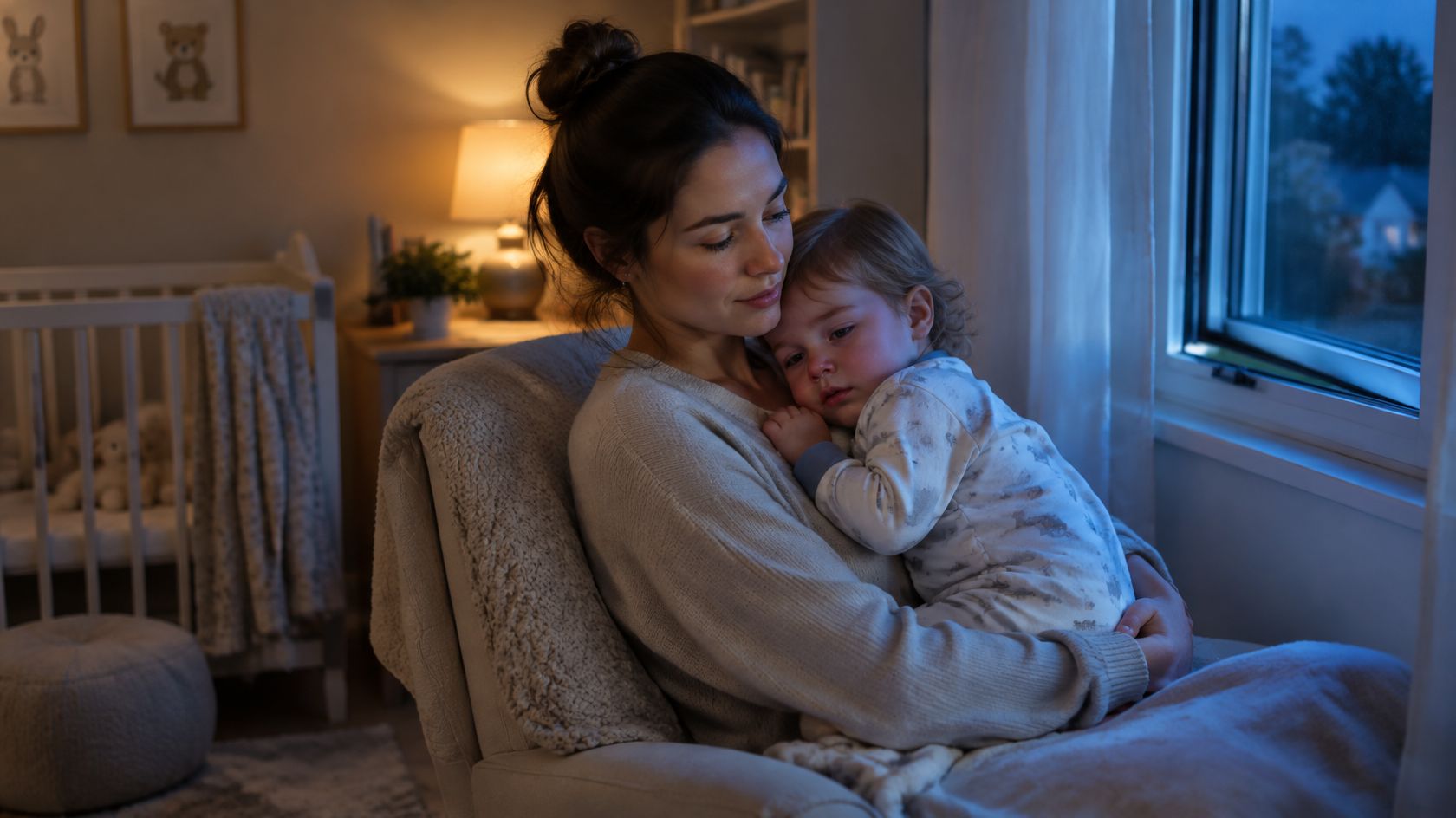
- Stay calm and keep your child calm. Crying makes the airway swelling and stridor worse. Hold your child, cuddle, sing, read or put on a favorite show. Your calm is the most effective thing you have.
- Keep them upright. Holding your child upright on your lap or shoulder often eases breathing better than lying flat. Babies under 12 months should still be put to sleep flat on their back in their crib; don’t use pillows or wedges.
- Offer fluids often. Breast milk or formula for babies; water and warm drinks for toddlers over 1. Watch for fewer wet diapers. Our dehydration guide lists the signs.
- Try cool night air if you like. Many parents find a few minutes by an open window or outside in cool air (dressed warmly) calms a coughing fit. It’s comforting, but studies haven’t shown that cool air or humidity actually reduces croup symptoms.
- Treat fever and discomfort. Acetaminophen, or ibuprofen for babies over 6 months, can make your child more comfortable. Use the dose on the product label for your child’s age and weight, or ask your pediatrician or pharmacist.
- Sleep in the same room for a few nights, because stridor can start suddenly at night.
- Keep smoke away. Tobacco and vape smoke irritates the swollen airway.
What About Steam and Humidifiers?
Sitting in a steamy bathroom is an old croup remedy, and you’ll still see it recommended. But randomized trials haven’t found that humidified air helps croup, according to a review in American Family Physician, and the NHS advises parents not to put a child in a steamy room or have them breathe in steam, because of the risk of scalds. If you use a humidifier because your home air is dry, choose a cool-mist one.
Avoid Cough and Cold Medicines
Over-the-counter cough and cold medicines don’t help croup, and the FDA advises that they should not be given to children under 2 because of the risk of serious side effects. Never give honey to a baby under 1 year. Antibiotics don’t work on croup, because it’s caused by a virus. For more on comforting a sick toddler, see our list of foods for toddlers during a cold and cough.
How Doctors Treat Croup
If your child needs medical care, the most common treatment is a single dose of a steroid (usually dexamethasone), given by mouth. It reduces swelling in the airway, usually starts working within about six hours, and lowers the chance of needing more care. For moderate or severe croup, doctors may also give nebulized epinephrine (breathed in as a mist), which works within minutes. The child is usually watched for a few hours afterward. Fewer than 5% of children with croup need to be admitted to hospital.
When to Call the Doctor or Go to the ER
Call 911 or go to the ER now if your child:
- Is struggling to breathe, or the skin between the ribs or at the base of the neck sucks in with each breath
- Has stridor (squeaky breathing) while calm and resting, or any stridor if under 1 year old
- Has blue, gray or very pale lips, face or fingernails
- Is drooling, spitting, or has great trouble swallowing
- Is very sleepy, hard to wake, limp or floppy, or unusually quiet
- Is very agitated or restless and can’t be calmed
- Insists on sitting up and won’t lie down
The NHS also advises not to drive yourself to the ER if your child is struggling to breathe: ask someone else to drive, or call for an ambulance.
Call your pediatrician the same day if your child:
- Is under 1 year old with a croupy, barking cough
- Is under 12 weeks old with a fever of 100.4°F (38°C) or higher
- Has had stridor, even if it settles once they’re calm
- Has a fever above 104°F (40°C)
- Shows signs of dehydration: no wet diaper in 8 hours, dark urine, a dry mouth, no tears
- Has needed steroid treatment for croup before, or has a lung or immune condition
- Isn’t getting better after 3 to 5 days, or seems to be getting worse
Sudden croup-like breathing without a cold, especially after eating, playing with small objects, a bee sting or a new medicine, may be choking or an allergic reaction. Call 911.
Can You Prevent Croup?
There’s no vaccine for parainfluenza, the main cause of croup. You can lower the risk:
- Wash hands often with soap and water, especially before handling your baby
- Keep babies away from people with coughs and colds when you can
- Clean toys and surfaces that sick children touch
- Keep routine vaccines up to date. The Hib, diphtheria, flu and measles vaccines protect against some of the most dangerous causes of croup-like illness.
Frequently Asked Questions About Croup in Babies
What does croup sound like in a baby?
A loud, dry, barking cough like a seal, often with a hoarse cry. Some babies also make a squeaky, high-pitched sound when breathing in, called stridor.
How long does croup last in babies?
Usually 3 to 5 days. The first one or two nights are the worst, and a looser cough can linger for up to two weeks.
Is croup contagious?
Yes. The viruses that cause croup spread through coughs, sneezes and hands. A child is usually contagious for about three days after symptoms start, or until the fever is gone.
What is the difference between croup and RSV?
Croup affects the voice box and windpipe and causes a dry, barking cough and stridor. RSV often affects the small airways of the lungs, causing a wet cough, wheezing and fast breathing.
Does steam help croup?
Studies haven’t shown that steam or humidified air improves croup, and the NHS advises against steam because of scald risk. Keeping your child calm and upright helps most.
When should I take my baby to the ER for croup?
Go now if your baby struggles to breathe, makes stridor while resting, has blue or gray lips, drools or can’t swallow, or is very sleepy. Any stridor in a baby under 1 needs the ER.
The Bottom Line
A barking cough in the middle of the night is frightening, but most croup is mild and gets better within a few days at home. Keep your child calm and upright, offer fluids, and skip cough medicines and steam. Know the danger signs: stridor while resting, breathing that pulls in at the ribs or neck, blue or gray lips, drooling or trouble swallowing, or a child who is very sleepy. Any of those means calling 911 or going to the ER.
This article is for general information and isn’t a substitute for medical advice. Always contact your pediatrician with questions about your baby’s health. In an emergency, call 911.