


Last reviewed: October 20, 2026 · Based on the American Academy of Pediatrics' 2026–27 flu recommendations.
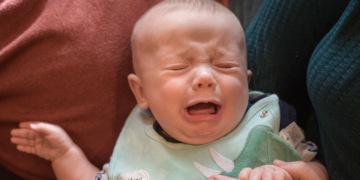
Quick answer: Flu (influenza) in babies usually starts suddenly with a fever, cough, runny nose and unusual fussiness or sleepiness. Many babies also vomit or have diarrhea.
Children under 2 are at higher risk of serious complications, so call your pediatrician as soon as you suspect flu, antiviral medicine works best when started within 48 hours.
Go to the ER for fast or labored breathing, bluish lips, no wet diaper in 8 hours, or a baby who is hard to wake.
Every child 6 months and older should get this season’s flu shot, ideally by the end of October.
Flu season is here, and it overlaps with RSV and the common cold which means a lot of sniffly babies and a lot of worried parents.
Last season was a hard one: nearly 200 children in the US died from flu in 2025–26, according to the American Academy of Pediatrics.
This guide covers what flu looks like in a baby, how to tell it apart from a cold or RSV, the exact signs that mean go to the hospital, and what’s new with the flu shot this season.
What Does Flu Look Like in Babies?
Flu is caused by influenza viruses that infect the nose, throat and lungs.
The biggest clue is speed: a cold creeps in over a day or two, but flu tends to hit hard and fast.
A baby who was fine at breakfast can be feverish and miserable by the afternoon.
Common flu symptoms in babies include:
- Sudden fever, often 100.4°F (38°C) or higher
- Cough and a runny or stuffy nose
- Unusual fussiness, crying or irritability
- Being much sleepier or floppier than usual
- Poor feeding or refusing the breast or bottle
- Vomiting or diarrhea, which is more common in children than adults
- Chills or shivering in older babies
Babies can’t tell you about a sore throat, headache or body aches, so you’ll mostly notice behavior: they’re harder to settle, don’t want to be put down, and feed less.
Why Babies Under 2 Are at Higher Risk
The CDC lists children under 5 especially under 2 as being at higher risk of serious flu complications.
These include pneumonia, ear infections, dehydration, and, rarely, brain inflammation (encephalopathy).
Young babies have small airways and immune systems that are still learning; our guide on when the newborn immune system gets stronger explains why the first months are the most vulnerable.
Flu vs Cold vs RSV in Babies: How to Tell the Difference
These three viruses all peak in the same months and can look alike at first.
Only a test can confirm which one it is, but the pattern gives useful hints.
| Flu | Common cold | RSV |
How it starts | Suddenly, within hours | Gradually, over 1–2 days | Gradually, like a cold |
Fever | Common, often high | Low or none | Sometimes, often low |
Energy | Very tired, floppy, achy | Mostly normal | Tired, fussy |
Breathing | Cough; can lead to pneumonia | Stuffy nose | Wheezing, fast breathing |
Tummy | Vomiting or diarrhea is common | Rare | Rare |
Treatment | Antivirals help if started early | Comfort care | Comfort care |
Prevention | Yearly flu shot from 6 months | Handwashing | RSV antibody shot or maternal vaccine |
If your baby’s symptoms are mainly wheezing and fast breathing, read our guide to RSV in babies too.
When in doubt, your pediatrician can do a quick nose swab knowing it’s flu matters, because flu is the one of the three that has a medicine that shortens it.
When to Take a Baby With Flu to the Hospital
These are the CDC’s emergency warning signs of flu complications in children.
Get medical care right away (call 911 or go to the ER) if your baby has:
- Fast breathing or trouble breathing
- Bluish lips or face
- Ribs pulling in with each breath
- Dehydration: no wet diaper for 8 hours, a dry mouth, or no tears when crying
- Not being alert or interacting when awake, or being very hard to wake
- A seizure
- A fever above 104°F (40°C) that doesn’t come down with fever medicine
- A fever or cough that gets better, then comes back or gets worse
Call your pediatrician the same day if your baby:
- Is under 12 weeks old and has any fever (100.4°F / 38°C or higher, taken rectally)
- Is under 2, or has a long-term health condition such as asthma, heart disease or a neuromuscular condition, and you suspect flu
- Is feeding much less than usual or vomiting repeatedly
- Has symptoms that are getting worse instead of better after 2–3 days
That second point matters more than many parents realize.
Because under-2s are a high-risk group, your pediatrician may want to start antiviral treatment even if your baby seems only mildly sick.
Can Babies Take Tamiflu? Antivirals Explained
Yes. Flu is different from colds and RSV because there are prescription antiviral medicines that fight the virus itself.
The AAP and CDC support oseltamivir (Tamiflu) for babies from birth, including premature infants, when a doctor recommends it, according to Contemporary Pediatrics.
For 2026–27, the AAP recommends starting antiviral treatment as early as possible for children with suspected or confirmed flu who are under 5, hospitalized, very sick, or otherwise at high risk even if they’ve had the flu shot.
Treatment works best within 48 hours of the first symptoms, so call your pediatrician early rather than waiting to see if things improve.
Your doctor will work out the dose from your baby’s weight.
How to Care for a Baby With Flu at Home
Most babies recover from flu at home in about a week, though the cough and tiredness can hang around longer.
Home care is all about comfort and fluids.
- Keep fluids going. Offer the breast or bottle little and often. Count wet diapers fewer than usual is an early sign of dehydration. Our guide to how often a newborn eats shows what’s normal.
- Treat discomfort, not just the number. Ask your pediatrician before giving any fever reducer, and never give one to a baby under 3 months without their advice. Get the dose for your baby’s weight from your pediatrician or the product label. Never give aspirin to babies or children.
- Dress them lightly. Bundling a feverish baby traps heat. See our tips on how to dress a baby with a fever at night.
- Clear the nose. Saline drops and gentle suction before feeds and sleep make feeding easier.
- Keep sleep safe. Even when your baby is congested, always place them on their back on a firm, flat surface never propped up or on an incline. Read more in our guide to the best sleeping position for a baby with a stuffy nose.
- Skip cough and cold medicines. Over-the-counter cough and cold products aren’t recommended for babies and young children.
- Protect the rest of the family. Wash hands often, keep the sick baby away from newborns and older relatives, and ask your doctor whether others in the house need preventive antivirals.
The Flu Shot for Babies: What’s New for 2026–27
The AAP’s 2026–27 flu recommendations, published in August, advise:
- Every child 6 months and older should get a flu vaccine this season, unless they have a medical reason not to.
- Get it early, as soon as it’s available, and ideally by the end of October.
- Any age-appropriate flu vaccine is fine. The AAP has no preference between brands, and you shouldn’t wait for a particular one. All US flu vaccines this season protect against three flu strains (trivalent).
- Pregnant and breastfeeding parents should be vaccinated too, because it protects the baby as well.
How Many Doses Does My Baby Need?
Children aged 6 months through 8 years need two doses, at least 4 weeks apart, if this is their first flu vaccine, if they’ve only ever had one dose before, or if their history is unknown, according to the CDC.
After that, it’s one dose a year. The two doses don’t have to be the same brand.
Babies get the shot as an injection; the nasal spray version is only for children 2 and older.
Does the Flu Shot Work?
The flu shot won’t always stop a baby catching flu, but it greatly lowers the chance of serious illness.
A CDC study found the vaccine cut children’s risk of dying from flu by 80%.
In the 2024–25 season alone, flu vaccines prevented an estimated 15,000 hospitalizations and 245 deaths in children and teens.
Even so, only 49.4% of US children aged 6 months to 17 years were vaccinated last season, and historically about 85% of children who die from flu were not vaccinated.
How to Protect a Baby Under 6 Months From Flu
Babies under 6 months are too young for the flu shot, yet they’re among the most likely to end up in hospital.
Their protection comes from the people around them:
- Flu shot during pregnancy. Antibodies cross the placenta and protect your baby for the first months of life.
- Breast milk passes on antibodies, and a vaccinated breastfeeding parent protects their baby further.
- A vaccinated household. Make sure parents, siblings, grandparents and regular caregivers all get their flu shot. This “cocooning” means flu is much less likely to reach the baby.
- Everyday habits. Wash hands before handling the baby, keep anyone with cold or flu symptoms away, and avoid crowded indoor places with a newborn in peak season.
If someone at home has flu, call your pediatrician: they may prescribe preventive antivirals for an older baby, although this is generally avoided under 3 months unless the situation is serious.
Frequently Asked Questions About Flu in Babies
What are the first signs of flu in a baby?
A sudden fever, cough, runny nose and unusual fussiness or sleepiness, often with poorer feeding. Flu tends to come on within hours, while a cold builds up over a day or two.
How long does flu last in babies?
The fever usually lasts 3–4 days and most babies feel better within about a week. A cough and tiredness can linger for up to two weeks. Call your doctor if symptoms improve and then get worse again.
When can babies get the flu shot?
From 6 months old. Babies getting it for the first time need two doses at least 4 weeks apart, so starting early in the season matters.
Is the flu shot safe for babies?
Yes. Flu vaccines have been given to millions of children. The most common side effects are a sore arm or leg and a low fever for a day or two. In children 6 months to 4 years there’s a very small extra risk of a febrile seizure the day after the shot, about 1 extra seizure for every 22,600 doses, which is far lower than the risk of seizures from flu itself.
Can my baby get the flu shot while sick?
A mild cold is usually fine. If your baby has a high fever or is quite unwell, your pediatrician may suggest waiting until they recover.
Can babies have flu and RSV at the same time?
Yes, co-infections happen, and they can make babies sicker. That’s one reason a nose swab is useful when a young baby has a fever and cough in winter.
The Bottom Line
Flu hits babies fast, and children under 2 are more likely to develop complications. Watch your baby’s breathing, alertness and wet diapers, call your pediatrician early so antivirals can start in time, and never hesitate to go to the ER for any of the warning signs above. The best protection is a flu shot for everyone 6 months and older in your home, ideally before the end of October.
This article is for general information and isn’t a substitute for medical advice. Always contact your pediatrician with questions about your baby’s health. In an emergency, call 911.