Feeding, sleep & first-week care
First smiles & tummy time
Rolling, giggles & grabbing
Sitting, crawling & first foods
Standing & first steps
Walking & first words
Talking & pretend play
Big feelings & potty training
Feeding, sleep & first-week care
First smiles & tummy time
Rolling, giggles & grabbing
Sitting, crawling & first foods
Standing & first steps
Walking & first words
Talking & pretend play
Big feelings & potty training
Practical, well-sourced guides for new parents
How old is your little one?
Last reviewed: October 19, 2026 · Based on the American Academy of Pediatrics' 2026–2027 RSV recommendations Quick answer: RSV (respiratory...
Read moreDetailsTested picks

Honest, budget-aware picks we'd actually use. Some links earn us a small commission at no cost to you. How that works
Find it fast
Quick answers for new parents
Answers follow current guidance from the American Academy of Pediatrics and the CDC. They're general information, not medical advice: always check with your pediatrician about your own baby.
Yellow, green and brown are all normal, and color often changes with feeding. Call your pediatrician if you see red, black (after the first few days of life) or white or very pale gray poop.
Baby poop color guide →If your baby is younger than 3 months and has a rectal temperature of 100.4°F (38°C) or higher, call your pediatrician right away, even if they seem well otherwise.
Warning signs to watch for →Put your baby to sleep alone, on their back, on a firm, flat mattress with only a fitted sheet. No pillows, blankets, bumpers or weighted products, and room-share for at least the first 6 months.
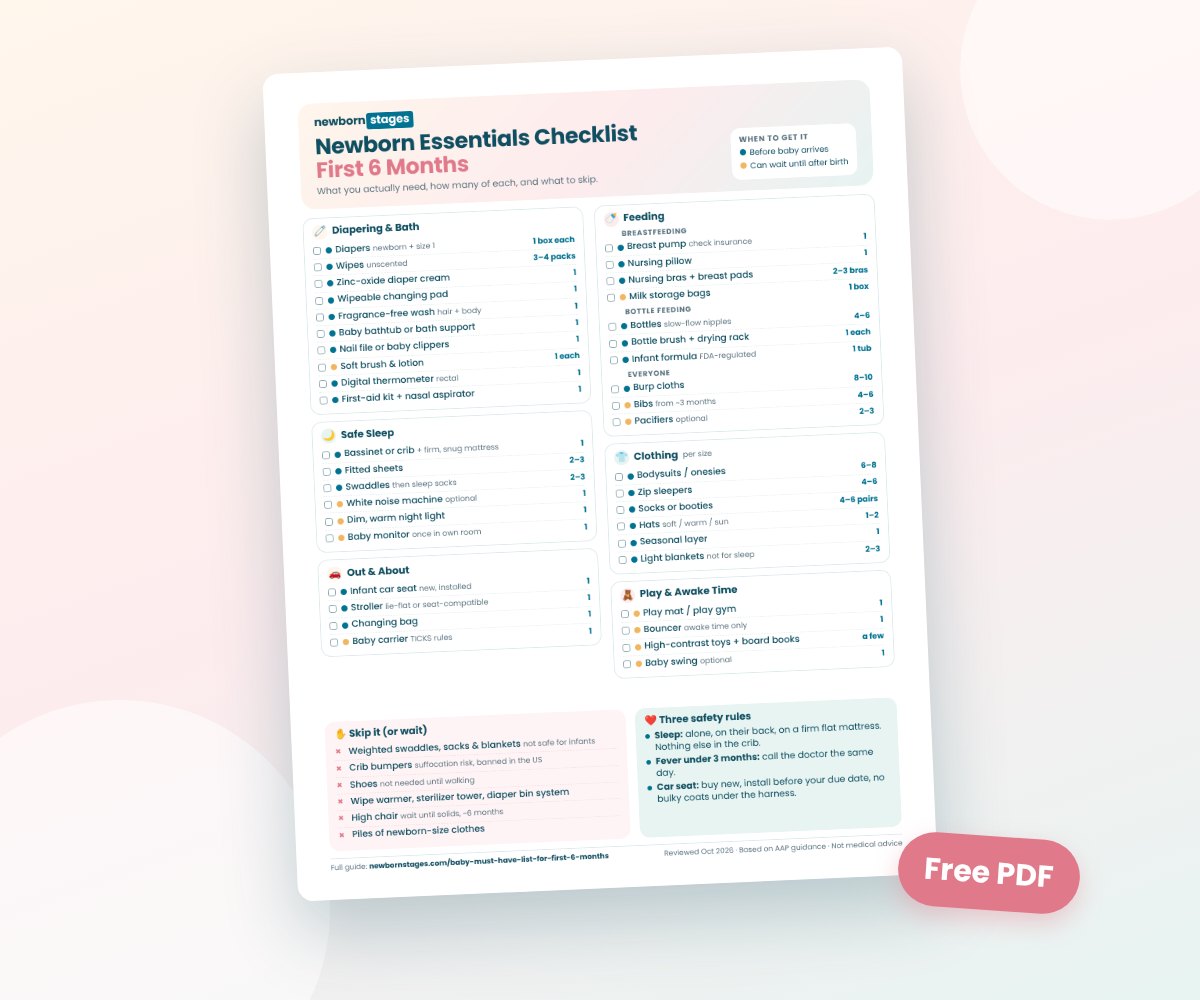
Safe sleep essentials →A correctly installed car seat, a safe place to sleep, diapers and wipes, your feeding supplies, a few bodysuits and sleepers, and a digital thermometer. Most other gear can wait.
Build your shopping list →Yes. Hiccups are very common in newborns and are usually harmless. They often follow feeds and tend to ease as your baby grows.
Newborn hiccups explained →By 2 years, most children say at least two words together, like "more milk". If your child isn't, or you have any concern about their speech, talk to your pediatrician. Early support makes a real difference.
When to worry about late talking →Newborn Stages offers clear, well-sourced parenting information from a parent who has been there. Our mission is to help new parents find answers they can trust.
Kindly take note that all the information is for educational purposes only and not a substitute for professional health services.
© 2026 www.newbornstages.com. All Rights Reserved.