


You just changed your baby’s outfit for the third time today – soaked through again.
Your 4 month old seems to be drooling constantly and you are starting to wonder whether something is wrong, or whether those first teeth are already on their way.
Here is the reassuring truth: excessive drooling at 4 months is completely normal. And it almost certainly has nothing to do with teething.
But there is a lot more going on beneath the surface than most parents realise.
Is It Normal for a 4 Month Old to Drool This Much?
Absolutely. Around 3 to 4 months, babies go through a significant surge in saliva production as their salivary glands mature.
The problem is that their ability to swallow excess saliva efficiently has not yet caught up with the increased output.
The result is a constantly damp baby and a never-ending supply of wet bibs.
According to the American Academy of Pediatrics, drooling is entirely normal and typically increases noticeably between 3 and 6 months of age.
It is one of the most predictable features of this developmental stage.
This is also the age when babies discover their hands and begin putting everything within reach into their mouths – which only adds to the saliva situation.
For a full picture of what else is happening at this stage, see our 3 to 6 month baby milestones guide.
So Is My Baby Teething?
This is the assumption almost every parent makes first – and it is understandable.
But teething typically does not begin until 6 to 10 months of age, with the lower front teeth usually appearing first.
Drooling at 4 months is almost never a sign of teething.
What it is a sign of is perfectly normal neurological and digestive development.
Specifically, the salivary glands are maturing rapidly, the swallowing reflex is still catching up to the increased flow, oral exploration is beginning in earnest, and the digestive system is quietly starting to prepare for solid foods – saliva contains enzymes that help break down carbohydrates, and the body begins producing more of it well in advance of when solids actually arrive.
The Real Reasons Behind the Drool
Salivary Gland Maturation
In the newborn stage, babies produce relatively little saliva. The dramatic shift that happens around 3 to 4 months catches many parents completely off guard.
The salivary glands essentially switch into a higher gear, and the mouth simply cannot contain the output yet.
This is a feature of normal development, not a problem.
Learning to Swallow
Efficiently managing saliva is a learned skill that requires muscle coordination and control.
Young infants have not yet developed the oral motor control to handle the increased flow, so it spills out.
This improves on its own over the following months as the muscles strengthen and coordination develops.
Oral Exploration
At 4 months, babies are entering a phase of intense oral exploration.
Everything goes straight to the mouth – hands, toys, your fingers, the corner of a muslin cloth.
This mouthing behaviour stimulates even more saliva production, adding to what is already a well-soaked situation.
Preparation for Solid Foods
The enzyme amylase, found in saliva, is essential for breaking down carbohydrates.
Your baby’s body begins increasing saliva production well before solid foods are introduced at around 6 months – it is getting the digestive system ready.
For guidance on what to expect when solids begin, see our baby feeding and solid foods guide.
How Long Will the Drooling Last?
Most babies drool heavily from around 3 to 4 months through to 12 to 18 months, when better oral motor control develops and most of the first teeth have come through.
The Mayo Clinic notes that drooling typically peaks around 6 months and gradually reduces as coordination improves. Some children drool longer than others – every baby is different.
Practical Ways to Manage It
Stock Up on Drool Bibs
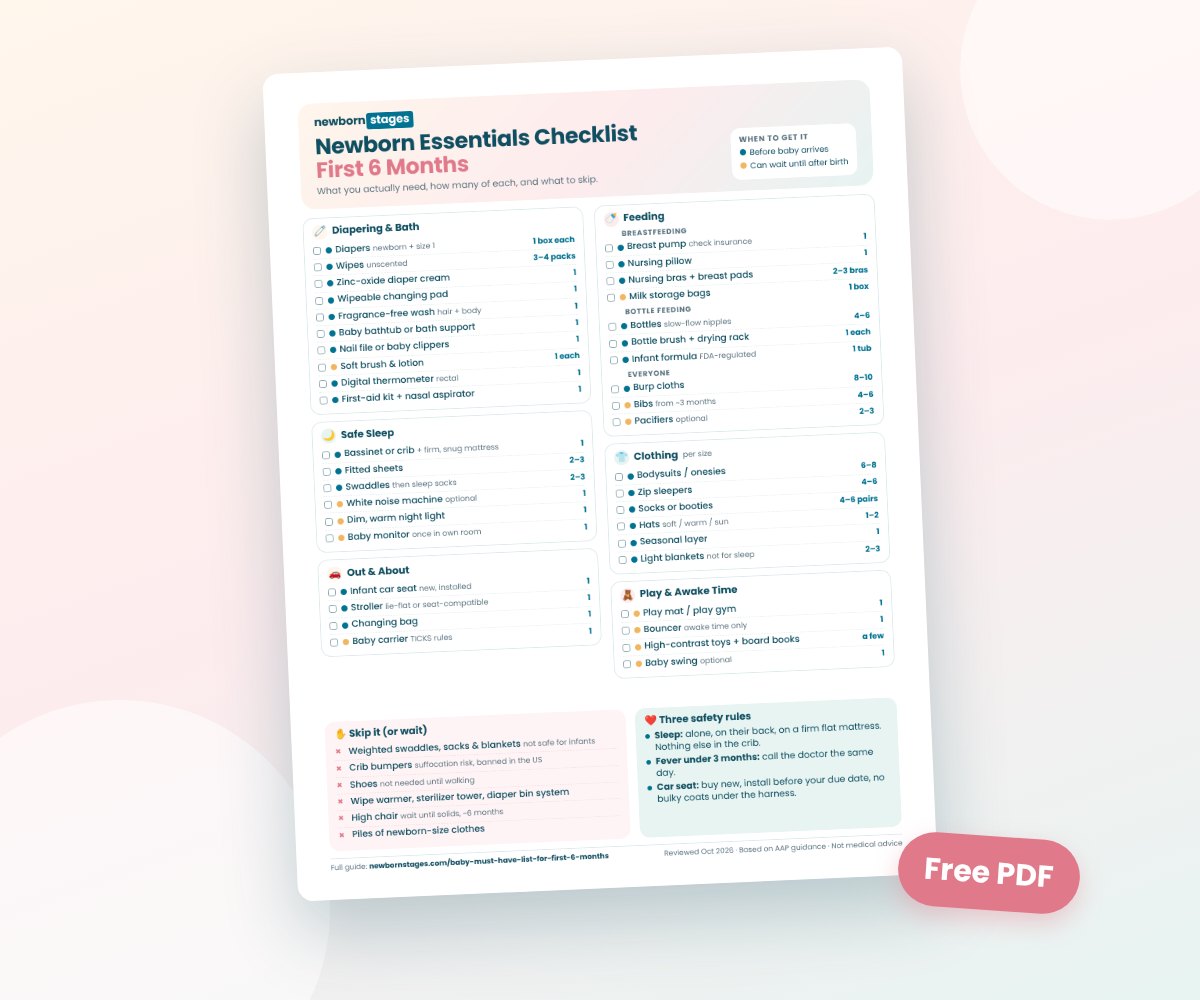
Forget the decorative bibs. At this stage you need genuinely absorbent drool bibs that catch everything before it soaks through to the outfit.
Keep at least five or six on rotation so you always have a dry one ready. Bandana bibs work particularly well for catching drool throughout the day without needing to change the full outfit.
Protect the Skin
Constant moisture against the skin leads to irritation surprisingly quickly. The chin, neck folds, and chest are the most commonly affected areas.
After feeds and several times throughout the day, gently pat these areas dry with a soft cloth.
A thin layer of unscented barrier cream – plain petroleum jelly works well – can protect the skin from the ongoing moisture.
Change Damp Clothing Promptly
Saliva sitting against skin for extended periods causes redness and rash.
Try to change damp clothing as soon as you notice it, rather than waiting until the next scheduled change.
This simple habit goes a long way toward preventing drool rash.
Drool Rash: What It Looks Like and How to Handle It
Drool rash is extremely common at this stage and appears as red, slightly rough or chapped skin around the mouth, chin, and neck folds. You may also see small bumps in the creases.
To treat it, keep the area clean and dry, apply an unscented barrier cream regularly, and avoid scented wipes or lotions on affected skin.
Most drool rash clears within a few days with consistent care. If it becomes very red, weepy, or spreads significantly, see your pediatrician – it may need a mild topical treatment.
For more on common skin concerns in babies, visit our everyday wellness section.
When Should I Be Concerned?
In the vast majority of cases, drooling at 4 months is a completely harmless part of development.
However, speak to your pediatrician if the drooling is accompanied by difficulty swallowing, if your baby seems to be choking on saliva frequently, if you notice unusual gurgling or rattling sounds when they breathe, or if there is a fever alongside the increased drooling.
Excessive drooling that persists significantly beyond 2 years of age can sometimes indicate a developmental concern worth evaluating.
The CDC’s developmental milestones resource is a helpful reference for tracking overall development alongside specific concerns.
Frequently Asked Questions
My baby is drooling and chewing on everything — does that mean teething?
Almost certainly not at 4 months. Mouthing behaviour and increased drooling are normal developmental features at this age, not signs of teething. True teething rarely begins before 6 months.
Can drooling cause a cough?
Yes, occasionally. If saliva pools at the back of the throat it can trigger a mild gag or cough reflex. This is usually harmless. If your baby seems to be struggling to breathe or coughing frequently, call your pediatrician.
Does drooling mean my baby is ready for solids?
Not on its own. Solid food readiness involves several signs together – sitting with support, good head control, interest in food, and loss of the tongue-thrust reflex. Drooling alone is not a green light.
See our guide on starting solid foods for more.
The Bottom Line
A soaking wet baby at 4 months is not a sign that something is wrong – it is a sign that their body is developing right on schedule. Stock up on bibs, protect that chin, and know that this phase passes.
Browse our full baby development section for more month-by-month guides.
Sources: