

Last reviewed: November 18, 2026 · Based on guidance from the CDC, the American Academy of Pediatrics, Seattle Children's Hospital and the NHS.
Quick answer: Pink eye (conjunctivitis) makes the white of a baby’s eye look pink or red, often with watery or sticky yellow-green discharge and crusty lashes. In older babies it is usually caused by a virus or bacteria, and most cases are mild and clear up in about a week. Newborns are different: the CDC says any newborn with pink eye symptoms should see a doctor right away. Call your pediatrician too if your baby has a fever, a very red or swollen eyelid, or pus that keeps coming back.
Waking up to a baby with gooey, crusted eyes is upsetting. The good news is that most eye discharge in babies is easy to manage at home once you know what is causing it. This guide walks you through the signs of pink eye, how to tell it apart from a blocked tear duct, what treatment looks like, how to clean your baby’s eyes, and the warning signs that mean you should call the doctor.
What Is Pink Eye in Babies?
Pink eye is swelling (inflammation) of the conjunctiva, the thin, clear layer that covers the white of the eye and lines the inside of the eyelids. When it gets irritated, tiny blood vessels widen and the eye looks pink or red.
The CDC lists viruses, bacteria and allergens as the most common causes, with chemicals and things like a loose eyelash causing some cases too. Viral and bacterial pink eye are very contagious, which is why it spreads so easily through families and daycare rooms.
Pink Eye Symptoms in Babies
Babies can’t tell you their eye feels gritty or itchy, so you will mostly notice what you can see. Common signs include:
- Pink or red color in the white of one or both eyes
- Watery eyes or extra tears
- Yellow, green or white discharge (pus or mucus)
- Eyelids or lashes crusted together, especially after sleep
- Puffy or swollen eyelids
- Rubbing at the eyes, fussiness or squinting in bright light
Pink eye often shows up together with a cold. If your baby also has a runny nose, cough or fever, the eye symptoms may be part of the same viral illness.
Types of Pink Eye: What’s Causing It?
The type of pink eye matters, because it changes how long it lasts, whether it spreads and whether your baby needs medicine. The American Academy of Pediatrics describes these main types:
| Type | What it usually looks like | Contagious? |
|---|---|---|
| Viral | Pink, watery, swollen eye, often one eye first; may come with a cold | Yes, while symptoms last |
| Bacterial | Red eye with thick yellow or green discharge; lids may be stuck shut in the morning | Yes, until treatment starts or symptoms clear |
| Allergic | Itchy, red, very watery eyes, usually both eyes | No |
| Chemical or irritant | Red, watery eyes after contact with something irritating | No |
It isn’t always easy to tell the types apart just by looking, so ask your pediatrician if you’re not sure which one your baby has.
Pink Eye in Newborns: Why It’s Different
In the first weeks of life, red or goopy eyes need a doctor’s check. Newborn pink eye (sometimes called ophthalmia neonatorum) can have causes that older babies don’t get. According to the CDC, it can come from:
- A blocked tear duct. This is common and usually harmless (more on this below).
- Irritation from the eye medicine given at birth. This causes mild redness and eyelid swelling that usually goes away on its own within 24 to 36 hours.
- An infection passed from the mother during birth. Gonorrhea usually shows up in the first 2 to 5 days of life, and chlamydia about 5 to 12 days after birth. A mother can pass on these bacteria even if she has no symptoms.
These birth-related infections are serious. The CDC warns that untreated gonococcal eye infection can damage the cornea and even cause blindness, and untreated chlamydia can spread to the lungs. Doctors treat them with antibiotics, often by mouth or by injection rather than drops alone.
To lower this risk, most US states require newborns to get antibiotic eye ointment or drops, usually erythromycin, within a few hours of birth. If you’re not sure whether your baby had them, ask your pediatrician.
The NHS advice is just as clear. NHS Healthier Together says a baby under 28 days old with a red eye or a lot of pus from the eye needs urgent assessment.
Pink Eye or Blocked Tear Duct?
Many parents mix these two up, and it’s easy to see why: both can cause a watery, sticky eye. The key difference is redness.
A blocked tear duct means the small tube that drains tears into the nose hasn’t fully opened yet. Seattle Children’s Hospital says about 10% of newborns have one, and over 90% open on their own, usually by 12 months of age.
| Blocked tear duct | Pink eye | |
|---|---|---|
| White of the eye | Not red | Pink or red |
| Eyelid | Not swollen | Often puffy |
| Tears | Eye looks watery all the time; tears run down the cheek even without crying | Watery or sticky, with discharge |
| Typical age | Often noticed in the first 1 to 2 months | Any age |
| Treatment | Usually none; it clears by itself | Depends on the cause |
A blocked duct can sometimes get infected. If you see pus, eyelids stuck together, a red or swollen eyelid or a red lump at the inner corner of the eye, call your pediatrician. Some doctors suggest a gentle tear duct massage, but only do this if your baby’s doctor has shown you how.
How Pink Eye Is Treated in Babies
Treatment depends on the cause, so it’s worth having your baby’s doctor take a look, especially for babies under a few months old.
Viral pink eye
Antibiotics don’t work on viruses. The CDC says viral pink eye usually clears in 7 to 14 days without treatment, though it can sometimes take 2 to 3 weeks or longer. Gentle cleaning and comfort care are the main treatment.
Bacterial pink eye
Mild bacterial pink eye often clears in 2 to 5 days on its own, but your doctor may prescribe antibiotic eye drops or ointment. With drops, Seattle Children’s says the pus should clear within about 3 days, while redness can last up to a week. Call the doctor if pus is still there after 3 days of drops.
Allergic or irritant pink eye
This type isn’t contagious and antibiotics won’t help. Ask your pediatrician before using any eye drops or allergy medicine in a baby.
Only use eye drops or ointment that a doctor has prescribed for your baby. Don’t use leftover drops, drops prescribed for someone else or adult products.
How to Clean Your Baby’s Eyes at Home
Keeping the eyes clean makes your baby more comfortable and helps any prescribed drops work. Here is a simple routine:
- Wash your hands before and after touching your baby’s eyes.
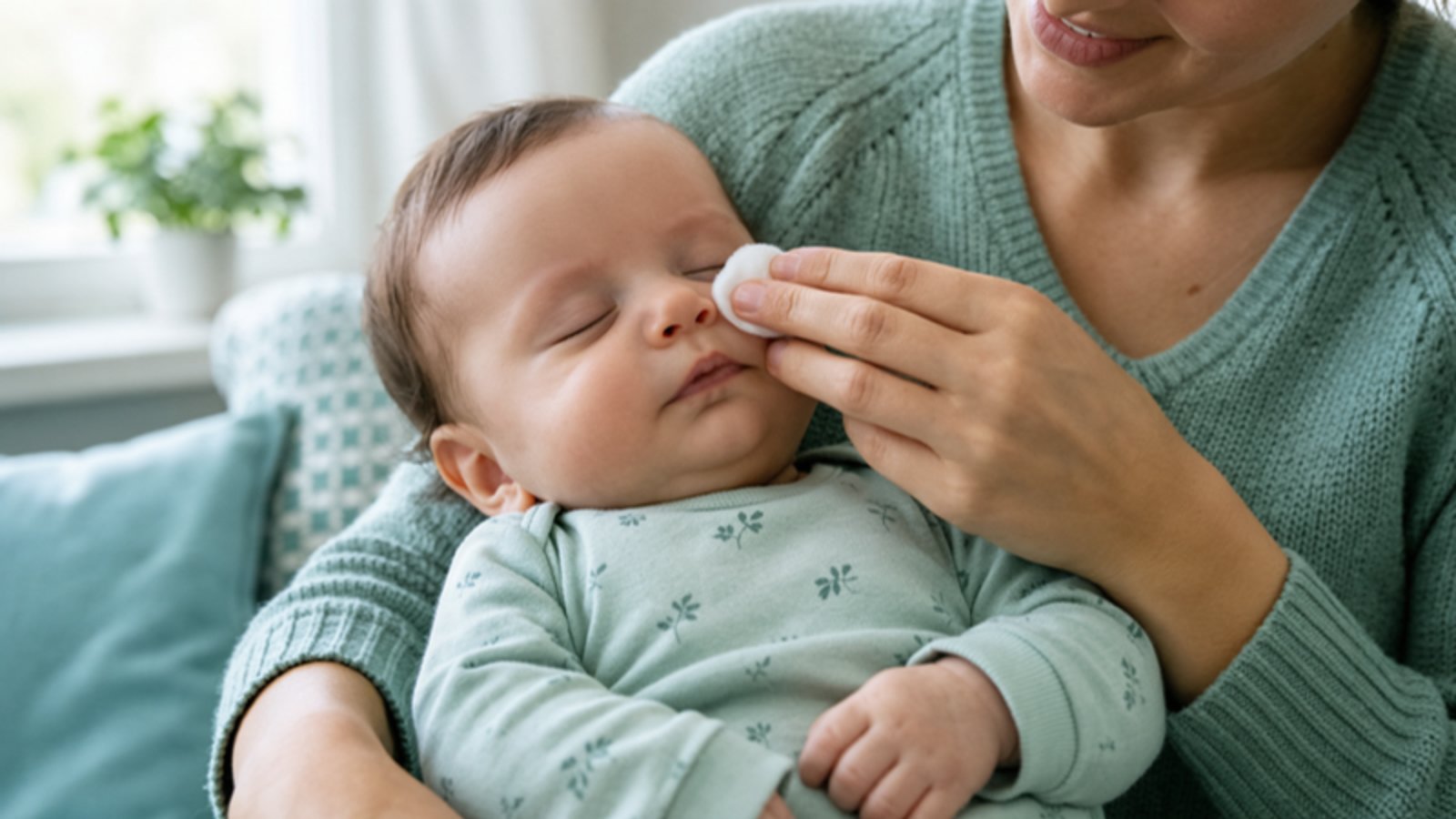
- Use a cotton ball soaked in warm water. Squeeze out the extra water so it isn’t dripping.
- Wipe from the inner corner (nose side) outward, in one direction only. NHS Healthier Together advises using a fresh cotton ball for each wipe and not cleaning inside the eyelids.
- Use a separate cotton ball for each eye, so you don’t carry germs from one eye to the other.
- Soften dried crusts by holding the warm, wet cotton ball on the lashes for a few seconds before wiping.
- Clean before putting in drops. Seattle Children’s notes that drops won’t work as well if the eye is still full of pus.
Throw used cotton balls away right after use. Keep your baby’s towels, washcloths and pillowcases separate from the rest of the family’s until the discharge clears.
Tips for giving eye drops to a baby
- Lay your baby on their back. A second adult can gently hold their head still.
- If your baby squeezes their eyes shut, place the drop in the inner corner of the closed eye. When they open their eyes or blink, the drop flows in.
- Don’t let the tip of the bottle touch the eye or lashes.
How to Stop Pink Eye From Spreading
Viral and bacterial pink eye spread easily from hands to eyes. To protect the rest of the family:
- Wash your hands often, especially after cleaning your baby’s eyes, changing diapers and wiping noses.
- Don’t share towels, washcloths, pillows or eye drops.
- Wash bedding, burp cloths and towels often.
- Clean toys, pacifiers and surfaces your baby touches a lot.
- Try to stop older siblings from touching their own eyes after playing with the baby.
Can My Baby Go to Daycare With Pink Eye?
Rules vary a lot, so check your daycare’s policy. The AAP explains that many schools and child care centers let children come back 24 hours after starting antibiotic eye drops. If your baby has a fever or seems generally unwell, it’s wiser to keep them home until they feel better.
When to Call the Doctor
Get medical care right away if your baby:
- Is a newborn (under about 4 weeks old) with a red eye, pus or eyelid swelling
- Is under 12 weeks old and has a fever of 100.4°F (38°C) or higher. Don’t give fever medicine before the baby is seen.
- Has a very red or very swollen eyelid, or swelling spreading around the eye
- Has a cloudy-looking eye, seems to be in a lot of pain or keeps the eye tightly shut
- Looks or acts very sick, is hard to wake or won’t feed
Call your pediatrician within 24 hours if:
- Your baby has pus or yellow-green discharge from the eye
- You see a red lump at the inner corner of the eye
- Pus is still there after 3 days of antibiotic drops
- Symptoms aren’t getting better, or are getting worse
Pink eye often travels with other winter bugs. If your baby has a fever, our guide on what counts as a fever in babies explains when to call. For stuffy noses, see why your newborn sounds congested, and for ear pulling and night waking with a cold, read about ear infections in babies. Curious about how your baby’s eyes work in the first days? Read what a newborn sees in the first week.
Frequently Asked Questions About Pink Eye in Babies
Is pink eye in babies contagious?
Viral and bacterial pink eye are very contagious. Viral pink eye can spread for as long as symptoms last, and bacterial pink eye until antibiotic treatment starts or the symptoms clear. Allergic and irritant pink eye are not contagious. Good handwashing and separate towels help protect the rest of the family.
How can I tell pink eye from a blocked tear duct?
Look at the white of the eye. A blocked tear duct makes the eye look watery all the time, with tears running down the cheek, but the eye is not red and the eyelid is not swollen. Pink eye makes the white of the eye pink or red, often with discharge and puffy lids. A blocked duct can get infected, so call your pediatrician if you see pus or redness.
Does my baby need antibiotic eye drops for pink eye?
Not always. Viral pink eye doesn’t get better with antibiotics and usually clears on its own. Bacterial pink eye may be treated with prescription antibiotic drops or ointment, and newborns with infections passed on during birth need antibiotics from a doctor. Only use eye medicine your baby’s doctor has prescribed.
How long does pink eye last in babies?
Viral pink eye usually clears in 7 to 14 days, though it can take 2 to 3 weeks. Mild bacterial pink eye often clears in 2 to 5 days. With antibiotic drops, pus usually clears within about 3 days, while redness can last up to a week.
Can my baby go to daycare with pink eye?
It depends on your daycare’s policy, so check with them. Many child care centers and schools let children return 24 hours after starting antibiotic eye drops. If your baby has a fever or seems unwell, keep them home until they feel better.
When should I take my baby to the doctor for pink eye?
Get care right away if your baby is a newborn with a red eye or pus, is under 12 weeks old with a fever of 100.4°F (38°C) or higher, or has a very red or swollen eyelid, a cloudy eye or seems very sick. Call within 24 hours for pus from the eye or pus that lasts more than 3 days on antibiotic drops.
The Bottom Line
Pink eye in babies is common and usually mild. Most older babies get better in about a week with gentle cleaning, and bacterial cases may need prescription drops. Newborns are the exception: a red, goopy eye in the first weeks of life always needs a doctor’s check. Keep hands clean, wipe each eye with its own cotton ball, and call your pediatrician if your baby has a fever, a swollen eyelid or pus that won’t go away.
This article is for general information and isn’t a substitute for medical advice. Always contact your pediatrician with questions about your baby’s health.
8 Sources
Newborn Stages uses trusted sources, including government health agencies, children’s hospitals and pediatric organizations, to support the facts in our articles. Read our editorial policy to learn how we research, fact-check and keep our content accurate.
- Centers for Disease Control and Prevention (CDC). Pink Eye in Newborns.
- Centers for Disease Control and Prevention (CDC). About Pink Eye.
- Centers for Disease Control and Prevention (CDC). How to Treat Pink Eye.
- American Academy of Pediatrics (HealthyChildren.org). Pinkeye (Conjunctivitis).
- American Academy of Pediatrics (HealthyChildren.org). Do I need to keep my son home if he has pinkeye?.
- Seattle Children’s Hospital. Eye – Pus or Discharge.
- Seattle Children’s Hospital. Tear Duct – Blocked.
- NHS West Yorkshire Healthier Together. Conjunctivitis.