

Last reviewed: November 16, 2026 · Based on guidance from the American Academy of Pediatrics, NHTSA, The Lullaby Trust and Boston Children's Hospital.
Quick answer: There’s no official time limit, but young babies shouldn’t spend long stretches in a car seat. The American Academy of Pediatrics suggests stopping about every 2 to 3 hours on day trips (every 4 to 6 hours at night) to feed, change and stretch your baby. Many car seat makers go by a “2-hour rule” for the same reason. Once you arrive, take your baby out of the seat and lay them on their back on a firm, flat surface to sleep.
Thanksgiving and the winter holidays mean a lot of long drives to see family. If this is your first road trip with a baby, it’s normal to wonder how long they can safely stay buckled in. The good news: a car seat is the safest place for your baby in a moving car. The key is using it the right way, taking breaks, and never letting it become a bed once the car stops.
How Long Can a Baby Safely Be in a Car Seat?
In a short answer: as long as the trip needs, with regular breaks, and no longer than that. According to the American Academy of Pediatrics, car seats are not ideal for very long periods when a sleeping baby isn’t being closely watched. The AAP recommends stopping roughly every 2 to 3 hours during day trips and every 4 to 6 hours at night.
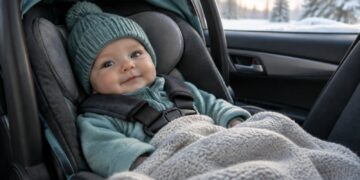
Why the caution? Young babies have heavy heads and weak neck muscles. When they sit semi-upright for a long time, their head can slump forward, which may make it harder to breathe. A correctly installed rear-facing seat, set at the right recline angle with a snug harness, helps keep the airway open.
What is the 2-hour car seat rule?
The “2-hour rule” is advice many car seat manufacturers give: try not to keep a baby in a car seat for more than about 2 hours at a stretch. It isn’t an official AAP rule, and it isn’t a law. But it lines up well with the AAP’s advice to stop every 2 to 3 hours during the day. Think of it as a helpful reminder to plan breaks, not a timer that makes hour 2 and 1 minute dangerous.
Newborns and premature babies need extra care
The younger the baby, the shorter the stretches should be. The Lullaby Trust, a UK safe sleep charity, advises avoiding long drives with premature and young babies when you can, because sitting upright too long may cause breathing difficulties.
Babies born early can be at higher risk. Boston Children’s Hospital notes that nearly 27 percent of premature babies are at risk of breathing problems in a car seat, and parents can’t reliably spot these problems just by looking at the baby. That’s why many hospitals do a “car seat challenge” before a preemie goes home. If your baby was born early, ask your pediatrician whether long drives are OK yet.
Why Babies Shouldn’t Sleep in the Car Seat Outside the Car
It’s fine for your baby to fall asleep in the car seat while you drive. The problem starts when you arrive and leave them sleeping in it. The AAP says it is not safe for babies to sleep in car seats, strollers, swings or carriers, and that you should move them to a firm sleep surface on their back as soon as possible.
This matters more than many parents realize. A 2019 study of nearly 12,000 sleep-related infant deaths found that about 3 percent happened in sitting devices, and car seats made up about 63 percent of those. In fewer than 1 in 10 of the car seat deaths was the seat being used as directed, and about half happened at home, not in a car.
So the rule is simple: car seats are for travel. When the car stops, the baby comes out.
- Carry the whole seat inside only if you’ll take the baby out right away.
- Don’t leave a sleeping baby in a car seat on the floor, a bed or a couch.
- Never place a car seat on a raised or soft surface, where it can tip over.
- Bring a portable play yard or bassinet if you’re not sure there will be a safe sleep space where you’re staying.
How to Plan a Road Trip With a Baby
A little planning makes long drives much easier for everyone. Here’s a simple plan that follows AAP guidance.
Before you leave
- Check the installation. Use the seat’s built-in recline indicator so your baby’s head doesn’t flop forward. The seat shouldn’t move more than an inch side to side or front to back.
- Get it inspected. According to NHTSA, certified technicians at local inspection stations will check your car seat, usually for free.
- Time the drive around sleep. Many parents leave right after a feed or near nap time so the baby sleeps for the first stretch.
- Plan your stops. Look at the route and pick rest stops about every 2 to 3 hours.
- Pack a safe sleep space. A portable play yard means your baby has a flat, firm place to sleep at grandma’s house.
On the road
- Have an adult ride in the back if you can, so someone can watch your baby’s breathing and head position.
- Use breaks well. Take your baby out of the seat, feed them, change diapers and let them stretch on a blanket or in your arms.
- Never feed in a moving car. The AAP says not to breastfeed while the car is moving. Pull over first, and buckle your baby back in before you drive.
- Keep loose items secured. Bags, toys and bottles can become dangerous in a sudden stop.
- Don’t turn around while driving. If your baby cries and you’re alone, pull over somewhere safe to check.
When you arrive
- Take your baby out of the car seat right away, even if they’re asleep.
- Lay them on their back in a crib, bassinet or play yard with nothing else in it.
- Never leave your baby alone in the car, even for a minute.
Sample Break Schedule for a Holiday Drive
| Trip length | Daytime stops | What to do at each stop |
|---|---|---|
| Under 2 hours | Usually none needed | Take baby out of the seat as soon as you arrive |
| 3 to 4 hours | 1 stop | Feed, change diaper, let baby stretch |
| 5 to 6 hours | 2 stops | Feed, change, stretch, check harness fit |
| 7 hours or more | A stop every 2 to 3 hours | Consider splitting the trip over 2 days with a young baby |
At night, the AAP says stops can be further apart, about every 4 to 6 hours, as long as an adult is watching the baby. For very young or premature babies, shorter trips and more breaks are the safer choice.
Car Seat Safety Checklist for Winter Trips
Long holiday drives are a good time to double-check the basics from the AAP’s car seat guidance:
- Rear-facing as long as possible. Keep your child rear-facing until they reach the highest weight or height their seat allows. Many convertible seats allow 2 years or more.
- Snug harness. For rear-facing, shoulder straps go at or below your baby’s shoulders. Tighten until you can’t pinch any slack at the shoulder.
- Chest clip at armpit level. Not down on the belly, not up at the neck.
- Back seat only. Never put a rear-facing seat in front of an active airbag.
- No puffy coats. Bulky coats squash down in a crash and leave the straps too loose. Dress your baby in thin layers and put a blanket over the buckled harness. Our guide to winter coats and car seats shows how to do the coat test.
- No add-ons. Skip head pillows, strap covers and inserts that didn’t come with the seat or aren’t approved by its maker.
- Check the dates. Make sure the seat isn’t expired, recalled or from a moderate or severe crash.
Never Leave a Baby Alone in the Car, Even in Winter
A cold day can make it feel harmless to run into a gas station while your baby sleeps. It isn’t. NHTSA warns that with an outside temperature in the mid-60s, the inside of a car can climb above 110°F, and it can rise almost 20°F in the first 10 minutes. Sunlight through the windows and a heater left running can make a car hot fast, even in cooler months. Babies also need an adult watching their breathing and head position. Always take your baby with you.
From a Dad of Two
Danis, who runs Newborn Stages, says their first child needed a lot of holding and car rides before falling asleep, while their second child fell asleep easily. If your baby is one who dozes off the moment the engine starts, that’s fine while you drive. Just remember to move them to a safe, flat sleep space once you’re home.
When to Call the Doctor
Most babies handle car trips well. Pull over safely and check your baby, and call your pediatrician or 911 as needed, if you notice:
- Pauses in breathing, very fast breathing or grunting.
- Blue, gray or pale lips or face.
- Your baby is hard to wake, floppy or unusually limp.
- The head keeps slumping forward with the chin on the chest, even after you adjust the recline.
Call 911 right away for trouble breathing or blue lips. Before a long trip, also talk to your pediatrician if your baby was born early, has breathing or heart problems, has low muscle tone, or is sick. If your baby gets a fever while you’re away, our guide on fever in babies explains when to call the doctor. A fever of 100.4°F (38°C) or higher in a baby under 3 months always needs a call to the doctor.
More Holiday Travel Help
Flying instead of driving? Read when you can fly with a baby. Staying overnight somewhere cold? See how to dress a baby for sleep in winter. And for the big meal, check our list of Thanksgiving foods for babies and toddlers.
Frequently Asked Questions About Babies in Car Seats
How long can a newborn be in a car seat?
The AAP doesn’t set an exact limit, but young babies shouldn’t spend long stretches in a car seat. In the early weeks, keep drives short when you can, stop every 2 to 3 hours during the day, and take your baby out of the seat as soon as you arrive. Premature babies may need a car seat breathing check before they go home.
What is the 2-hour car seat rule?
It’s common advice from many car seat makers: try not to keep a baby in a car seat for more than about 2 hours at a time. It isn’t an official AAP rule, but it fits the AAP’s tip to stop every 2 to 3 hours on day trips. Think of it as a reminder to take regular breaks, not a hard deadline.
Can my baby sleep in the car seat after we arrive?
No. The AAP says it isn’t safe for a baby to keep sleeping in the car seat once you arrive. Gently move your baby onto their back on a firm, flat surface, like a crib, bassinet or play yard, as soon as you can. If you’re not sure there will be a safe sleep space where you’re going, bring a portable play yard.
How often should I stop on a road trip with a baby?
The AAP suggests stopping about every 2 to 3 hours during the day and every 4 to 6 hours at night. Use each stop to feed, change diapers and let your baby stretch out of the seat. Never breastfeed or bottle feed while the car is moving.
Is it safe to take a long road trip with a newborn?
Healthy babies can travel by car, but long drives are harder in the first weeks. The Lullaby Trust advises avoiding long drives with premature and very young babies when you can. If you need to go, plan regular breaks, check the harness and recline angle, and have an adult ride in the back to watch your baby.
Should an adult sit in the back seat with my baby?
If you can, yes. A second adult in the back seat can check that your baby’s head isn’t slumping forward and that breathing looks normal. If you’re driving alone, pull over somewhere safe to check on your baby instead of turning around while you drive.
The Bottom Line
There’s no magic number, but young babies do best with short stretches in the car seat. Stop every 2 to 3 hours during the day, take your baby out of the seat when you arrive, and always put them to sleep on their back on a firm, flat surface. Keep the seat rear-facing, the harness snug and an adult in the back when you can. With a few planned breaks, holiday road trips with a baby can be safe and a lot calmer.
This article is for general information and isn’t a substitute for medical advice. Always contact your pediatrician with questions about your baby’s health.
8 Sources
Newborn Stages uses trusted sources, including government health agencies, children’s hospitals and pediatric organizations, to support the facts in our articles. Read our editorial policy to learn how we research, fact-check and keep our content accurate.
- American Academy of Pediatrics (HealthyChildren.org). Is it safe for my baby to travel in a car seat for hours at a time?.
- American Academy of Pediatrics (HealthyChildren.org). A Parent’s Guide to Safe Sleep.
- American Academy of Pediatrics (HealthyChildren.org). Car Safety Seats: Information for Families.
- The Lullaby Trust. Car seats and reducing the risk of SIDS.
- National Highway Traffic Safety Administration (NHTSA). Find the Right Car Seat.
- National Highway Traffic Safety Administration (NHTSA). Child Safety: Heatstroke and Vehicle Safety.
- National Library of Medicine (PubMed). Infant Deaths in Sitting Devices.
- Boston Children’s Hospital. Car Seat Challenge.