

Last reviewed: November 6, 2026 · Based on guidance from the American Academy of Pediatrics, the FAA, the TSA and Mayo Clinic.
Quick answer: Healthy, full-term babies can usually fly from about 1 week old, but the American Academy of Pediatrics (AAP) says it’s ideal to wait until your baby is 2 to 3 months old, when their immune system is stronger and they’ve had their first vaccines. Airlines set their own minimum ages, often 7 to 14 days, and some ask for a doctor’s note for younger babies. The safest way for a baby to fly is in their own seat in an FAA-approved car seat, not on your lap. Formula and breast milk are allowed through security in amounts over 3.4 ounces, and feeding during takeoff and landing helps with ear pressure.
Holiday travel often means a first flight with a baby. With a little planning, it can go much more smoothly than you fear. Here’s when it’s safe to fly, what the rules are, what to pack, and practical tips for the airport and the plane.
When Is It Safe to Fly With a Baby?
Air travel is generally safe for healthy, full-term babies. The main concern for very young babies isn’t the flight itself but germs. Airports and planes are crowded, and a fever in a baby under 2 to 3 months always needs urgent medical care.
- Under 7 days: experts advise against flying. Mayo Clinic notes that many airlines don’t allow it without a doctor’s approval.
- 1 week to 2 months: possible for a healthy, full-term baby, but talk to your pediatrician first, and consider whether the trip can wait.
- 2 to 3 months and older: the AAP’s preferred age for flying. Your baby will have had their 2-month vaccines, and many babies are on a more predictable feeding and sleep routine.
Talk to your pediatrician before flying if your baby: was born premature, has heart or lung problems, has had breathing problems or needed oxygen, has had an ear infection or ear surgery in the last 2 weeks, or is sick.
Airline Minimum Ages
Each airline sets its own rules, and they change, so always check before you book. For example, some U.S. airlines don’t accept babies under 7 days old without a doctor’s letter, and some ask for a medical release for babies under 14 days. International airlines may have different rules.
Should Your Baby Sit on Your Lap or in Their Own Seat?
In the U.S., children under 2 can fly as “lap infants,” usually free on domestic flights and for a reduced fare on international ones. But the FAA says the safest place on a plane for a child under 2 is in an approved child car seat or device in their own seat, because your arms can’t hold your baby securely during unexpected turbulence.
- Buy a seat if you can, and bring your baby’s car seat on board.
- Check the label. The car seat should say it’s certified for use in motor vehicles and aircraft.
- Keep it rear-facing if that’s how your baby rides in the car.
- Car seats go in a window seat, not in aisle or exit rows.
- Didn’t buy a seat? Ask at check-in or the gate if there’s an empty seat you can use for the car seat.
- Airline bassinets are offered on some long-haul flights. Only use one if your baby is within the airline’s size and weight limits, always lay your baby on their back, and take them out when the seatbelt sign is on.
The FAA-approved CARES harness is for children 22 to 44 pounds, so it isn’t suitable for babies.
Going Through Airport Security With a Baby
According to the TSA:
- Formula, breast milk and juice for babies and toddlers are allowed in your carry-on in reasonable quantities over 3.4 ounces. Baby food pouches are allowed too.
- Ice packs and freezer packs to keep milk cold are allowed, even if they’re partly melted.
- Tell the officer at the start of screening that you have these items, and take them out of your bag. They’re usually X-rayed. You can ask for them not to be opened or X-rayed, though you may need extra screening.
- Breast pumps are allowed in your carry-on.
- Baby wipes are allowed in your carry-on and don’t need to go in your liquids bag.
- Strollers and car seats go through the X-ray machine if they fit. You’ll carry your baby through the scanner.
What Documents Does a Baby Need to Fly?
- Domestic U.S. flights: the TSA doesn’t require ID for children under 18 traveling with an adult. But airlines may ask for proof of a lap infant’s age, so bring a copy of the birth certificate or vaccination record.
- International flights: every baby needs their own passport, and some countries need a visa. If only one parent is traveling, bring a signed letter of consent from the other parent, as some countries ask for it.
- Your baby’s boarding pass: lap infants still need to be added to your booking and usually get their own boarding pass.
What to Pack in Your Carry-On
- Enough diapers for the trip plus delays, about one per hour of travel, and plenty of wipes
- A portable changing pad and plastic bags for dirty diapers or clothes
- Breast milk or formula for the trip plus a few extra feeds, clean bottles, and a pacifier if your baby uses one
- A spare outfit for your baby, and a spare shirt for you
- A light blanket or swaddle, and a layer for your baby, as planes can be cool
- Infant acetaminophen and any medicines your baby takes, plus a thermometer
- A few small, quiet toys or books
- Hand sanitizer and disinfecting wipes for tray tables and armrests
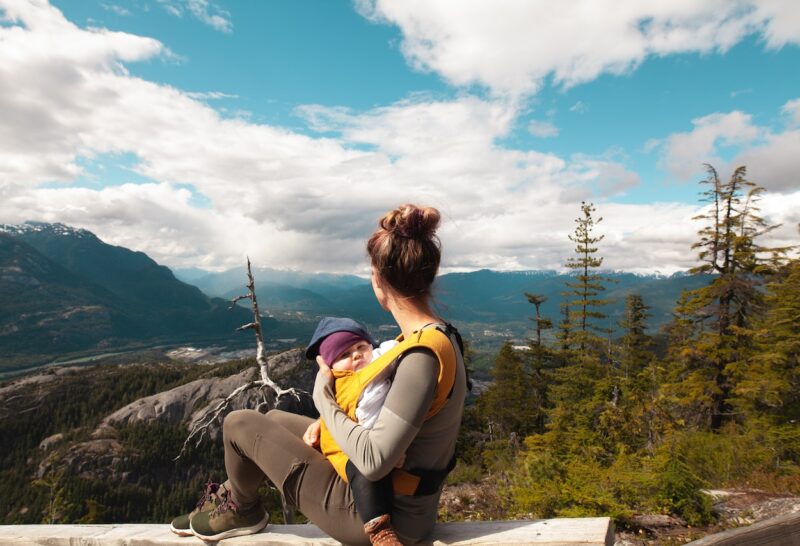
- Your baby carrier, to keep your hands free through the airport
12 Tips for Flying With a Baby
1. Book Smart
Choose nonstop flights when you can, and times that match your baby’s nap or bedtime. Midweek and early-morning flights are often less crowded.
2. Check Vaccines and Health Protection
Make sure your baby is up to date on vaccines, and ask your pediatrician about RSV protection if you’re traveling during RSV season. Everyone in the family should have their flu shot.
3. Arrive Early
Give yourself extra time for check-in, security and diaper changes. Rushing is the fastest way to stress you and your baby.
4. Use Family Boarding Wisely
Board early to install the car seat and settle in. If you don’t need setup time, some parents prefer to board last to cut down on time sitting in the plane.
5. Gate-Check the Stroller
Most airlines let you check a stroller at the gate for free, so you can use it all the way to the plane.
6. Feed During Takeoff and Landing
Swallowing helps equalize the pressure in your baby’s ears. Offer the breast, a bottle or a pacifier as the plane climbs and especially as it starts to descend, which is often the most uncomfortable part. It’s fine if your baby sleeps through it, as there’s no need to wake them.
7. Hold Your Baby Upright for Burps
Air pressure changes can make gas feel worse. Burp your baby during and after feeds.
8. Clean Your Space
Wipe down the tray table, armrests and seatbelt buckle, wash or sanitize your hands often, and politely ask other passengers not to touch your baby.
9. Dress in Layers
Cabins can be warm at the gate and cool in the air. Layers let you adjust quickly.
10. Walk the Aisle
When the seatbelt sign is off, a short walk in the carrier can calm a fussy baby. Always buckle back in when the sign comes on.
11. Plan for Diaper Changes
Change your baby just before boarding. Many planes have a fold-down changing table in at least one restroom. Ask a flight attendant which one.
12. Keep Your Expectations Realistic
Babies cry, and most passengers understand. Stay calm, focus on your baby rather than the people around you, and remember the flight will end.
When Not to Fly
Delay the trip and call your pediatrician if your baby has a fever (100.4°F or 38°C or higher, especially under 3 months), trouble breathing, a bad cold with ear pain, vomiting or diarrhea, or seems unwell. For more help, see our guides to RSV in babies, flu in babies and the best travel strollers.
Frequently Asked Questions About Flying With a Baby
Can a newborn fly on a plane?
Yes, a healthy, full-term newborn can usually fly from about 7 days old. The AAP says it’s ideal to wait until 2 to 3 months, mainly because young babies are more vulnerable to infections, and any fever in a baby under 2 to 3 months needs urgent care. Check your airline’s minimum age and talk to your pediatrician first, especially if your baby was premature or has health problems.
Does my baby need their own seat on a plane?
No. In the U.S., babies under 2 can fly on your lap, usually free on domestic flights. But the FAA and AAP say the safest place for a child under 2 is in an FAA-approved car seat in their own seat, because you can’t hold your baby securely in severe turbulence. If you don’t buy a seat, ask whether an empty seat is available for your car seat.
Can I bring formula and breast milk through TSA?
Yes. The TSA allows formula, breast milk and juice for babies and toddlers in your carry-on in reasonable quantities over 3.4 ounces, along with ice packs to keep them cold. Tell the security officer at the start of screening and take these items out of your bag. They’re usually X-rayed, and you can ask for other screening if you prefer.
How do I help my baby's ears on a plane?
Encourage your baby to suck or swallow during takeoff and especially landing, when ear pressure changes the most. Breastfeeding, a bottle or a pacifier all work. If your baby is asleep, you don’t need to wake them. If your baby has had an ear infection or ear surgery in the last 2 weeks, talk to your pediatrician before flying.
What documents does a baby need to fly?
For domestic U.S. flights, the TSA doesn’t require ID for children traveling with an adult, but airlines may ask for proof of a lap infant’s age, so bring a birth certificate or vaccination record. For international flights, your baby needs their own passport and possibly a visa. If one parent is traveling alone with the baby, bring a consent letter from the other parent.
Can I fly with a baby who has a cold or ear infection?
It’s best not to fly if your baby is sick. Babies with a stuffy nose or ear infection may have more ear pain with pressure changes, and travel makes it harder to get care. Don’t fly with a baby who has a fever, trouble breathing, vomiting or diarrhea. Call your pediatrician to ask whether it’s safe to travel.
The Bottom Line
Healthy, full-term babies can usually fly from about a week old, but the AAP suggests waiting until 2 to 3 months if you can. Check your airline’s age rules, and talk to your pediatrician first if your baby was premature, has health problems or is sick. For safety, buy your baby a seat and use an FAA-approved car seat. Bring formula or breast milk through security, feed during takeoff and landing for ear comfort, pack extra supplies for delays, and give yourself plenty of time.
This article is for general information and isn’t a substitute for medical advice. Always contact your pediatrician with questions about your baby’s health, and check your airline’s current rules before you travel.
4 Sources
Newborn Stages uses trusted sources, including government health agencies, children’s hospitals and pediatric organizations, to support the facts in our articles. Read our editorial policy to learn how we research, fact-check and keep our content accurate.
- HealthyChildren.org, American Academy of Pediatrics. Flying With Baby: Parent FAQs & Tips for Safer, Easier Air Travel.
- Federal Aviation Administration. Flying with Children.
- Transportation Security Administration. Traveling with Children.
- Mayo Clinic. Air travel with infant: Is it safe?