

Newborn Stages
  • Home
  • Baby

    Development & Growth

    Newborn icon

    Newborn (0–4 Weeks)

    Feeding, sleep & first-week care

    1-2 months baby icon

    1-2 Months

    First smiles & tummy time

    3-6 months baby icon

    3-6 Months

    Rolling, giggles & grabbing

    7-9 months baby icon

    7-9 Months

    Sitting, crawling & first foods

    10-12 months baby icon

    10-12 Months

    Standing & first steps

    VIEW ALL
    Baby feeding icon
    Baby Feeding
    Breastfeeding
    Baby Food Recipes
    Bottle Feeding
    VIEW ALL
    Baby sleep icon
    Baby Sleep
    Sleep Problems
    Basics & Bedtime Routines
    VIEW ALL
    Baby basics icon
    Baby Basics
    Newborn Daily Care
    Essentials
    Activities & Playtime
    VIEW ALL
  • Toddler

    Development & Growth

    13-18 months toddler icon

    13-18 Months

    Walking & first words

    19-24 months toddler icon

    19-24 Months

    Talking & pretend play

    2-3 years toddler icon

    2-3 Years

    Big feelings & potty training

    VIEW ALL
    Toddler feeding icon
    Toddler Feeding
    Eating & Nutrition
    Healthy Food Recipes
    Toddler Breastfeeding
    VIEW ALL
    Toddler sleep icon
    Toddler Sleep
    Problems & Concerns
    Basics & Bedtime Routines
    VIEW ALL
    Toddler care and training icon
    Care & Training
    Playtime & Education
    Everyday Care & Training
    VIEW ALL
  • Free Tools
    • Newborn Checklist
    • Baby Handover Sheet
    • Baby Food Checker
    • Baby Sleep Schedule
    • Why Is My Baby Crying?
  • Health & Safety
    • Everyday Wellness
    • Common Health Concerns
    • Disabilities and Chronic Conditions
    • Mental Health
    • Playtime
    • Safety & First Aid
  • Gear & ProductsReviews

    Gear & product reviews

    • Parenting books & courses
    • Beds & sleep products
    • Toys
    • Nursing & feeding
    • Strollers & accessories
    • Car seats & accessories
    • Health & safety products

    Latest reviews

    Best Baby Food Maker (2026): 4 Steamer-Blenders Compared, Including the One We Used

    Best Humidifier for Baby (2026): 5 Cool-Mist Picks + Safe Nursery Setup

    Dad/Partner Picks: Baby Products Men Actually Love (and Use)

    Best Under $30 Baby Toys That Feel Premium!

    Top 5 Travel Strollers of 2026 — Lightweight, Foldable & Airline-Approved!

    See all gear reviews →

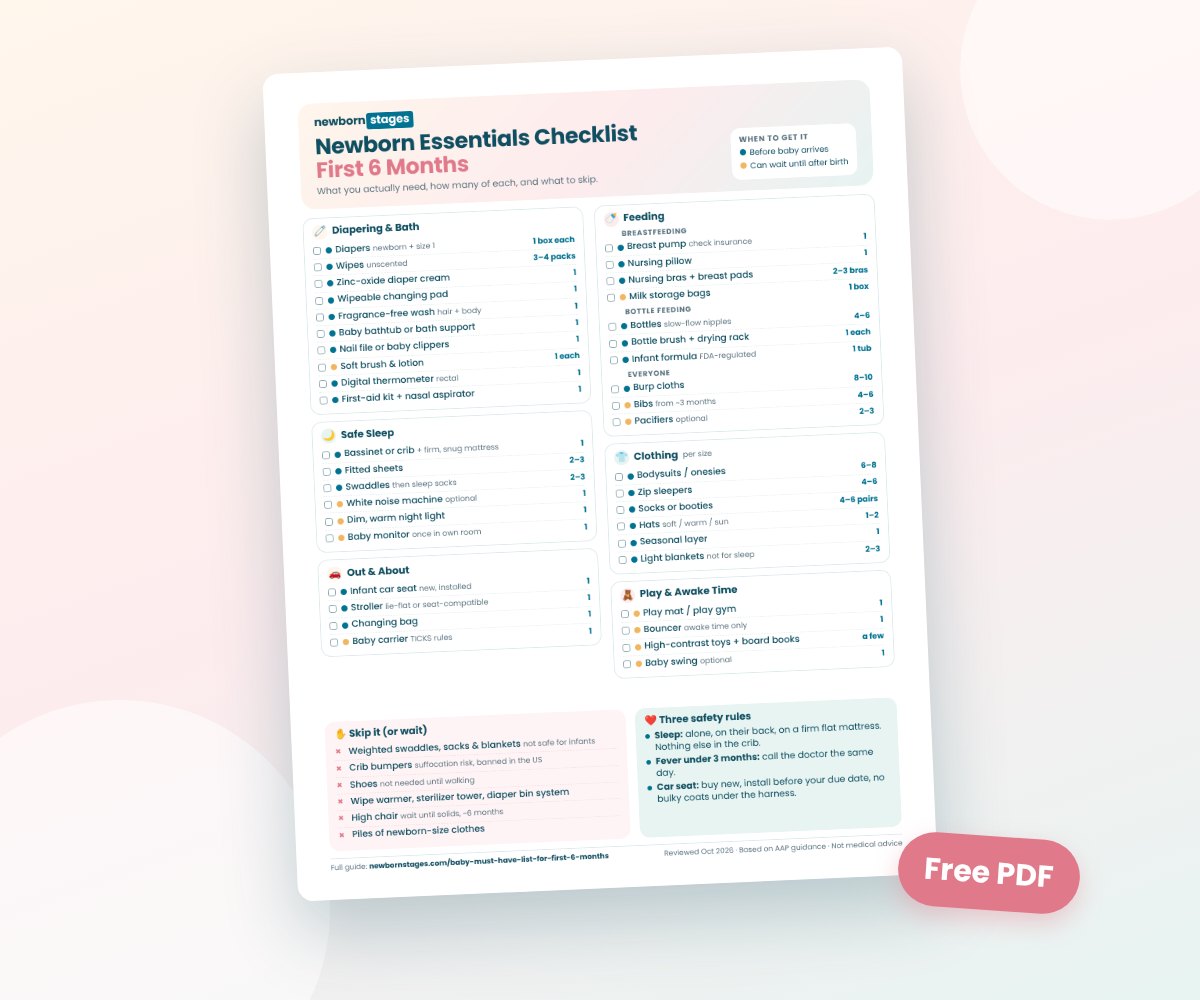
    Preview of the newborn shopping list checklistFree toolBuild your newborn shopping listMark what you have and need, then save your own list as a PDF.Start my list →
  • General Parenting
No Result
View All Result
Newborn Stages
No Result
View All Result

Home » Safety & First Aid » Stroller vs. Baby Carrier: What’s the best choice for your baby?

Stroller vs. Baby Carrier: What’s the best choice for your baby?

Written by: Guest Post
November 6, 2026
in Safety & First Aid
Stroller vs. Baby Carrier
Key Takeaways
  • The post compares strollers and baby carriers as alternatives to carrying a baby in your arms, noting both have pros and cons depending on family needs.
  • Strollers are convenient, offer storage, can fit more than one baby, and let siblings join walks, but they can be bulky, hard to use in narrow or crowded spaces, and poorly suited to hills, steps, or clingy babies.
  • Strollers aren't safe for longer sleep, so a baby who dozes off should be moved to a firm, flat surface on their back once home.
  • Baby carriers support bonding and work where there are no sidewalks or smooth roads, but they can be risky on uneven terrain, limit activities like jogging, and some babies fuss because they feel confined.

Last reviewed: November 6, 2026. Checked against current guidance from the American Academy of Pediatrics (HealthyChildren.org) and the U.S. Consumer Product Safety Commission.

If you’re a new parent, you’re probably tired of carrying your baby around everywhere in your arms. You’re not alone. Many parents struggle with this problem, and it can be exhausting to carry around an infant all day long. But there are other options out there!

There are strollers that make it easier for you to get their little one from place to place without having to worry about back pain or getting too tired. And then there are also baby carriers that allow you the chance to bond with your child while still being able to go on walks or run errands.

Both options have their pros and cons, which makes the decision quite tricky. So, we wanted to compare them side by side so you could decide what works best for your family! Keep reading!

Strollers – Pros & Cons:

newborn3sa 1

A stroller is a popular choice for new parents because it makes it easier to get around your neighborhood without having to carry the baby. And, if you have an infant who still needs feeding or changing frequently, a stroller can make life much more convenient!

Not to mention, it also allows older siblings the chance to join in on family activities and gives you a chance to get some exercise! It’s fine if your little one dozes off during a walk, but a stroller isn’t a safe place for longer sleep. Once you get home, move your baby to a firm, flat sleep surface on their back as soon as you can.

However, if your baby is going through a clingy phase or doesn’t enjoy being in one place for too long, then this may not be the right option. In addition, if you live somewhere with hills and steps (or plan to visit an area with these), then a stroller may not be the best choice for you for mobility purposes.

Pros:

  • Convenient to use and push around
  • Different stroller types can accommodate more than one newborn
  • Include storage spaces or baskets
  • Makes it easier to get around the neighborhood

Cons:

  • Aren’t the best option if your baby is clingy or doesn’t like staying in one place for long periods
  • Can be a hassle in narrow spaces or crowded areas
  • Some are bulky and challenging to fold

Baby Carriers – Pros & Cons:

Stroller vs. Baby Carrier

A baby carrier is an excellent great choice for parents who want to bond with their child and give them the freedom of movement they crave. Carriers are also ideal if you live somewhere where it can be complex to get around because there are no sidewalks or smooth roads!

Yet, on the other hand, baby carriers aren’t an ideal choice if you live somewhere with hills or uneven terrain because you’ll have to worry about tripping or slipping all the time. This can also make it challenging if you want to go for a jog, rollerblade, or do other outdoor activities.

In addition, some babies don’t like being in carriers because they can feel trapped and may fuss after a short amount of time. So it really depends on your baby’s personality!

Lastly, it’s essential to remember that baby carriers can be a safety hazard if you’re not careful. Keep your baby upright and snug against you, with their face always visible and not pressed into the fabric or your body. Their chin should be off their chest so they can breathe easily, and they should sit high enough that you can kiss the top of their head. Keep blankets away from their face. If your baby falls asleep in a carrier for a long stretch, move them to a firm, flat sleep surface on their back.

Pros:

  • Allow great bonding time with your baby
  • Enable the baby to face outwards and explore the world around them once they have good head and neck control (young babies should face in toward you)
  • Excellent choice for parents who live somewhere without sidewalks
  • Provide higher mobility

Cons:

  • Not the best option for newborns who still need feeding or changing frequently
  • Can only take one child at a time
  • If the baby is clingy, they may not enjoy being in a carrier for too long
  • May be difficult to take your baby on walks because of uneven ground or poor weather conditions
  • Can be a safety hazard if not used properly
  • Lack storage space for essentials like diapers, wipes, and similar

Stroller vs. Baby Carrier for Travel

Traveling with your baby can be stressful enough, so it’s important to choose the right option for you! If you don’t already own a stroller or carrier, then investing in one that’s ideal for travel may seem like an unnecessary expense. However, if you plan on traveling more often than not (maybe even as a family), then it’s probably worth the investment.

As for the choice, it really depends on how often you plan to travel and what your baby likes/doesn’t like! If they’re always happy in their stroller, for instance, but never want to sit still in a carrier, then go with the stroller every time.

Furthermore, if your family plans on going somewhere where it may rain often, or there might be uneven terrain (such as hiking trails), then definitely stick with a stroller because carriers can be a safety hazard in these cases.

On the other hand, if they’re happier in a carrier, and you don’t want to have to bring your stroller everywhere with you, then always go for the baby carrier if you can handle carrying your little one all day.

This is especially handy if you plan to travel by air, since you usually have to check your stroller at the gate and can’t use it on the plane. And, of course, carriers are more lightweight than strollers.

Baby Carrier or Stroller for Newborns?

For many newborns, they’re happiest when held in their parents’ arms and aren’t ready for time spent sitting up on their own just yet!

In this case, a baby carrier is an excellent choice because it allows your newborn to be close to you without having to sit up completely on their own, making them feel safer and more secure. Choose a carrier that fits newborns and supports their head and neck.

However, if your baby can hold their head up well and isn’t too clingy, then a stroller is definitely the way to go! Your little one will be happily able to see more of their surroundings while you freely do all the walking. Before then, use a stroller that reclines fully or has a bassinet or infant car seat attachment made for newborns.

Finally, if your baby is old enough that they’re ready to sit up by themselves but still acts clingy sometimes, then grab both! Strollers are wonderful when babies need a break from walking, and baby carriers are perfect for when they want to be held.

Stroller vs. Baby Carrier: In Conclusion

So, strollers or baby carriers? As with most parenting decisions, it all comes down to your personal preferences and what you want out of a carrier/stroller!

In general, baby carriers are the best choice if your child is usually happy when held by you but occasionally wants to explore on their own. But if they’re old enough to hold their head up and aren’t too clingy, then a stroller will probably be the best bet.

In all cases, it’s important to keep your family’s needs in mind as you make this decision – no matter what option you choose, both stroller and baby carrier can work wonders!

Also, remember: don’t feel afraid of investing in both! Strollers and baby carriers can be a bit pricey, but they’re definitely worth it.

This article is for general information and isn’t a substitute for medical advice. Always contact your pediatrician with questions about your baby’s health.

3 Sources

Newborn Stages uses trusted sources, including government health agencies, children’s hospitals and pediatric organizations, to support the facts in our articles. Read our editorial policy to learn how we research, fact-check and keep our content accurate.

  1. American Academy of Pediatrics, HealthyChildren.org. How to Keep Your Sleeping Baby Safe: AAP Policy Explained.
  2. American Academy of Pediatrics, HealthyChildren.org. Baby Carriers: Backpacks, Front Packs & Slings.
  3. U.S. Consumer Product Safety Commission. CPSC Educates New Parents on Safe Babywearing.

Guest Post

Preview of the newborn shopping list checklistFree toolBuild your newborn shopping listMark what you have and need, then save your own list as a PDF.Start my list →
Previous Post

10 Helpful Brain Development Activities For Toddlers

Next Post

When Babies Can Eat Yogurt (Plus 4 Delicious Recipes)?

You Might Also Like

Baby sleeping on their back in a sleep sack in an empty crib with a fitted sheet, next to the parents' bed
Safety & First Aid

SIDS (Sudden Infant Death Syndrome): Causes, Risk by Month & How to Lower the Risk

November 18, 2026
Parent holding a smiling baby beside an open car door during a road trip break
Safety & First Aid

How Long Can a Baby Be in a Car Seat? The 2-Hour Rule & Holiday Road Trip Tips

November 16, 2026
Smiling baby sitting on a play mat stacking large wooden blocks next to a soft cloth book in a cozy holiday living room
Safety & First Aid

Safe Toys for Babies and Toddlers: Holiday Gift Safety Guide & Hidden Hazards

November 14, 2026
Smiling baby in a knit hat and thin fleece outfit buckled into a rear-facing car seat, with a soft blanket over the harness on a winter day
Safety & First Aid

Winter Coats and Car Seats: Why Puffy Coats Aren’t Safe & How to Keep Baby Warm

November 12, 2026
Smiling parent holding a happy baby in a knit hat and sweater by an airplane window, with the wing and clouds outside
Safety & First Aid

When Can You Fly With a Baby? Safe Age, What to Pack & 12 Tips for Holiday Flights

November 12, 2026
When Is My Baby Too Big for an Infant Car Seat?
Safety & First Aid

When Is My Baby Too Big for an Infant Car Seat?

November 14, 2026

Newborn Stages offers clear, well-sourced parenting information from a parent who has been there. Our mission is to help new parents find answers they can trust.

  • About us
  • Contact us
  • Advertise
  • Sitemap
  • Privacy Policy
  • Terms & Conditions
  • Disclaimer
  • Editorial Policy
  • Affiliate Disclosure
Facebook-f Instagram

Kindly take note that all the information is for educational purposes only and not a substitute for professional health services.

  • Checklist
  • Handover Sheet
  • Food Checker
  • Sleep Schedule
  • Crying Helper
  • All Free Tools
  • Development Stages
  • Feeding
  • Sleeping
  • Health & Safety
  • Product Reviews
©2026 www.newbornstages.com. All Rights Reserved.
No Result
View All Result
  • Home
  • Baby
    • Baby Development
      • Newborn (0–4 Weeks)
      • 1-2 Months
      • 3-6 Months
      • 7-9 Months
      • 10-12 Months
    • Baby Feeding
      • Breastfeeding
      • Bottle Feeding
      • Baby Food Recipes
    • Baby Sleep
      • Sleep Problems
      • Bedtime Routines & Sleep Basics
    • Baby Basics
      • Newborn Daily Care
      • Activities & Playtime
  • Toddler
    • Toddler Development
      • 13-18 Months
      • 19-24 Months
      • 2-3 Years
    • Toddler Sleep
      • Basics & Bedtime Routines
      • Problems & Concerns
    • Toddler Feeding
      • Healthy Food Recipes
      • Eating & Nutrition
      • Toddler Breastfeeding
    • Toddler Care & Training
      • Everyday Care & Training
      • Playtime & Education
  • Free Tools
    • Newborn Checklist
    • Baby Handover Sheet
    • Baby Food Checker
    • Baby Sleep Schedule
    • Why Is My Baby Crying?
  • Health & Safety
    • Common Health Concerns
    • Disabilities and Chronic Conditions
    • Everyday Wellness
    • Mental Health
    • Safety & First Aid
  • Gear & Products
    • Parenting Books – Courses
    • Infant & Toddler Beds & Sleep products
    • Toys
    • Nursing & Feeding
    • Health & Safety
    • Strollers & Accessories
    • Car Seats & Accessories
  • General Parenting

© 2026 www.newbornstages.com. All Rights Reserved.