

Last reviewed: November 11, 2026 · Based on guidance from the American Academy of Pediatrics, the CDC, the USDA and the Dietary Guidelines for Americans.
Quick answer: Most babies who have started solids, usually around 6 months, can join Thanksgiving dinner with a few simple swaps. Plain turkey, mashed potatoes, sweet potatoes, squash, pumpkin and soft cooked vegetables are great choices if you set some aside before salt, sugar, honey or marshmallows go in. Skip honey before age 1, added sugars before age 2, and salty gravy, ham and stuffing. Serve everything soft and in small pieces, keep your baby seated and watched while eating, and keep nuts, popcorn, whole grapes, raw veggies and candy out of reach.
Thanksgiving is a feast of soft, cozy food, and a lot of it is perfect for little eaters. Your baby or toddler can share the table and taste many of the same flavors as everyone else. The trick is knowing which dishes to share, which to skip and how to prepare them so they are safe for small mouths.
This guide walks you through it dish by dish, with tips by age, a simple plate plan and the choking hazards that tend to show up at holiday gatherings.
Can My Baby Eat Thanksgiving Dinner?
It depends on your baby’s age and stage.
- Under about 6 months: Breast milk or formula is all your baby needs. The American Academy of Pediatrics (AAP) recommends breast milk only for about the first 6 months. Healthy babies this age don’t need water or other drinks.
- Babies on solids (around 6 to 12 months): Your baby can try many holiday foods, as long as they are plain, soft and mashed or cut small. Breast milk or formula is still their main food.
- Toddlers (1 to 2 years): Toddlers can eat most of the same food as the family, cut into small pieces. They still should not have added sugars before age 2, and salty dishes should stay small.
Your baby is ready for solids when they can hold their head up well, sit in a high chair, show interest in your food and move food from a spoon to the back of their mouth. If your baby hasn’t started solids yet, there is no need to start just because it’s a holiday. You can learn more in our guide on when to start baby-led weaning.
Thanksgiving Foods Babies Can Usually Eat
The easiest approach: before you season a dish, scoop out a portion for your baby. Cook fresh food for babies with no added salt or seasoning, as the AAP advises.
| Food | Baby-friendly? | How to serve it |
|---|---|---|
| Turkey | Yes | Cooked to 165°F. Remove skin and bones. Shred or chop finely and keep it moist with a little breast milk, formula or the cooking juices before salt is added. |
| Mashed potatoes | Yes | Scoop some out before adding salt. A little butter or milk in cooking is fine. |
| Sweet potatoes | Yes | Plain, mashed or in soft wedges. Skip the brown sugar, maple syrup and marshmallow topping. |
| Squash and pumpkin | Yes | Roasted and mashed, or plain pumpkin puree (not pie filling, which has added sugar). |
| Green beans, carrots, peas | Yes | Cook until very soft. Cut into small pieces or mash. Never serve raw carrots or uncooked crudités. |
| Soft dinner roll | Usually | Small pieces of plain soft bread for older babies and toddlers. Avoid rolls with seeds or nut pieces. |
| Corn | With care | Whole kernels are a choking hazard. Mash or puree corn for babies. |
If your baby is doing baby-led weaning, our list of the best first foods for baby-led weaning shows safe shapes and sizes for many of these foods.
Thanksgiving Foods to Skip or Limit
Some holiday favorites aren’t a good fit for babies and young toddlers. Here’s what the CDC, the AAP and the Dietary Guidelines for Americans say to avoid.
Honey (under 12 months)
Never give honey to a baby under 12 months. It can cause infant botulism, a severe form of food poisoning. Watch for hidden honey in honey-glazed ham, honey butter, honey-roasted carrots and some breads and desserts.
Added sugars (under 2 years)
The CDC says children under 2 should have no added sugars. That rules out pie, cranberry sauce, candied yams, marshmallows, cookies, candy and sweet drinks. Your toddler won’t miss what they haven’t tried, and a plate of mashed sweet potato is naturally sweet.
Salty dishes
Young children should avoid high-sodium foods, such as processed meats and salty snacks. On the Thanksgiving table that usually means gravy, ham, stuffing, store-bought rolls and many casseroles. A tiny taste won’t hurt a toddler, but don’t make them the main part of the plate.
Drinks
- No cow’s milk as a drink before 12 months.
- No juice before 12 months. After that, no more than 4 ounces of 100% juice a day for ages 1 to 3.
- No soda, sweet tea, punch, cider drinks or anything with caffeine before age 2.
- Avoid unpasteurized (raw) cider, milk and cheese, which can carry harmful germs.
New allergens at a busy meal
The AAP suggests offering one new food at a time and watching for a reaction over the next few days. Common allergens like egg, peanut, dairy and wheat are great to introduce early, but a crowded holiday meal makes a reaction harder to spot. Stick mostly to foods your baby has already eaten safely.
Holiday Choking Hazards to Watch For
Holiday gatherings bring bowls of snacks on low tables, busy adults and relatives eager to share a treat. Children under 4 are at the highest risk of choking because they have small airways and are still learning to chew.
The AAP, the CDC and the Dietary Guidelines list these foods as choking hazards for young children:
- Whole or chopped nuts and seeds, including candied pecans on salads and sides
- Popcorn, pretzels and chips
- Whole grapes, cherry tomatoes, berries and olives
- Raw carrots, celery and apple pieces from a veggie or fruit tray
- Chunks of cheese, including string cheese
- Large or tough chunks of meat, sausages and hot dogs
- Hard candy, gummy candy, caramels and marshmallows
- Whole corn kernels and raisins
- Thick spoonfuls of nut butter
Cut food into pieces no bigger than half an inch, and chop round foods like grapes completely. Keep nut bowls and candy dishes high up, and let relatives (and older siblings) know what your little one can and can’t have.
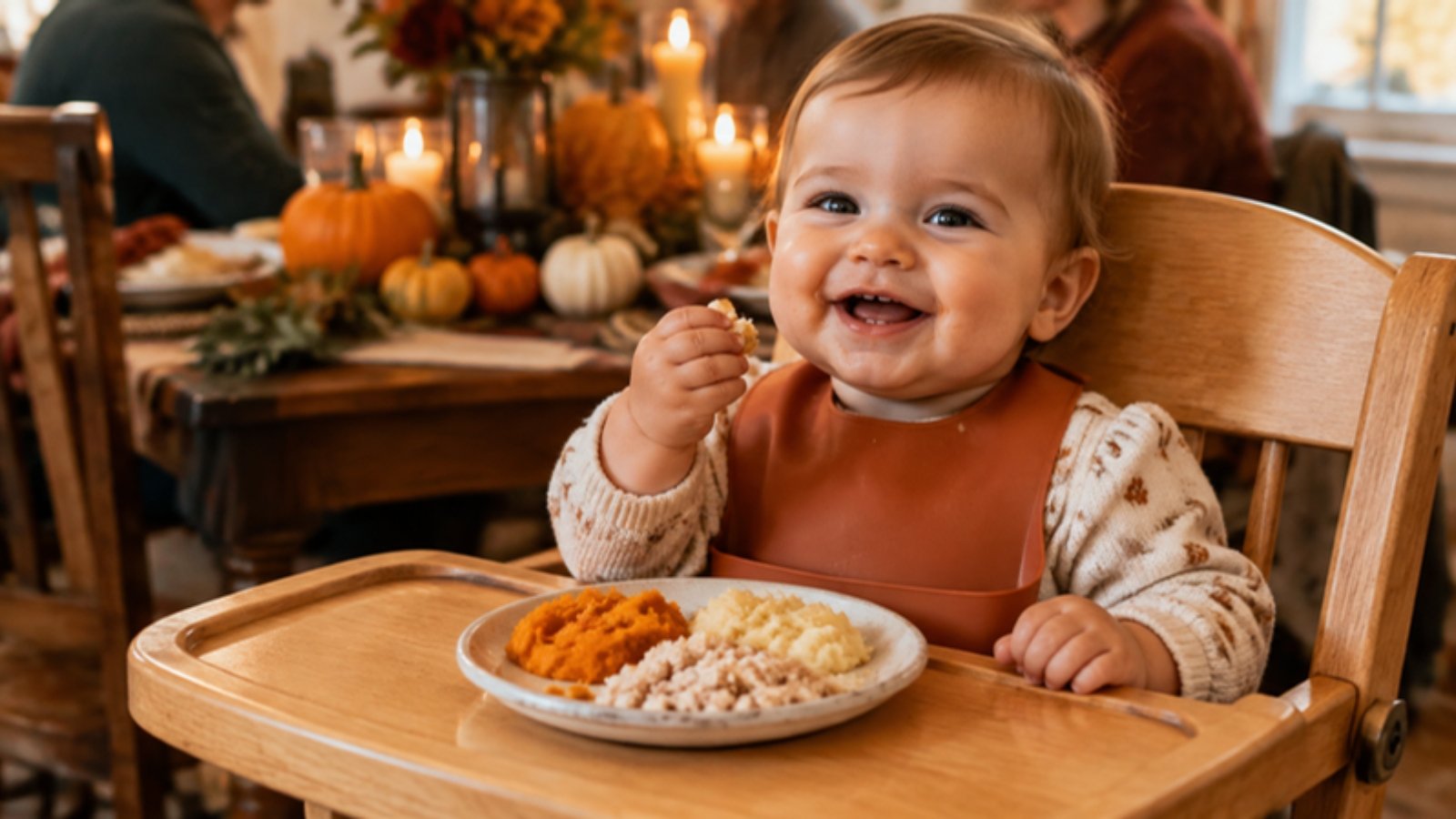
A Sample Thanksgiving Plate by Age
6 to 8 months
- A few spoonfuls of plain mashed sweet potato or squash
- Smooth mashed potato thinned with breast milk or formula
- Pureed or very finely minced turkey
9 to 12 months
- Small, soft pieces of moist dark-meat turkey
- Soft cooked green beans or carrots, cut small
- Mashed potato and mashed pumpkin
- Tiny pieces of plain soft roll
For portion ideas at this age, see our 9 month old feeding schedule and sample menu.
Toddlers (12 to 24 months)
- Turkey cut into small pieces
- A scoop of mashed potatoes and sweet potatoes
- Soft vegetables and a small piece of roll
- Whole milk or water to drink
- Fruit, like soft banana or finely chopped pear, instead of pie
Food Safety: Cooking and Leftovers
A big holiday meal means a lot of food sitting out. The USDA advises:
- Cook turkey to at least 165°F. Check the thickest part of the breast, the innermost part of the wing and the innermost part of the thigh with a food thermometer.
- Cook stuffing separately. If you do stuff the bird, the center of the stuffing must also reach 165°F.
- Refrigerate leftovers within 2 hours. Don’t let your baby graze on food that has sat out all afternoon.
- Use leftovers within 4 days and reheat them to 165°F. Let baby’s portion cool and stir well to check for hot spots before serving.
Tips for a Calm, Safe Holiday Meal
- Keep your baby seated. Children should eat sitting down, not while walking, playing or lying down.
- Stay close and watch. Assign one adult to watch your little one during the meal, and keep an eye on what older kids hand them.
- Bring backups. Pack a few foods you know your baby eats, plus a bib, a spoon and their usual cup.
- Stick to the routine where you can. A well-napped, not-too-hungry baby is a happier eater. Feed breast milk or formula as usual.
- Wash hands. Ask guests to wash their hands before holding your baby, especially during cold and flu season.
- Travelling? If you’re flying to see family, our guide to flying with a baby has holiday travel tips.
When to Call the Doctor
Call 911 right away if your child:
- Is choking and can’t cry, cough, talk or breathe
- Has trouble breathing, wheezing or swelling of the lips, tongue or face after eating
- Turns blue or pale, goes limp or becomes very sleepy after eating
Call your pediatrician if your child:
- Gets hives, a rash or vomits after trying a new food
- Has vomiting or diarrhea with signs of dehydration, such as fewer wet diapers, a dry mouth or no tears
- Has a fever of 100.4°F (38°C) or higher and is younger than 3 months
- Keeps coughing or gagging after a choking scare, even if they seem fine now
Learning infant CPR and choking first aid before the holidays is one of the best gifts you can give your family.
Frequently Asked Questions About Thanksgiving Foods for Babies
Can my baby eat Thanksgiving dinner?
If your baby has started solids, usually around 6 months, yes, with some changes. Offer plain turkey, potatoes, sweet potatoes, squash and soft vegetables set aside before salt, sugar or honey are added. Babies under about 6 months need only breast milk or formula.
Can babies eat turkey?
Yes, once they eat solids. Cook turkey to 165°F, remove the skin and bones, and puree it or chop it very finely for younger babies. Moist dark meat is easier to chew, and small, soft pieces work well for older babies and toddlers.
Can babies eat mashed potatoes and stuffing?
Mashed potatoes are a great choice if you scoop out baby’s portion before adding salt. Stuffing is usually salty and may contain nuts, seeds or dried fruit, so it’s best skipped or kept to a tiny, plain taste for toddlers.
Can my baby have cranberry sauce or pumpkin pie?
It’s best to wait. The CDC says children under 2 should have no added sugars, and cranberry sauce and pie are both sweetened. Offer plain pumpkin puree or mashed sweet potato instead, and skip anything made with honey before age 1.
What Thanksgiving foods are choking hazards for toddlers?
Nuts, popcorn, whole grapes, olives, raw carrots and celery, apple chunks, cheese cubes, chunks of meat, sausages, whole corn kernels, marshmallows and hard or gummy candy. Keep these away from children under 4, cut other foods into pieces no bigger than half an inch, and keep your child seated and watched while eating.
How long are Thanksgiving leftovers safe for my baby?
Refrigerate leftovers within 2 hours of cooking and use them within 4 days, according to the USDA. Reheat to 165°F, then let baby’s portion cool and stir it to check for hot spots. Don’t serve food that sat out all afternoon.
The Bottom Line
Thanksgiving can be your baby’s first taste of a family feast. Set aside plain portions of turkey, potatoes, sweet potatoes, squash and soft vegetables before seasoning, and serve them mashed or in small, soft pieces. Skip honey before age 1, added sugars before age 2 and salty gravy, ham and stuffing. Keep nuts, popcorn, whole grapes, raw veggies and candy out of reach, keep your little one seated and watched while eating, and refrigerate leftovers within 2 hours.
This article is for general information and isn’t a substitute for medical advice. Always contact your pediatrician with questions about your baby’s health.
7 Sources
Newborn Stages uses trusted sources, including government health agencies, children’s hospitals and pediatric organizations, to support the facts in our articles. Read our editorial policy to learn how we research, fact-check and keep our content accurate.
- Centers for Disease Control and Prevention. Choking Hazards.
- Centers for Disease Control and Prevention. Foods and Drinks to Avoid or Limit.
- American Academy of Pediatrics (HealthyChildren.org). Choking Prevention for Babies & Children: What Every Parent Needs to Know.
- American Academy of Pediatrics (HealthyChildren.org). When Can Babies Start Solid Foods? Readiness & Feeding Tips.
- U.S. Department of Health and Human Services and U.S. Department of Agriculture (Dietary Guidelines for Americans). Healthy Eating for Babies & Young Children (Birth to Age 2).
- U.S. Department of Agriculture, Food Safety and Inspection Service. Happy Thanksgiving! Turkey Food Safety.
- Stanford Medicine Children’s Health. Avoiding Choking Hazards During the Holidays.