

Last reviewed: October 29, 2026 · Based on guidance from the American Academy of Pediatrics, the Dietary Guidelines for Americans and the CDC.
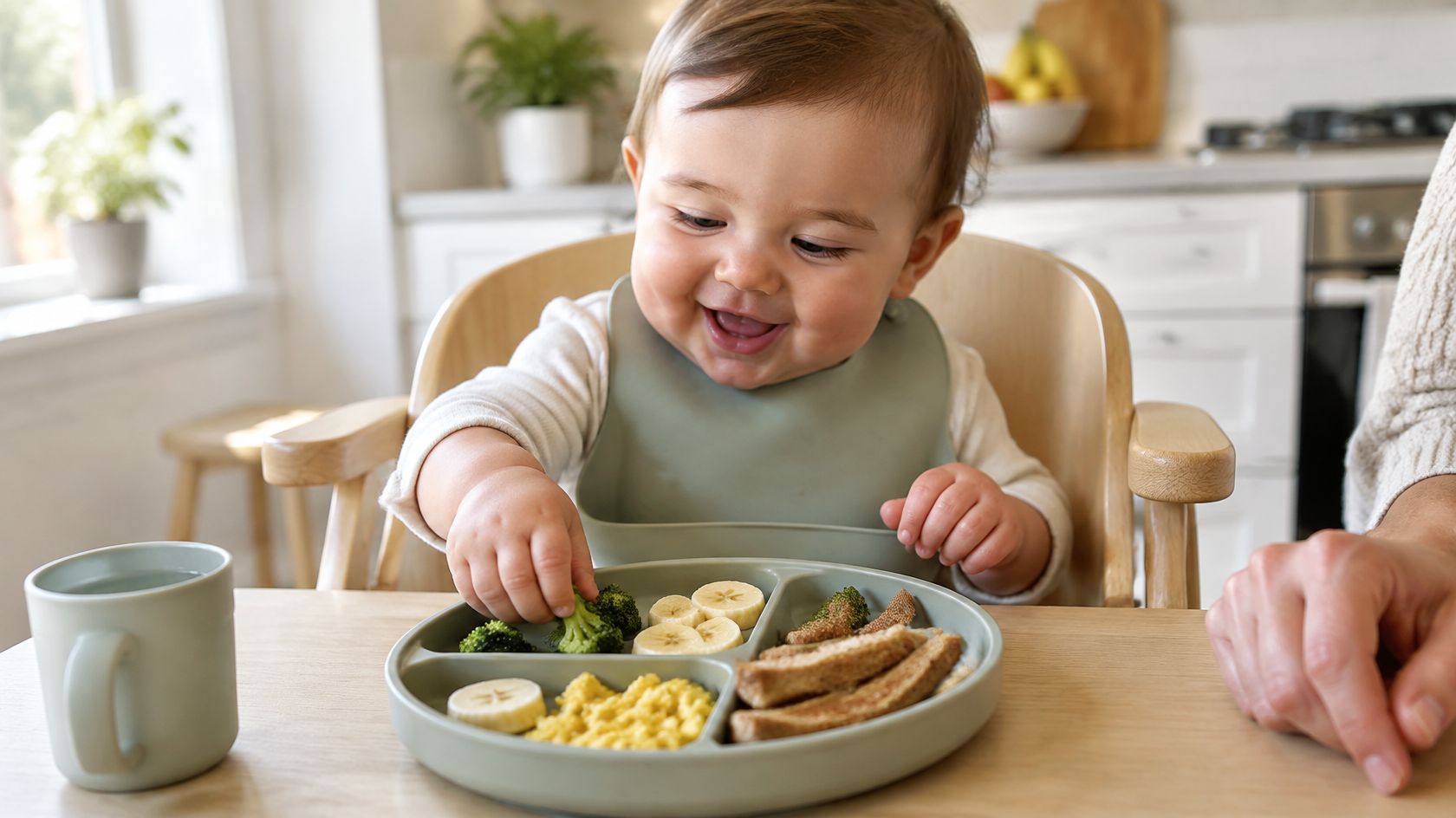
Quick answer: A typical 9 month old eats 3 meals of solid food plus 1–2 snacks a day, and still drinks breast milk or formula about 4–5 times, roughly 24 ounces in total, according to the American Academy of Pediatrics. Most 8 and 9 month olds are ready for soft finger foods they can pick up themselves, like banana, steamed broccoli, scrambled egg, shredded chicken and toast strips. Offer a few sips of water from an open cup with meals, skip honey and cow’s milk as a drink until 12 months, and cut foods to avoid choking hazards.
Somewhere around 8 to 9 months, mealtimes change fast. Purees give way to lumpier textures, your baby starts grabbing food off the plate, and you may wonder how much they should actually be eating and how to fit it all around naps. This guide gives you a sample 9 month old feeding schedule, how much breast milk or formula they still need, the best finger foods, what to avoid, and simple meal ideas.
How Much Should a 9 Month Old Eat?
Babies aged 8 to 12 months need about 750 to 900 calories a day, and about 400 to 500 of those still come from breast milk or formula, which works out to about 24 ounces (720 mL) of milk a day, according to the AAP’s HealthyChildren.org. In other words, milk is still a big part of your baby’s nutrition at this age; solid food is growing, not replacing it.
For solids, the AAP’s sample menu offers roughly 2 to 4 ounces (about ¼ to ½ cup) of each food at meals, for example a protein, a vegetable, a fruit and a grain. Don’t worry about measuring exactly. Every baby is different, appetites go up and down from day to day, and your baby’s hunger and fullness cues are the best guide.
- Hungry signs: reaching for food, opening their mouth, getting excited when they see food, fussing when you stop.
- Full signs: turning their head away, closing their mouth, pushing food away, playing with or throwing food instead of eating.
If you’re breastfeeding, you can’t measure ounces, and that’s fine: watch for steady weight gain, plenty of wet diapers and a contented baby. If your baby is only just starting solids, our guide to how much a 6 month old should eat covers the earlier stage.
Sample 9 Month Old Feeding Schedule
Here’s what a day might look like for an 8 or 9 month old on two naps. It’s an example, not a rule, so shift the times to fit your baby.
| Time | Feeding |
|---|---|
| 7:00 a.m. | Wake up: breast milk or formula |
| 8:00 a.m. | Breakfast: e.g. scrambled egg or iron-fortified oatmeal, mashed or diced fruit, sips of water |
| 9:30 – 11:00 a.m. | Nap |
| 11:00 a.m. | Breast milk or formula |
| 12:00 p.m. | Lunch: e.g. yogurt or beans, soft orange vegetables, toast strips |
| 2:00 – 3:30 p.m. | Nap |
| 3:30 p.m. | Breast milk or formula, plus a small snack (soft fruit or a teething cracker) |
| 5:30 p.m. | Dinner: e.g. shredded chicken or tofu, green vegetables, soft pasta, fruit |
| 6:30 p.m. | Bedtime routine and breast milk or formula |
| 7:00 p.m. | Bedtime |
If you give milk right before bed, the AAP suggests following it with a little water or brushing your baby’s teeth afterward. For the sleep side of the day, see our sample 8 month old sleep schedule.
8 Month Old Feeding Schedule vs 9 Month Old
They’re very similar. At 8 months, many babies are still getting used to thicker, lumpier textures and may eat 2 to 3 meals a day with smaller portions. By 9 months, most are on 3 meals plus a snack or two and are feeding themselves more. By 10 to 12 months, meals start to look more like toddler meals, and milk feeds gradually drop as solid food increases.
What Can a 9 Month Old Eat?
By 9 months, your baby can eat most of the same healthy foods as the rest of the family, just soft, mashed or cut small, and without added salt or sugar. Aim for variety across the week:
- Iron-rich foods (every day): meat, poultry, beans and lentils, eggs, and iron-fortified infant cereal. The US Dietary Guidelines highlight iron and zinc as especially important for growth and brain development at this age.
- Vegetables: broccoli, carrots, sweet potato, peas, green beans, zucchini, all cooked soft.
- Fruit: banana, avocado, ripe pear, mango, peach, and berries cut small.
- Grains: oatmeal, soft pasta, rice, toast strips.
- Dairy: plain whole-milk yogurt, cottage cheese, and small soft pieces of cheese. Cow’s milk is fine in cooking, but not as a drink until 12 months.
Common Allergens: Don’t Wait
Current US Dietary Guidelines say foods like egg, peanut, wheat, fish and shellfish don’t need to be delayed, and introducing peanut-containing foods before 12 months lowers the risk of peanut allergy. Offer peanut butter thinned with water or stirred into oatmeal or yogurt, never as a thick spoonful, which is a choking risk. If your baby has severe eczema or an egg allergy, talk to your pediatrician first, as they may want to plan how to introduce peanut.
Best Finger Foods for a 9 Month Old
Around 9 months, many babies develop the pincer grasp, picking things up between thumb and finger, which makes small, soft pieces easier to manage. Good finger foods should squash easily between your thumb and finger:
- Banana slices or spears
- Soft avocado strips
- Steamed broccoli or cauliflower florets
- Steamed carrot or sweet potato sticks (cooked very soft)
- Scrambled egg or strips of omelet
- Shredded chicken or soft meatballs
- Flaked, boneless salmon or white fish
- Soft tofu cubes
- Toast strips with a thin spread of avocado or thinned nut butter
- Soft-cooked pasta shapes
- Blueberries squashed flat, or raspberries torn in half
- Small pieces of soft cheese (not chunks or string cheese)
If you’re following baby-led weaning, our list of the best first foods for baby-led weaning has more ideas.
Easy 9 Month Old Meal Ideas
- Breakfast: scrambled egg with soft toast strips and mashed berries; oatmeal with thinned peanut butter and banana.
- Lunch: plain yogurt with soft pear; mashed beans with sweet potato and avocado.
- Dinner: shredded chicken with soft pasta and broccoli; flaked salmon with mashed potato and peas (squashed).
- Snacks: soft fruit, a teething cracker, or small pieces of cheese.
Foods and Drinks to Avoid Before 12 Months
- Honey, in any form, including baked goods, because of the risk of infant botulism.
- Cow’s milk as a drink and juice. Wait until 12 months.
- Added sugar and salty foods, like sweets, sugary drinks, chips and processed meats.
- Choking hazards (see below).
Choking Hazards: How to Serve Food Safely
Foods that are round, hard, sticky or chunky are the biggest risk. For babies 6 to 12 months, the USDA’s WIC program lists these as choking hazards, as shared by the CDC:
- Whole grapes, cherries, berries, cherry tomatoes and melon balls (cut them small)
- Hard raw fruit and vegetables, and whole corn kernels
- Whole or chopped nuts, and thick nut butter
- Hot dogs, sausages, meat sticks and tough chunks of meat
- Large chunks of cheese, especially string cheese
- Raisins and other dried fruit
- Popcorn, chips, pretzels, cookies and granola bars
- Hard candy, gummies and marshmallows
Always feed your baby sitting upright in a high chair, never in a car seat, stroller or while crawling around, and stay with them for the whole meal. Gagging is common and normal as babies learn to handle textures: it’s noisy, and your baby usually works the food forward on their own. Choking is silent. It’s worth taking an infant first aid or CPR class so you know what to do.
Water and Cups
Once your baby is eating solids, small amounts of water are fine, up to 4 to 8 ounces a day, according to the Dietary Guidelines for Americans. Offer a few sips with meals from an open cup or a straw cup. It’s great practice for when bottles go at around 12 months. Too much water can fill a small tummy and leave less room for milk and food.
When to Talk to Your Pediatrician
- Your baby isn’t gaining weight, or you’re worried they’re eating too little
- They gag or vomit a lot with lumpier textures, or still refuse anything but smooth purees
- They have hives, swelling, vomiting or wheezing after a new food (call 911 for trouble breathing or swelling of the face or lips)
- They have fewer wet diapers, hard stools or big changes in their poop (see our baby poop color guide)
For everything else your baby is learning this month, see our guide to 9 month milestones.
Frequently Asked Questions About Feeding a 9 Month Old
How many times a day should a 9 month old eat?
Most 9 month olds eat 3 meals of solid food and 1–2 snacks a day, plus about 4–5 breast milk or formula feeds.
How much formula or breast milk does a 9 month old need?
About 24 ounces (720 mL) a day, according to the AAP. Milk still provides roughly half of your baby’s calories at this age.
What finger foods can a 9 month old eat?
Soft foods that squash easily, such as banana, avocado, steamed broccoli, scrambled egg, shredded chicken, flaked fish, soft pasta and toast strips.
Can a 9 month old drink water?
Yes, in small amounts. Up to 4 to 8 ounces a day is fine once your baby eats solids, ideally from an open or straw cup with meals.
What foods should a 9 month old not eat?
Honey, cow’s milk as a drink, juice, added sugar and salt, and choking hazards like whole grapes, nuts, hot dogs, popcorn and chunks of cheese.
Can a 9 month old eat eggs and peanut butter?
Yes. Egg and peanut don’t need to be delayed, and early peanut lowers allergy risk. Serve peanut butter thinned, never as a thick spoonful.
The Bottom Line
A 9 month old typically eats 3 small meals and 1–2 snacks a day, while still drinking about 24 ounces of breast milk or formula. Offer a variety of soft finger foods, with something iron-rich every day, introduce common allergens like egg and peanut, and give a few sips of water from a cup. Skip honey, cow’s milk as a drink, added sugar and salt, cut foods to avoid choking, and let your baby’s hunger and fullness cues guide how much they eat.
This article is for general information and isn’t a substitute for medical advice. Always contact your pediatrician with questions about your baby’s feeding, growth or allergies.