

Last reviewed: October 28, 2026 · Based on guidance from the American Academy of Pediatrics and the American Academy of Sleep Medicine.
Quick answer: The 8 month sleep regression is a stretch of a few weeks, usually somewhere between 8 and 10 months, when a baby who was sleeping fairly well starts waking at night again, fighting bedtime or skipping naps. It isn’t a medical condition. It’s caused by big developmental leaps happening at once: crawling, pulling up to stand, separation anxiety and often teething. It usually passes within 2 to 6 weeks. What helps most is a consistent bedtime routine, putting your baby down drowsy but awake, two good naps, extra practice of new skills during the day, and calm, brief reassurance at night.
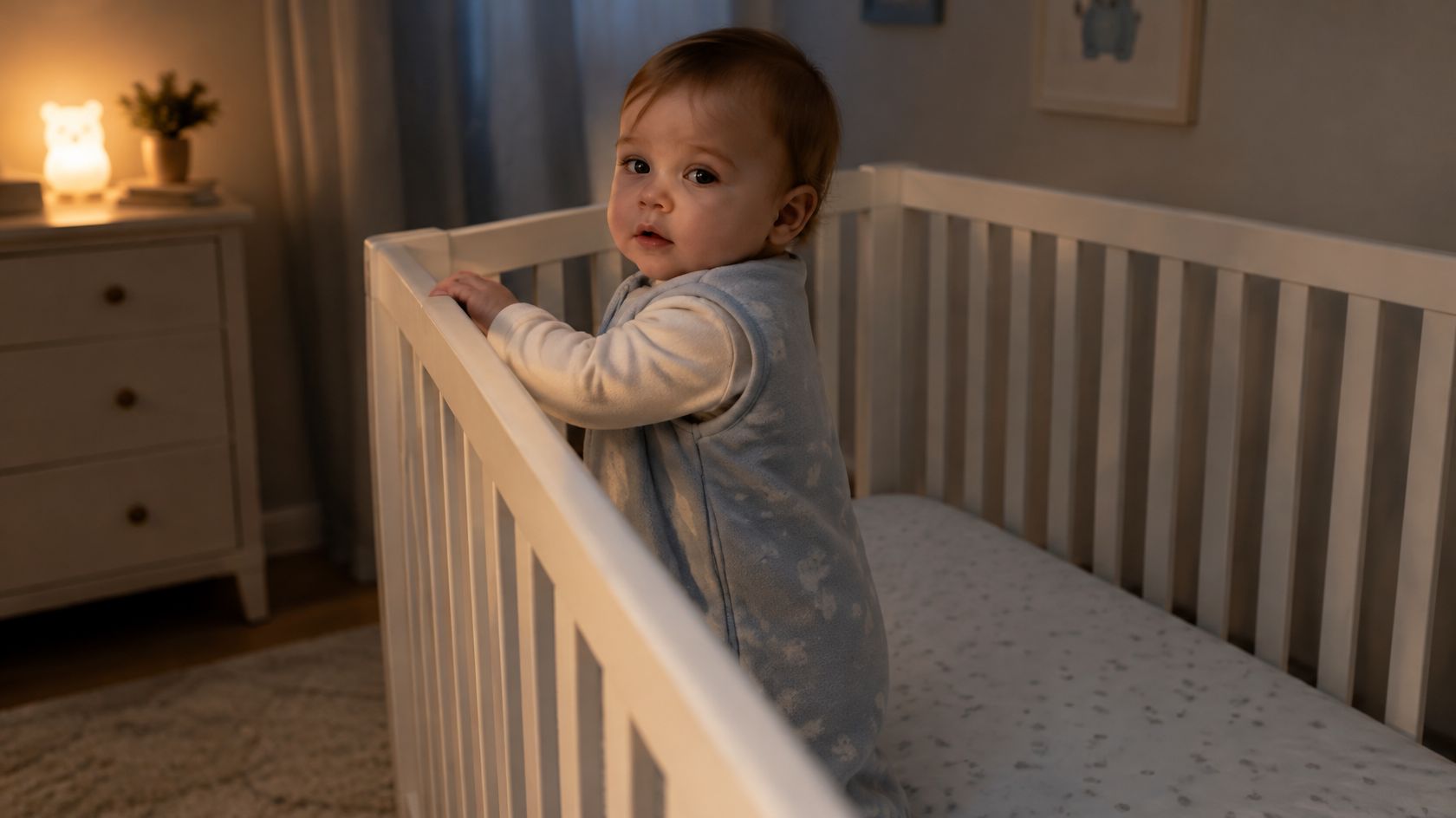
If your baby suddenly stands up in the crib and won’t lie back down, cries the moment you leave the room, or wakes at 2 a.m. after weeks of sleeping well, you’re not doing anything wrong. Sleep often takes a step back during this age. Some parents notice it closer to 9 or 10 months, which is why you’ll also hear it called the 9 month or 10 month sleep regression. They’re generally the same phase.
This guide covers the signs, why it happens, how long it lasts, a sample 8 month old sleep schedule, and what actually helps your baby (and you) get through it.
Is There Really an 8 Month Sleep Regression?
“Sleep regression” isn’t a medical diagnosis, and not every baby goes through one. But many parents notice a clear dip in sleep around 8 to 10 months, and pediatric sleep experts recognize it as a common, temporary bump in the road, according to the Sleep Foundation (reviewed by a board-certified pediatrician). It often lines up with major motor and emotional milestones, which is why it tends to appear around the same age.
Your baby may already have gone through earlier ones, like the 4 month sleep regression or the 6 month sleep regression. The 8 month one feels different because it’s driven less by changes in sleep cycles and more by everything your baby is learning.
8 Month Sleep Regression Signs
Signs that your baby is in a sleep regression rather than just having a bad night or two:
- Waking more often at night after sleeping longer stretches
- Taking longer to fall asleep, or crying and fussing at bedtime
- Standing, sitting or crawling around the crib instead of sleeping
- Crying as soon as you leave the room, or wanting only one parent
- Short or skipped naps, or fighting one of the two naps
- Being more clingy and cranky during the day
The key pattern is a sudden change in a baby who was sleeping reasonably well, lasting more than a few nights.
What Causes the 8 Month Sleep Regression?
Several developmental changes tend to pile up around 8 to 10 months:
New Motor Skills
Crawling, sitting up and pulling to stand are huge milestones. Babies want to practice them constantly, including in the crib at 3 a.m. Many babies learn to pull up before they learn how to get back down, so they stand at the rail and cry until someone helps them lie down.
Wondering if your baby is on track with moving around? Here’s when babies start crawling and what’s normal.
Separation Anxiety
Around this age, babies understand that you still exist when you leave the room, but they don’t yet understand that you’ll come back. The American Academy of Pediatrics explains that separation anxiety usually starts in the second half of the first year, often causes many nights of disrupted sleep, and is a normal part of emotional development, according to HealthyChildren.org. It can last several months and often eases around the second birthday.
Teething
Many babies are cutting teeth around this age. Sore gums can make it harder to settle. If you’re not sure whether it’s teeth, look for drooling, chewing on everything and swollen gums. Our guide on drooling and teething signs can help.
Changing Nap Needs and a Busy Brain
Babies this age are more aware of everything around them, so they’re more easily overstimulated and overtired. Many are also settling into a two-nap day, and a schedule that worked at 6 months may no longer fit.
How Long Does the 8 Month Sleep Regression Last?
Most parents find it lasts about 2 to 6 weeks, though there’s no research that sets an exact timeline. It usually fades as your baby masters the new skill (for example, learning to sit back down from standing). Separation anxiety can make bedtime tricky for longer, on and off, but the worst night waking typically settles within a few weeks.
Sleep regressions can also start a little early, at 7 months, or late, at 10 months. That’s normal: babies hit milestones on their own timeline.
How Much Sleep Does an 8 Month Old Need?
Babies aged 4 to 12 months need 12 to 16 hours of sleep in 24 hours, including naps, according to sleep guidelines from the American Academy of Sleep Medicine that are endorsed by the American Academy of Pediatrics (Healio). Most 8 and 9 month olds get this as about 10 to 12 hours at night plus two daytime naps.
Sample 8 Month Old Sleep Schedule
This is an example of a common two-nap day, not a rule. Shift it earlier or later to fit your baby and your family, and watch your baby’s sleepy cues (rubbing eyes, fussiness, staring off).
| Time | Activity |
|---|---|
| 7:00 a.m. | Wake up, milk feed |
| 8:00 a.m. | Breakfast (solids) |
| 9:30 – 11:00 a.m. | Nap 1 |
| 11:00 a.m. | Milk feed, then lunch (solids) |
| 2:00 – 3:30 p.m. | Nap 2 |
| 3:30 p.m. | Milk feed and snack |
| 5:30 p.m. | Dinner (solids) |
| 6:30 p.m. | Bedtime routine: bath, pajamas, milk feed, book |
| 7:00 – 7:30 p.m. | Bedtime |
This adds up to roughly 3 hours of naps and 11.5 to 12 hours at night. A 9 month old sleep schedule looks very similar; some babies simply stretch the time awake between naps a little. US clocks go back on November 1, 2026, so if your schedule shifts, see our tips on handling daylight saving time with a baby.
How to Handle the 8 Month Sleep Regression
- Keep the same bedtime routine every night. A short, predictable routine (bath, pajamas, feed, book, song, bed) tells your baby sleep is coming, even when everything else feels new.
- Put your baby down drowsy but awake. The AAP advises putting babies to bed drowsy rather than fully asleep, so they learn to fall asleep on their own and can resettle when they wake at night, according to HealthyChildren.org. If your baby has come to rely on being held, our guide on why babies only sleep when held has gentle steps.
- Practice new skills during the day. Give plenty of floor time to crawl, pull up and cruise. Practice getting from standing back down to sitting by gently bending their knees. The more they practice by day, the less they need to practice at night.
- Don’t rush in, but do reassure. Babies often stir and resettle on their own within a few minutes. If your baby is upset, go in calmly, lay them back down if they’re standing, offer a few words or a pat, and leave. Keep lights low and the visit short.
- Play separation games. Peekaboo, short “I’ll be right back” trips out of the room, and a consistent goodbye routine help your baby learn that you always return.
- Protect both naps. An overtired baby sleeps worse at night. Try to keep naps at roughly the same times, even if they’re shorter for a while.
- Don’t add new habits you’ll want to break later. It’s fine to comfort your baby more during a rough patch, but try not to start feeding or rocking to sleep at every waking if you weren’t doing it before. If you’re unsure whether your baby still needs a night feed, ask your pediatrician. Our guide to dropping the dream feed explains one gradual approach.
- Keep the room dark, cool and comfortable. Use blackout curtains and a white noise machine if they help, and dress your baby for the room temperature. Here’s how to dress a baby for sleep in winter.
Can You Sleep Train During the 8 Month Sleep Regression?
You can, but many parents find it easier to wait until the regression settles, because separation anxiety and new skills make progress harder to judge. If you do start, choose one method and stay consistent for at least a week or two. Whatever you choose, keep responding to real needs like hunger, a dirty diaper or illness.
Safe Sleep Reminders for Babies Who Stand
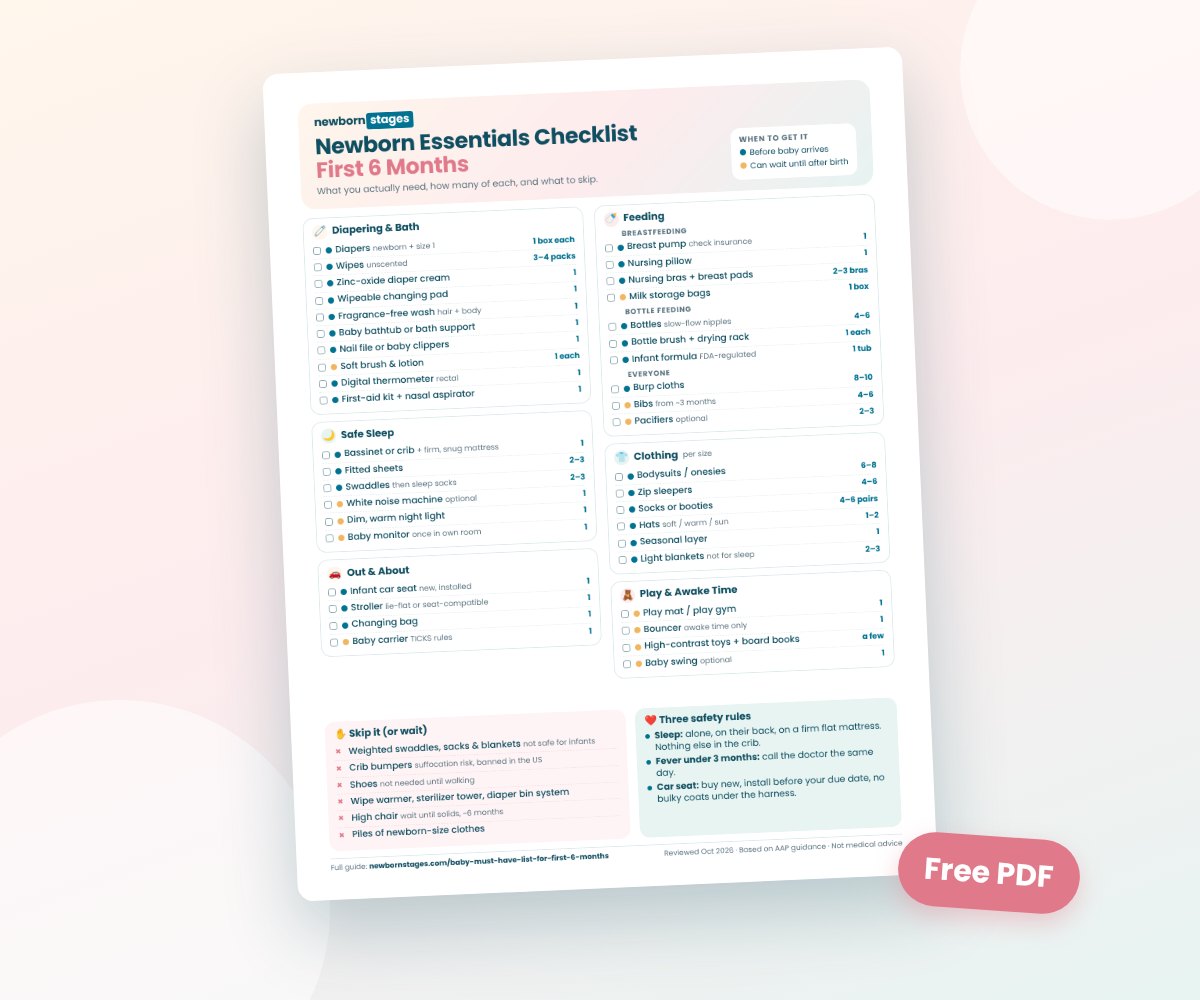
- Lower the crib mattress to its lowest setting once your baby can pull up to stand, often around 9 months, so they can’t tip over the rail, advises Cleveland Clinic.
- Keep the crib bare: a firm mattress and fitted sheet only. No pillows, blankets, bumpers or stuffed animals, which can also become a step to climb out.
- Keep placing your baby on their back for every sleep until age 1. If they roll or stand on their own, you don’t need to keep turning them back.
- If your baby uses a sleep sack, make sure it fits well and allows their legs to move freely.
Sleep Regression or Something Else?
Most night waking at this age is normal. Talk to your pediatrician if:
- Sleep problems go on for more than six weeks or keep getting worse
- Your baby snores loudly, gasps, or seems to struggle to breathe in their sleep
- Your baby has a fever, pulls at their ears, or seems to be in pain
- Your baby is feeding less, has fewer wet diapers, or isn’t gaining weight
- Your baby has lost a skill they had before
Looking ahead, many toddlers have another wobble around their first birthday. Here’s what to expect from the 12 month sleep regression.
Frequently Asked Questions About the 8 Month Sleep Regression
Is there an 8 month sleep regression?
Yes, many babies have a temporary dip in sleep around 8 to 10 months. It isn’t a medical diagnosis, and not every baby has one, but it’s very common.
How long does the 8 month sleep regression last?
Usually about 2 to 6 weeks. It tends to fade as your baby masters new skills like crawling and standing.
Is the 9 month sleep regression the same as the 8 month one?
Generally, yes. It’s the same developmental phase; it just starts a little later for some babies, at 9 or even 10 months.
Can the 8 month sleep regression start early?
Yes. Some babies show signs at 7 months, because it follows milestones like crawling and separation anxiety, which every baby reaches at their own pace.
How many naps should an 8 month old take?
Most 8 month olds take two naps a day, often about 3 hours in total, plus 10 to 12 hours at night, for 12 to 16 hours of sleep in 24 hours.
Is it teething or a sleep regression?
It can be both. Teething usually comes with drooling, chewing and sore, swollen gums, and lasts a few days per tooth. A regression lasts weeks and often follows a new skill.
The Bottom Line
The 8 month sleep regression (also called the 9 or 10 month sleep regression) is a normal, temporary phase caused by crawling, standing, separation anxiety and teething all arriving at once. It usually passes within a few weeks. Keep your routine consistent, protect two naps, let your baby practice new skills during the day, and offer calm, brief reassurance at night. Lower the crib mattress once your baby can stand, and talk to your pediatrician if sleep keeps getting worse or your baby seems unwell.
This article is for general information and isn’t a substitute for medical advice. Always contact your pediatrician with questions about your baby’s health and sleep.