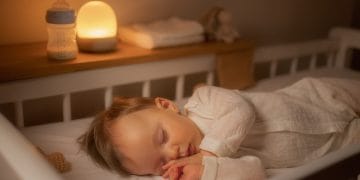











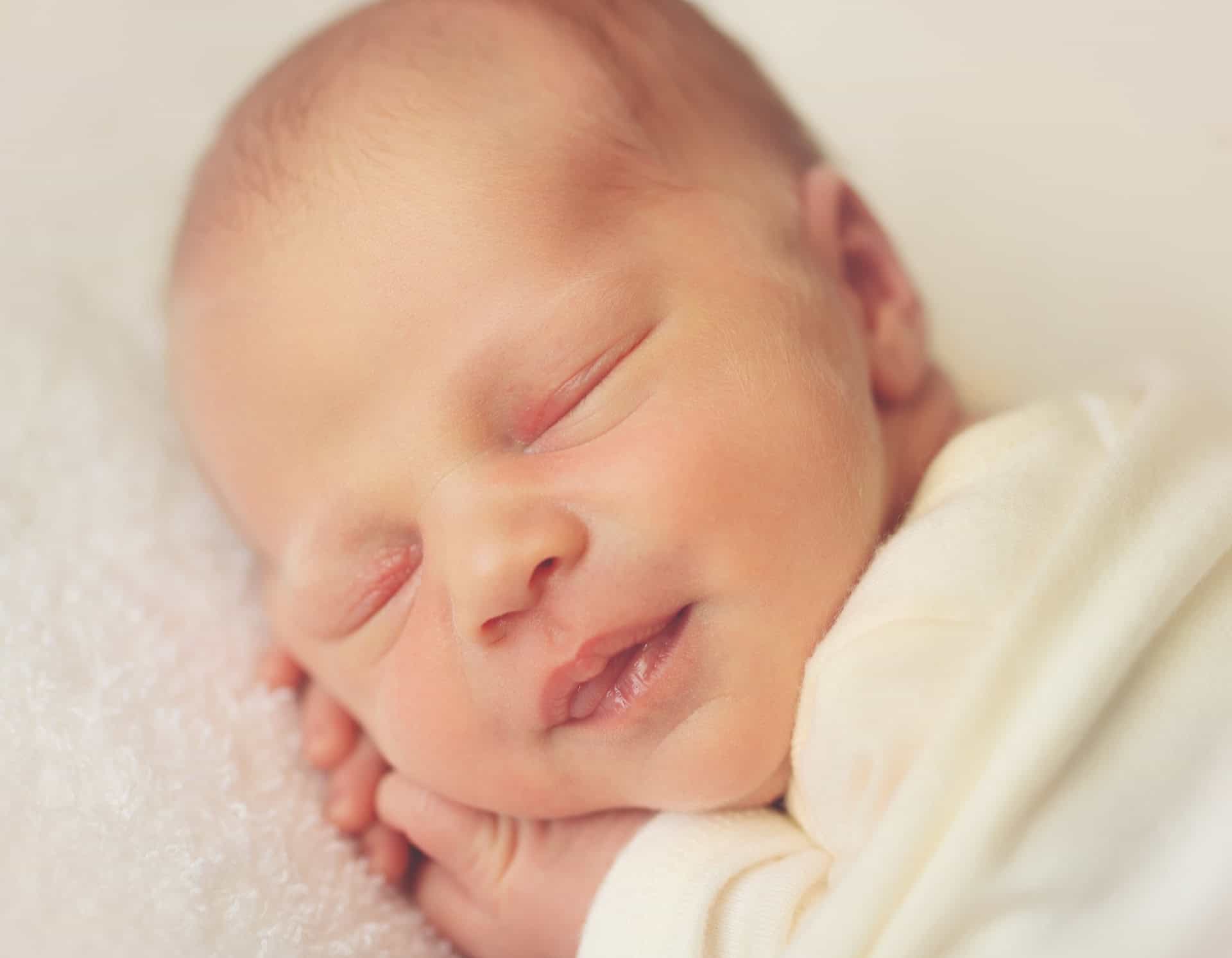
Few things are more enchanting than catching a sleeping newborn break into a wide, beaming smile for no apparent reason.
Some parents see it dozens of times in the early weeks – small grins, the occasional full smile, sometimes even tiny laughs.
It is the kind of moment that prompts an immediate question: what are they smiling about?
Sleep smiles in newborns have a specific neurological explanation, and the answer is more interesting than the common ‘just gas’ assumption.
Here is what the research actually shows about what your baby is doing during those mysterious sleep smiles.
Sleep Smiles Are Real – and Very Common
Sleep smiles appear from birth and are especially common in the first 2 months of life.
Most newborns will smile in their sleep multiple times a day, often during specific phases of the sleep cycle.
They can range from tiny lip twitches to full open-mouth grins, and occasionally even soft chuckles or sighs that sound like laughter.
These early smiles look just like social smiles – but they are functionally different.
Understanding the difference clears up most of the confusion around what is actually happening.
Reflex Smiles vs Social Smiles
Newborn smiles fall into two categories, and the same baby produces both kinds at different stages.
Reflex Smiles
Reflex smiles are involuntary muscle movements that originate in the brainstem – the most primitive part of the developing brain.
They do not involve any emotional content or social awareness.
A reflex smile can appear in response to internal stimuli (sensations the baby is processing), random neural activity, or no apparent trigger at all.
These are the smiles parents see in the first 6 to 8 weeks of life, and they appear most often during sleep.
They are not the baby reacting to a dream, to feeling happy, or to recognizing anyone – they are essentially a wired-in motor pattern firing.
Social Smiles
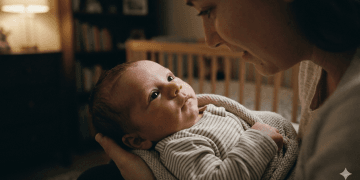
Social smiles typically emerge between 6 and 12 weeks. These are smiles directed at a person in response to social cues – your face, your voice, eye contact.
Unlike reflex smiles, social smiles require the cortex of the brain and reflect genuine emotional engagement.
Once social smiling begins, sleep smiles continue but become less frequent as more smiling happens in awake, interactive moments.
According to the American Academy of Pediatrics, the transition from reflex to social smile is one of the earliest and most reliable indicators that the brain’s social processing systems are coming online.
For more on what to expect during this developmental window, see our 1 to 2 month baby milestones guide.
Why Sleep Smiles Happen During REM Sleep
Newborns spend roughly half of their total sleep in what is called active sleep – equivalent to adult REM sleep but far more pronounced.
By comparison, adults spend only about 20 to 25 percent of their sleep in REM.
The high proportion of active sleep in babies is thought to be critical for brain development, as REM is when much of the brain’s wiring and consolidation work happens.
Active sleep in newborns is anything but quiet. Babies twitch, sigh, grunt, make small sounds, briefly open their eyes, move their limbs – and yes, smile.
All of this is happening as the brain processes sensory input, lays down neural connections, and discharges accumulated activity from the waking hours.
Sleep smiles tend to cluster during these active sleep phases.
The brain is firing, and one of the patterns it fires is the motor program for smiling.
Do Babies Dream When They Smile?
This is the question parents most want answered, and the honest answer is: probably not in any way an adult would recognize.
Dreaming, as adults experience it, requires a level of cortical organization and stored memory content that newborns simply do not yet have.
A newborn has no story memories, no language, no concept of self, and no symbolic thinking. The raw materials of an adult dream are not yet in place.
What may be happening during newborn REM sleep is closer to sensory replay – the brain rehearsing patterns of light, touch, sound, and movement that it encountered during waking hours.
This is enormously important for development, but it is not the same as the narrative dreams adults experience.
The smile may be part of motor learning that happens alongside this sensory replay, not a reaction to a dream.
As babies get older – typically by 12 to 18 months – sleep activity becomes more clearly dream-like, with evidence of more organized REM behavior.
What About Sleep Laughter?
Many parents are startled the first time they hear their sleeping baby laugh.
Sleep laughter is a real phenomenon and follows the same explanation as sleep smiles – it is part of the motor program firing during active sleep.
Around the same time social smiling becomes reliable (8 to 12 weeks), sleep laughter often appears too, and continues to surface occasionally throughout the first year.
Frequent, very loud, or sustained sleep laughter that seems unusual is occasionally mentioned in medical literature as potentially associated with neurological conditions, but in almost every case it is simply a normal part of newborn sleep.
Is It Gas? The Common Misconception
Generations of parents have been told that newborn smiles are just gas.
While newborns do produce a lot of gas and can pass it during sleep, gas does not cause the muscles of the mouth and face to form a smile. The two things are unrelated.
The reflex smile explanation is well-supported in developmental neuroscience research and has essentially replaced the gas folklore in pediatric literature.
Your baby’s sleep smile is not gas – it is their developing brain testing out one of its earliest motor programs.
When Does the Real Smile Arrive?
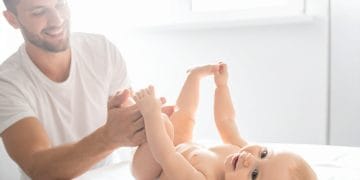
The first true social smile – one that is clearly directed at you in response to your face, voice, or interaction – typically emerges between 6 and 12 weeks.
The signs that you are seeing a social smile rather than a reflex include:
- It happens while the baby is awake and alert, not asleep or drifting off
- It is directed at a person rather than appearing randomly
- It is reliably triggered by social cues – your face appearing, your voice, eye contact
- The whole face engages, including the eyes (the duchenne smile pattern)
If your baby has not produced a clear social smile by 3 months of age, mention it to your pediatrician.
The CDC’s developmental milestones include social smiling as a key 2-month checkpoint.
Are Some Babies More Smiley in Their Sleep Than Others?
Yes – there is significant individual variation. Some newborns smile in their sleep many times a day, while others rarely do.
The frequency does not correlate with temperament, intelligence, or how social the baby will be later in life.
It simply reflects how active that particular baby’s REM sleep is, and how often the motor pattern fires.
If your baby almost never smiles in their sleep, this is not a sign of any problem. Some babies do most of their REM motor activity in twitches, sighs, or eye movements rather than smiles.
What matters developmentally is the social smile, which arrives on its own timeline regardless of how much sleep smiling preceded it.
Capturing the Moment
Sleep smiles are fleeting – they typically last less than a second and tend to disappear the moment you reach for a camera.
They tend to happen most often during light sleep transitions, particularly in the 15 to 30 minutes after falling asleep and during the lighter sleep stretches toward early morning.
For more on understanding your baby’s sleep cycles, browse our baby sleep section.
Frequently Asked Questions
Can newborns laugh in their sleep?
Yes. Sleep laughter is real and follows the same reflex mechanism as sleep smiles. It tends to appear around the same time social smiling emerges and is completely normal.
Do premature babies smile in their sleep too?
Yes. Premature babies show sleep smiling from a very early age, often before their original due date. The reflex develops in utero, and many sleep smiles occur before any social ones.
My baby is 4 months old and still smiles in sleep more than awake. Is that normal?
Generally yes. Some babies remain prolific sleep smilers well into the first year. If awake social engagement is also developing well, this is just individual variation.
The Bottom Line
Sleep smiles are one of the small wonders of the newborn period – reflex motor patterns firing during active sleep as your baby’s brain does its developmental work.
The first true social smile, when it arrives, is the real milestone, and it is one of the most rewarding moments of early parenthood. For more on early development, browse our baby development section.
Sources:
American Academy of Pediatrics — Emotional and Social Development