

Last reviewed: October 22, 2026 · Based on safe-sleep guidance from The Lullaby Trust, the American Academy of Pediatrics and the US Consumer Product Safety Commission.
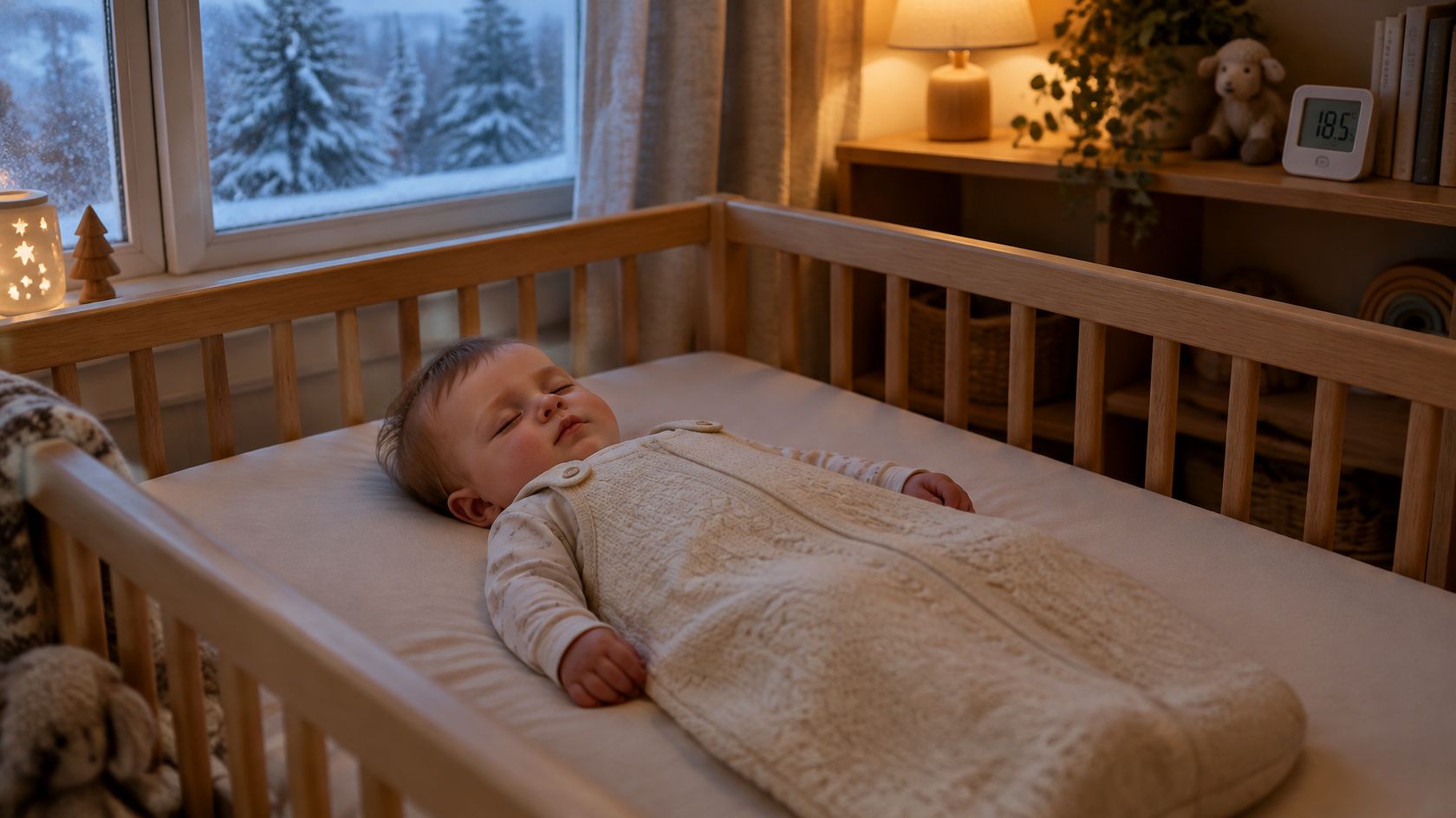
Quick answer: Dress your baby for sleep in one more layer than you would be comfortable sleeping in in the same room. For most winter nurseries at 61–68°F (16–20°C), that means long-sleeve cotton pajamas plus a 2.5 TOG sleep sack, with no loose blankets, no hat, and nothing else in the crib. Check your baby’s temperature by feeling their chest or the back of their neck, not their hands or feet. If they’re sweaty or hot, take a layer off. Overheating is more dangerous than being slightly cool.
When the temperature drops, the instinct is to bundle your baby up. But babies can’t regulate their body temperature as well as adults, and getting too hot during sleep is linked to a higher risk of sudden infant death syndrome (SIDS), according to the UK’s safer-sleep charity, The Lullaby Trust. The goal for winter nights is simple: warm enough to sleep well, never so warm that your baby overheats. This guide shows you exactly what to put your baby in at every room temperature, how to read TOG ratings, and which “cozy” winter products to avoid.
The Golden Rule: One More Layer Than You
Safe-sleep guidance used by pediatricians is to dress your baby in no more than one layer more than an adult would wear to be comfortable in the same room. If you’re comfortable in pajamas and a light duvet, your baby needs pajamas plus a sleep sack. If you’re cozy in a t-shirt, your baby needs a bodysuit plus a light sleep sack.
It helps to think of the sleep sack as your baby’s duvet. Babies shouldn’t have loose blankets in the crib, so the sleep sack replaces the blanket you’d use yourself.
What Should Baby Wear to Sleep? Room Temperature Chart
Use a room thermometer rather than guessing. The Lullaby Trust recommends keeping a baby’s room between 16–20°C (61–68°F), and keeping any overnight heating low. This chart is a general guide used by sleep-sack makers; always check the label on your own sleep sack, because fabrics vary.
Room temperature | What to wear | Sleep sack |
Below 61°F (under 16°C) | Long-sleeve footed pajamas, plus a long-sleeve bodysuit underneath if needed | 2.5–3.5 TOG. Consider gently warming the room instead |
61–68°F (16–20°C), ideal | Long-sleeve cotton pajamas or a footed sleepsuit | 2.5 TOG |
69–73°F (21–23°C) | Short-sleeve or long-sleeve bodysuit | 1.0 TOG |
74–77°F (24–25°C) | Short-sleeve bodysuit | 0.5 TOG or none |
Above 77°F (over 25°C) | Diaper and a light short-sleeve bodysuit | No sleep sack |
Most homes in winter fall into the second row. If your heating is off overnight and the nursery drops below 61°F, it’s usually better to warm the room a little than to keep adding layers.
What Does TOG Mean on a Sleep Sack?
TOG (thermal overall grade) is a measure of how warm a fabric is. The higher the number, the warmer the sleep sack. You’ll typically see:
- 0.5 TOG – thin cotton, for warm rooms and summer
- 1.0 TOG – light, for mild rooms and spring or autumn
- 2.5 TOG – the standard winter weight for most nurseries
- 3.5 TOG – extra warm, only for genuinely cold rooms
TOG only measures the sack itself. What your baby wears underneath also adds warmth, which is why the chart pairs each TOG with specific clothing. Our guide to baby wardrobe essentials for the first winter covers which sleepwear is worth buying.
How to Tell if Your Baby Is Too Hot or Too Cold at Night
Don’t judge by your baby’s hands or feet. They’re usually cooler than the rest of the body, and that’s normal. Instead, slip your hand onto your baby’s chest or the back of their neck.
Signs your baby is too hot:
- Sweating or damp hair
- Flushed, red cheeks or a heat rash
- Faster breathing than usual
- A chest or neck that feels hot to the touch
- Unusual restlessness
If you notice any of these, remove a layer and recheck in 15–20 minutes.
Signs your baby may be too cold:
- Chest or back of the neck feels cool, not just the hands
- Waking more often and settling once warmed up
- Pale or slightly mottled skin on the body
If your baby feels cool, add a layer under the sleep sack or switch to a warmer TOG. A baby who has a fever should be dressed more lightly, not bundled; see our guide on how to dress a baby with a fever at night.
Winter Sleep Safety: What to Avoid
Many products sold as “cozy” for winter are not safe for sleep. Avoid:
- Loose blankets, quilts, duvets and bumpers. Keep the crib bare: a firm, flat mattress with a fitted sheet only.
- Hats and hoods indoors. Babies release heat through their heads, so covering the head can cause overheating. The Lullaby Trust is clear that babies don’t need hats indoors.
- Weighted sleep sacks, swaddles and blankets. The American Academy of Pediatrics considers weighted sleep products unsafe for babies, and the US Consumer Product Safety Commission has warned parents not to use them.
- Space heaters near the crib. Keep the crib away from radiators, heaters and sunny windows, and set any overnight heating low.
- Puffy snowsuits or coats in the car seat. They compress in a crash and leave the straps too loose. Buckle your baby in normal clothes and put a blanket over the straps instead.
- Electric blankets or hot water bottles in or near the crib.
And as always: place your baby on their back for every sleep, in their own crib or bassinet in your room. Read more in our guide to SIDS and safe sleep.
Swaddle or Sleep Sack in Winter?
A swaddle can help young babies settle, but it adds warmth, so count it as a layer and choose a thin, breathable one. Stop swaddling as soon as your baby shows signs of trying to roll, which can happen from around 2 months. After that, move to a sleep sack with arms out, so your baby can use their arms to push up and reposition if they roll.
How to Keep Baby Warm at Night Without Overheating
- Warm the room, not the baby. Aim for 61–68°F with a room thermometer, and use your heating’s timer rather than bundling.
- Layer smartly. Two thin layers (a bodysuit plus pajamas) are better than one thick one, because you can remove one easily.
- Pre-warm the crib sheet. Put your hand or a warm (not hot) towel on the sheet for a minute before laying your baby down, then remove the towel.
- Choose cotton or merino. Natural fibers breathe better than fleece, which can trap heat and sweat.
- Use footed pajamas or socks instead of a blanket for cold feet.
- Do a quick night check. Feel the chest or neck when you do a night feed, and adjust layers if needed.
- Plan for the clocks changing. Shifting routines can mean earlier, colder mornings; our guide on handling daylight saving time with a baby can help.
Winter is also cold and flu season. If your baby is unwell, check our guides to flu in babies and the best sleeping position for a baby with a stuffy nose.
Frequently Asked Questions About Dressing Baby for Sleep
What should a baby wear to sleep in winter?
In a typical winter nursery of 61–68°F (16–20°C), long-sleeve cotton pajamas plus a 2.5 TOG sleep sack. No hat, no loose blankets.
What room temperature is best for a sleeping baby?
Between 61 and 68°F (16–20°C). Use a room thermometer, and keep any overnight heating low.
Is a 2.5 TOG sleep sack too warm?
Not for most winter nurseries. A 2.5 TOG is designed for rooms of about 61–68°F. In a warmer room (69°F or above), switch to a 1.0 TOG or lighter.
Can my baby sleep with a blanket in winter?
No. Loose blankets raise the risk of suffocation and SIDS for babies under 12 months. A wearable blanket or sleep sack keeps your baby warm safely instead.
Should my baby wear socks or a hat to bed?
Socks or footed pajamas are fine. A hat is not: babies don’t need hats indoors, and covering the head can cause overheating.
How do I know if my baby is cold at night?
Feel their chest or the back of their neck. If it feels cool, add a layer. Cold hands and feet on their own are normal and not a reason to add layers.
The Bottom Line
For winter nights, keep the nursery at 61–68°F (16–20°C) and dress your baby in one more layer than you’d wear: usually long-sleeve pajamas and a 2.5 TOG sleep sack. Keep the crib bare, skip hats and weighted products, and check your baby’s chest or the back of their neck rather than their hands. When in doubt, a slightly cooler baby is safer than an overheated one.
This article is for general information and isn’t a substitute for medical advice. Always contact your pediatrician with questions about your baby’s health and sleep.