

Last reviewed: November 1, 2026 · Based on guidance from the American Academy of Sleep Medicine, the American Academy of Pediatrics and the American Dental Association.
Quick answer: The 18 month sleep regression is a stretch of a few weeks when a toddler who was sleeping well suddenly fights bedtime, cries when you leave the room, wakes more at night or refuses naps. It isn’t a medical problem, and not every toddler has one. It’s usually driven by separation anxiety, a big push for independence (“No!”), new molars and canines coming in, and a busy, fast-developing brain. It typically passes within a few weeks. What helps most: a short, predictable bedtime routine, calm and consistent limits, one solid nap, and not starting new sleep habits you’ll have to undo later.
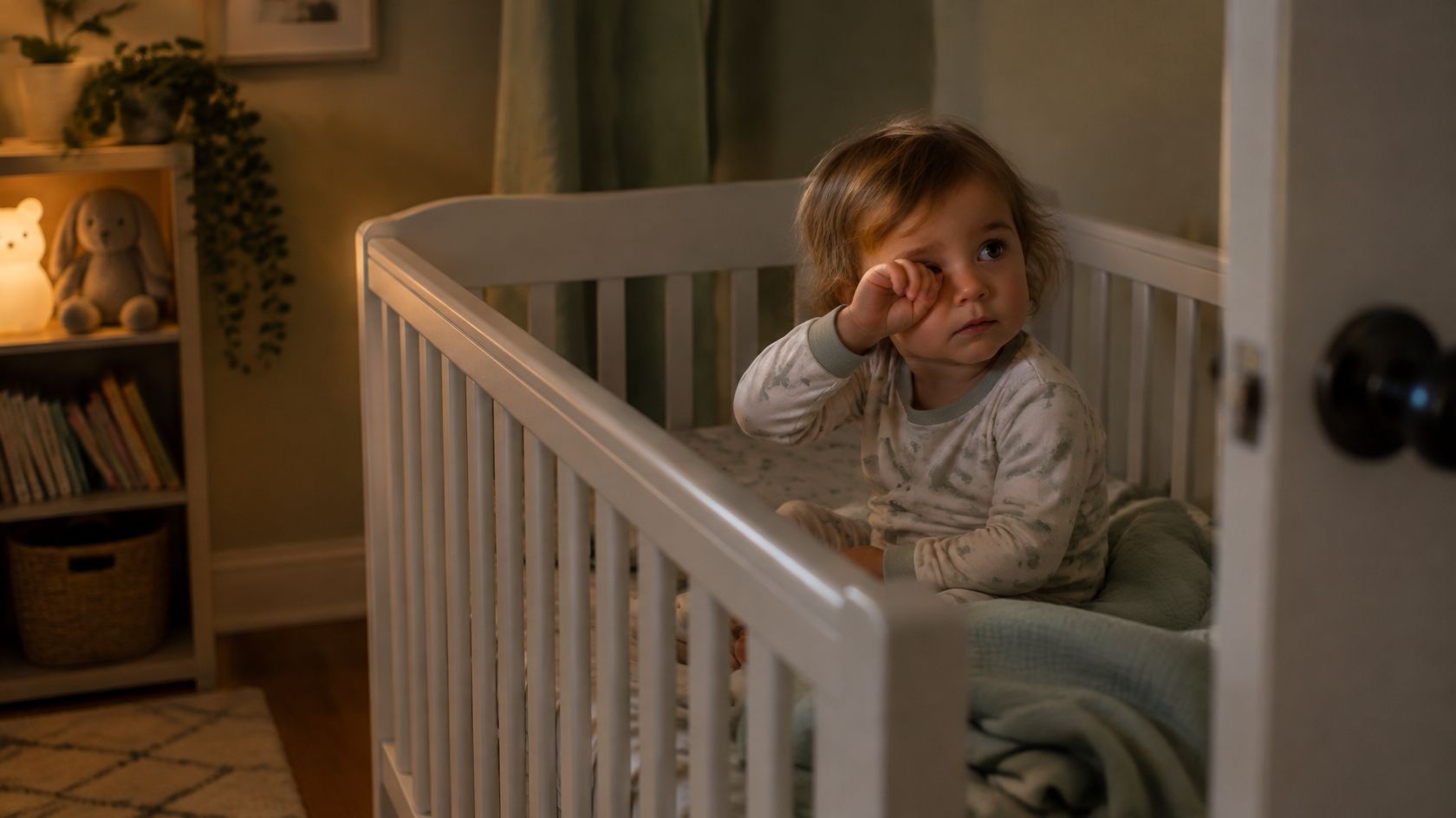
If your 18 month old has gone from “down by 7, asleep by 7:10” to standing at the crib rail shouting for you, you’re not alone, and you haven’t undone all your good work. Sleep often wobbles somewhere between 17 and 20 months. The same kind of phase can show up again around age 2, which is why you’ll also hear about the 2 year old sleep regression.
This guide explains the signs, why it happens, how long it lasts, a sample 18 month old sleep schedule, and what actually helps.
Is the 18 Month Sleep Regression Real?
“Sleep regression” isn’t a medical diagnosis, and many toddlers never have one at this age. But plenty of parents notice a clear dip in sleep around 18 months, and pediatric sleep experts describe it as a common, temporary disruption, according to the Sleep Foundation. Bedtime resistance is the most common sleep problem at this age, notes BC Children’s Hospital Research Institute.
If you’ve been through earlier regressions, like the 8 month sleep regression or the 12 month sleep regression, this one often feels different: less about waking to practice new skills and more about a little person with strong opinions about bedtime.
18 Month Sleep Regression Signs
- Fighting bedtime: crying, stalling, or calling you back again and again
- Crying or panicking when you leave the room
- Waking more at night and struggling to settle back down
- Refusing the nap, or taking a much shorter one
- Standing in the crib or trying to climb out
- Being clingier or crankier during the day
The pattern to look for is a sudden change in a toddler who was sleeping fairly well, lasting more than a few nights.
What Causes the 18 Month Sleep Regression?
Separation Anxiety
Separation anxiety often has a second peak in the toddler years. Your child knows exactly what bedtime means: you leaving. Crying the moment you step out is normal at this age. Our guide to separation anxiety in toddlers has more on what helps.
A Big Push for Independence
Around 18 months, toddlers discover that they’re separate people with their own wants, and “no” becomes a favorite word. Testing limits at bedtime is a normal part of this, not a sign that your routine has failed.
Molars and Canines
Some of the most uncomfortable teeth arrive now. According to the American Dental Association, first molars usually come in between 13 and 19 months, and canines between 16 and 23 months. Sore gums can make it harder to fall and stay asleep.
A Busy Brain
Language is taking off, toddlers are walking, climbing and exploring everything, and there’s a lot to process. Overtiredness from a short or skipped nap can also make bedtime harder, not easier.
How Long Does the 18 Month Sleep Regression Last?
Most parents find it lasts a few weeks, usually 2 to 6. Sleep often goes back to normal without any obvious reason, especially if you stay consistent. If it’s dragging on past a month or getting worse, see the “when to talk to your pediatrician” section below.
How Much Sleep Does an 18 Month Old Need?
Children aged 1 to 2 years need 11 to 14 hours of sleep in 24 hours, including naps, according to the American Academy of Sleep Medicine, whose guidelines are endorsed by the American Academy of Pediatrics. Most 18 month olds get this as about 11 hours at night plus one nap of 1.5 to 2.5 hours.
Sample 18 Month Old Sleep Schedule
Many toddlers move from two naps to one somewhere between 12 and 18 months. Here’s a common one-nap day. It’s an example, not a rule, so shift it to suit your child.
| Time | Activity |
|---|---|
| 7:00 a.m. | Wake up, breakfast |
| 9:30 a.m. | Snack, outdoor play |
| 11:30 a.m. | Lunch |
| 12:30 – 2:30 p.m. | Nap |
| 3:00 p.m. | Snack, play |
| 5:30 p.m. | Dinner |
| 6:30 p.m. | Bedtime routine: bath, pajamas, teeth, books |
| 7:00 – 7:30 p.m. | Bedtime |
That’s about 2 hours of nap and 11.5 to 12 hours at night. If your toddler fights the nap, try pushing it 15 to 30 minutes later rather than dropping it: many children keep napping until age 3 or later.
How to Handle the 18 Month Sleep Regression
- Keep a short, predictable bedtime routine. Bath, pajamas, teeth, two books, a song, lights out, in the same order every night. A consistent routine is one of the most effective ways to reduce bedtime resistance and night waking, according to BC Children’s Hospital Research Institute.
- Offer limited choices. Toddlers want control. Let them pick between two pajamas or two books, so bedtime feels like something they’re part of, not something done to them.
- Use a calm, consistent goodnight. Say the same short goodnight phrase every night, then leave. If they cry, go back briefly to reassure them, keep it boring, and leave again. Every adult who does bedtime should respond the same way.
- Give a comfort object. After 12 months, a small soft toy or lovey in the crib is fine and can help with separation anxiety.
- Protect the nap and watch for overtiredness. A toddler who skipped their nap often fights bedtime harder. If the nap is short, move bedtime a little earlier.
- Turn off screens before bed. Bright screens and exciting shows close to bedtime make it harder to wind down. Swap them for books and quiet play in the last hour.
- Soothe sore gums. If molars seem to be the problem, a cool, damp washcloth or a chilled (not frozen) teething ring before bed can help. Ask your pediatrician or pharmacist before giving any pain reliever.
- Don’t start new habits you’ll want to undo. It’s tempting to lie down with them, bring them into your bed or start rocking to sleep again. Comfort them, but try to keep the same routine you had before the regression.
For more ideas on settling a toddler who keeps waking, see our guide to dealing with toddler night waking.
Should You Move to a Toddler Bed?
Usually not yet. A regression is the worst time to make a big change, and most toddlers sleep more safely and soundly in a crib. Cleveland Clinic notes that the AAP suggests moving to a bed when a child climbs out of the crib, the rail is below chest height, or they’re about 35 inches (89 cm) tall. Until then, keep the crib mattress on its lowest setting and keep the crib free of anything they could climb on.
The 2 Year Old Sleep Regression
Many families see a similar phase again around age 2, often linked to new fears, nightmares, potty training, a new sibling, starting daycare or dropping naps too early. The same approach works: keep the routine consistent, stay calm, keep the nap, and avoid big changes in the middle of it.
When to Talk to Your Pediatrician
Most toddler sleep problems are normal phases, but check in with your pediatrician if:
- Sleep problems last longer than a month or keep getting worse
- Your toddler snores loudly, gasps, or seems to stop breathing during sleep
- They seem very tired, irritable or unwell during the day
- There are changes in eating, growth, weight, or wet diapers
- They have a fever, ear pain or other signs of illness
- They’ve lost words or skills they used to have
For everything else that’s changing at this age, see our guide to 15 to 18 month toddler development.
Frequently Asked Questions About the 18 Month Sleep Regression
Is there an 18 month sleep regression?
Many toddlers have a temporary dip in sleep around 18 months, with bedtime battles and more night waking. It isn’t a medical diagnosis, and not every toddler has one.
How long does the 18 month sleep regression last?
Usually a few weeks, often 2 to 6. Staying consistent with the routine helps it pass faster. Talk to your pediatrician if it lasts more than a month.
How much sleep does an 18 month old need?
11 to 14 hours in 24 hours, including naps. Most get about 11 hours at night plus one nap of 1.5 to 2.5 hours.
Should my 18 month old still nap?
Yes. Most 18 month olds take one daily nap, and many children keep napping until age 3 or later. Don’t drop the nap because of a regression.
Is it the 18 month sleep regression or teething?
It can be both. First molars come in around 13 to 19 months and canines around 16 to 23 months. Teething pain usually lasts a few days per tooth.
When is the 2 year old sleep regression?
Many families see another phase around age 2, often linked to new fears, potty training, a new sibling or dropping naps. The same steady approach helps.
The Bottom Line
The 18 month sleep regression is a normal, temporary phase caused by separation anxiety, a push for independence, new molars and a busy brain. It usually passes within a few weeks. Keep a short, consistent bedtime routine, offer simple choices, respond calmly and the same way every time, protect the nap, and avoid big changes like a new bed until it settles. Talk to your pediatrician if it lasts longer than a month or your toddler seems unwell.
This article is for general information and isn’t a substitute for medical advice. Always contact your pediatrician with questions about your child’s health and sleep.
Sources
- 18-Month Sleep Regression – Sleep Foundation
- Recommended Amount of Sleep for Children – American Academy of Sleep Medicine
- Healthy Sleep for Toddlers – BC Children’s Hospital Research Institute
- Primary Tooth Development – American Dental Association
- When to Lower Your Crib Mattress (and Move to a Bed) – Cleveland Clinic