

Last reviewed: November 25, 2026 · Based on guidance from the AAP, CDC, NHS, Mayo Clinic, Seattle Children's, KidsHealth and Cleveland Clinic.
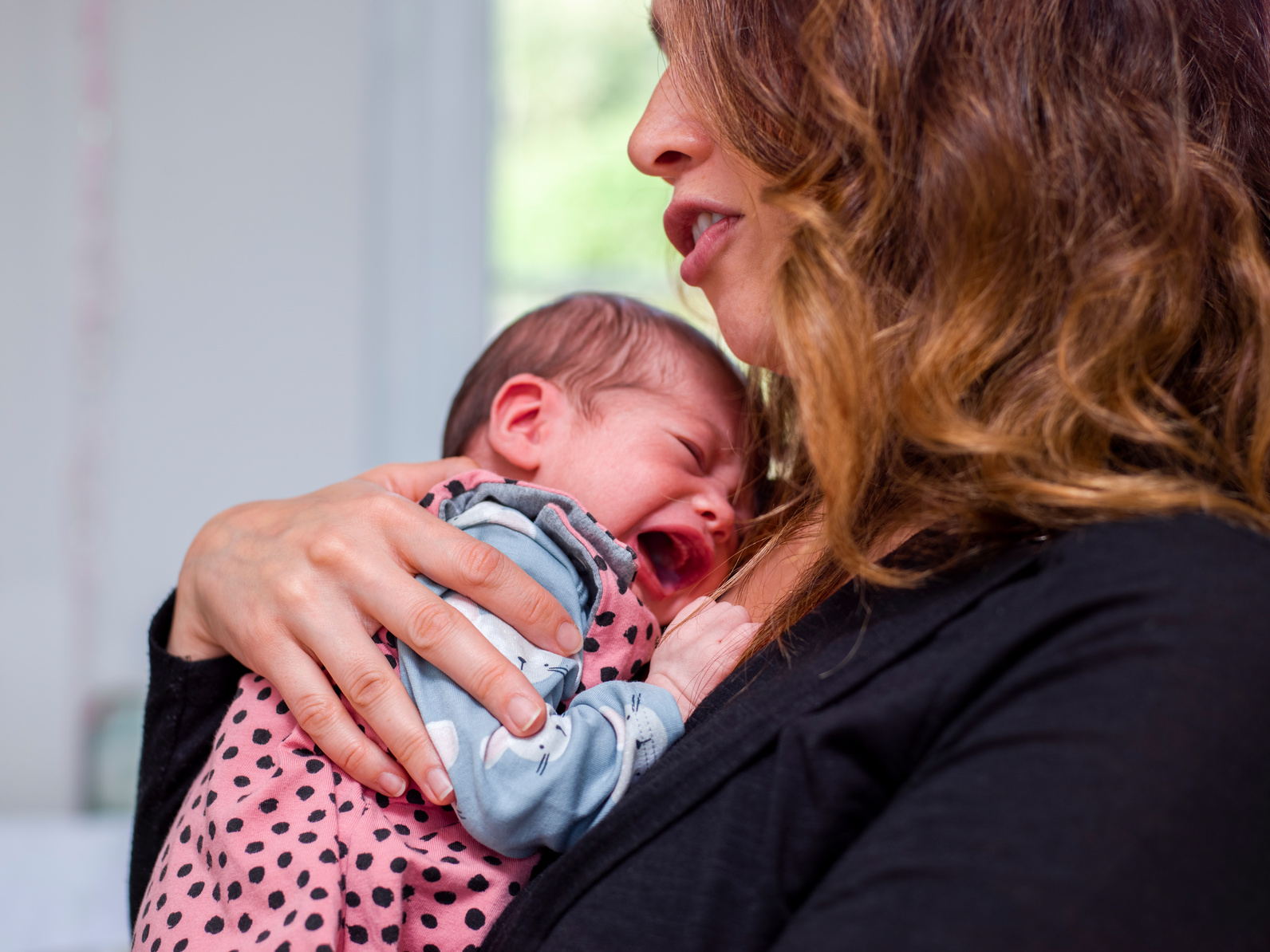
It is 2 a.m., your baby is screaming, and you have already tried everything you can think of. You are not doing anything wrong. Start with the free crying helper right below: it checks the warning signs first, then puts the usual reasons in the order to check them for your baby’s age, and includes a crying timer you can show your doctor.
Why is my baby crying? Crying helper
Quick answer: Most crying babies are hungry, tired, need a diaper change or a burp, are too hot or cold, or simply want to be held. Check those first, one at a time, and meet the most pressing need. Newborns cry 1 to 4 hours a day, and crying usually peaks around the second month, often in the evening, then eases by 3 to 5 months. Call your doctor right away if your baby has a fever under 3 months, cries harder when touched, is vomiting, seems very sick, or has cried nonstop for more than 2 hours and nothing calms them.
How Much Crying Is Normal?
All babies cry, and some cry a lot more than others. According to the American Academy of Pediatrics, newborns routinely cry 1 to 4 hours a day while they adjust to life outside the womb. You cannot spoil a young baby by responding, and babies whose calls are answered tend to cry less overall.
Crying also follows a pattern. Cleveland Clinic explains that crying usually starts to build at about 2 weeks, is heaviest in the second month, and tapers off by 3 to 5 months. Doctors call this the Period of PURPLE Crying:
- Peak of crying: more each week, the most in month two.
- Unexpected: it comes and goes for no clear reason.
- Resists soothing: sometimes nothing works.
- Pain-like face: your baby may look like they hurt even when they do not.
- Long-lasting: it can last hours a day.
- Evening: it is often worse in the late afternoon and evening.
| Age | What is typical | What usually helps |
|---|---|---|
| 0 to 6 weeks | Crying builds up, often 2 to 3 hours a day | Feeding on cue, burping, holding, swaddling on the back |
| 6 to 8 weeks | The peak, often in the evening | Calm routine, white noise, walks, taking turns with a partner |
| 3 to 5 months | Crying eases a lot | Naps before your baby gets overtired |
| 6 to 12 months | Crying is more about tiredness, teething, separation and illness | Regular naps, comfort, checking for fever or earache |
| 1 to 2 years | Frustration, tantrums, sleep problems | Naming the feeling, quiet time, a nap or earlier bedtime |
First, Rule Out the Warning Signs
A baby who cries more than usual can be sick. Check these before you work through the soothing checklist.
Call 911 (or your local emergency number) if your baby:
- Is not moving, is very weak or floppy, or is hard to wake
- Has trouble breathing, or blue, gray or very pale lips, tongue or skin
- Has a seizure
- Has a rash that does not fade when you press on it
- Has had no wet diaper in the last 8 hours
The last three come from the NHS list of emergency signs in a crying baby.
Call your baby’s doctor now, or go to urgent care, if your baby:
- Has a fever of 100.4°F (38°C) or higher. Under 3 months, any fever needs a doctor right away, and Seattle Children’s warns not to give fever medicine before your baby is seen.
- Cries more when you touch, move or hold them
- Is vomiting
- Could be injured, for example after a fall
- Has swelling anywhere, including the groin, scrotum or the soft spot on the head
- Has a red or swollen finger, toe or penis
- Has had little or nothing to drink for more than 8 hours
- Has a cry that sounds odd or very different from usual
- Has cried nonstop for more than 2 hours and nothing calms them
- Looks or acts very sick, or is under 1 month old and acting different from normal in any way
Not sure how to read a temperature? See our guide to what counts as a fever in a baby.
Why Is My Baby Crying? The Checklist
When the warning signs are ruled out, work down this list. The AAP advice is simple: meet the most pressing need first. If your baby is cold, wet and hungry, warm them, change them, then feed them.
1. Hungry
Hunger is the most common reason babies cry. The CDC notes that crying is a late sign of hunger. Earlier signs are hands to the mouth, turning toward the breast or bottle, puckering or smacking the lips, and clenched hands. Feeding at those first signs is easier than feeding a screaming baby.
For babies under 3 months, Seattle Children’s suggests offering a feed if it has been more than 1½ hours since a breastfeed or more than 2 hours since a formula feed, but not feeding every time your baby cries.
2. Tired or overtired
Young babies can only stay awake a short time before they need to sleep again. Cleveland Clinic gives these typical awake times:
| Age | Typical awake time |
|---|---|
| Birth to 1 month | 30 minutes to 1 hour |
| 1 to 3 months | 1 to 2 hours |
| 3 to 4 months | 1¼ to 2½ hours |
| 5 to 7 months | 2 to 4 hours |
| 7 to 10 months | 2½ to 4½ hours |
| 10 to 12 months | 3 to 6 hours |
An overtired baby often cries harder and fights sleep. A dim, quiet room, a cuddle and a calm wind-down help. Our free baby sleep schedule by age tool builds a day around your baby’s wake-up time, and newborn fighting sleep covers the bedtime battle.
3. Wet or dirty diaper
Stool can irritate the skin and sting, especially with diaper rash. Change the diaper and look for redness.
4. Needs a burp
Burping releases swallowed air, and the AAP lists it among its calming techniques. If your baby feeds fast or gulps, a slower-flow nipple or short pauses during a bottle feed may help them manage the flow. Gas is not always to blame, though. Seattle Children’s goes further and says gas is not a cause of crying and spitting up is not a cause of colic, and the AAP notes that research has never shown that gas drops or gripe water work.
5. Too hot, too cold or uncomfortable
Being too warm, too cold or in tight clothing can make a baby cry. Feel their tummy or the back of the neck, add or remove a layer, and loosen anything tight. For nights, see how to dress a baby for sleep.
6. A hair or thread around a finger or toe
A sudden, shrieking or panicked cry can mean something hurts. The AAP suggests checking whether a strand of hair is caught around a finger or toe. Cleveland Clinic describes this “hair tourniquet” as rare, with redness, swelling and inconsolable crying. If you find one, call your doctor.
7. Wants a cuddle, or too much going on
Babies also cry because they want to be close to you, because they are bored, or because sights and sounds have become too much. Hold your baby close and move somewhere quieter and dimmer.
8. Teething (often from about 4 to 7 months)
Babies typically start teething at about 4 to 7 months. According to the AAP, teething can cause fussiness, drooling and extra chewing. It does not cause fever, diarrhea or excess crying, so call your doctor if you see those. A cold, firm teething ring or rubbing the gums with a clean finger can help, but avoid anything frozen solid, numbing gels and teething necklaces. More in our guide to teething symptoms.
9. Older babies and toddlers: feelings and illness
After 3 months, Seattle Children’s notes that crying is often about being upset: separation, tantrums, being overtired or sleep problems. A new illness, such as an ear infection, is the most common physical cause, so watch for other symptoms.
Newborn Crying for No Reason: Normal Crying and Colic
Sometimes your baby is fed, changed, burped and held, and still cries. In the first months, that can be completely normal. When it is a lot of crying, doctors may call it colic.
Mayo Clinic describes colic as crying for 3 or more hours a day, 3 or more days a week, for 3 or more weeks in a healthy baby. It is usually at its worst at about 6 weeks and eases after 3 to 4 months. The crying is often loud, comes at a predictable time (usually the evening), and your baby may clench their fists, pull up their legs or arch their back.
Two things are important to know. First, colic is not caused by anything you did. Second, you do not have to wait 3 weeks to ask for help. The crying timer in the tool above shows you a 7-day picture you can bring to your pediatrician. For more ideas, see our guides to the signs of colic and soothing a colicky baby at night.
Why Does My Newborn Cry When I Put Them Down?
Newborns want to be close, and being held is one of their basic needs. Answering that need will not spoil them. A few things can make the move to the crib easier:
- Always lay your baby on their back on a firm, flat surface with nothing else in the crib.
- Swaddle a young baby and always place them on their back. The AAP says to stop swaddling as soon as your baby shows any signs of trying to roll over.
- Use steady white noise at a moderate volume.
- Watch the awake times above. An overtired baby protests harder.
Why Does My Baby Cry After Feeding?
Crying soon after a feed is often about swallowed air, a fast flow or a very full tummy. Seattle Children’s notes that too much milk can cause a bloated, uncomfortable tummy for a short while. Burp during and after the feed, try a slower-flow nipple, and let your baby decide when they have had enough. Spitting up is common and usually not a cause of crying. Our guide on how long to keep a baby upright after feeding covers spit-up. If your baby vomits, refuses feeds or is not gaining weight, call your doctor.
Why Is My Baby Fussy at Night?
Many parents call the late afternoon and evening the “witching hour.” It matches the E in PURPLE crying, and colic crying also tends to happen in the evening. A predictable evening routine, dim lights, fewer visitors and a calm, quiet room help. So does planning the hardest hours in advance, such as taking turns with a partner.
How to Calm a Crying Baby: 10 Things to Try
- Hold your baby close, skin to skin if you can, and breathe slowly.
- Rock in a chair or sway from side to side in your arms.
- Walk around the house, or use a carrier.
- Talk, sing or hum softly.
- Play steady white noise or soft music at a moderate volume.
- Offer a pacifier.
- Swaddle a young baby, on their back only, until they show signs of trying to roll.
- Gently stroke the head or pat the back or chest.
- Try a warm bath. Many babies love it, though a few get more upset.
- Go for a stroller walk or a car ride, safely buckled. The NHS reminds parents to move a baby who falls asleep in a car seat to a firm, flat crib.
Give each idea a few minutes before you switch. The NHS notes that too much rocking and singing can keep a baby awake. For more tips, see soothing a fussy baby.
When the Crying Gets to You
Long crying is exhausting, and feeling frustrated or even angry does not make you a bad parent. What matters is what you do with the feeling. The CDC warns that shaking, throwing or hitting a baby is never the right response to crying, and babies under 1 year are at the greatest risk of a shaking injury.
- Put your baby on their back in a safe, empty crib, close the door and take 10 minutes to calm down. Then go back and check on them.
- Call a partner, friend or relative to take over for a while.
- If you worry you might hurt your baby or yourself, KidsHealth advises calling your doctor, calling or texting 988, or calling 911 right away.
- If you think someone else might hurt your baby, call the Childhelp hotline at 1-800-422-4453.
- Tell everyone who cares for your baby, including babysitters, never to shake a baby.
From a Dad of Two
Our two kids were completely different here. Our first needed a lot of holding before falling asleep, and car rides, and we used the baby carrier mostly with our first child. Our second fell asleep easily. So if the tricks that worked for a friend’s baby do nothing for yours, that is normal. Keep trying the ideas above one at a time until you find your baby’s favorites.
When to Call the Doctor
Call your baby’s doctor if:
- Your baby shows any of the warning signs above.
- The crying started suddenly and is new, even if your baby calms down.
- Your baby cries 3 or more hours a day, or the crying worries you, at any age.
- Your baby is not gaining weight or seems hungry all the time.
- You are worn out and need help.
Trust your instincts. The NHS advises acting on your instincts if something about your baby seems different or worrying.
Frequently Asked Questions About Baby Crying
Why is my baby crying for no reason?
In the first months, babies often cry without a clear cause, especially in the late afternoon and evening. This normal crying usually peaks in the second month and eases by 3 to 5 months. Check hunger, tiredness, the diaper, a burp and temperature first, and call your doctor if your baby seems sick or nothing calms them for 2 hours.
How long is it normal for a newborn to cry?
The AAP says newborns routinely cry 1 to 4 hours a day. Crying 3 or more hours a day, on 3 or more days a week, for 3 or more weeks in a healthy baby is called colic. You can talk to your doctor at any point if the amount of crying worries you.
Why does my newborn cry when I put them down?
Newborns want closeness, and being held is a real need, not a bad habit. Try laying your baby down once they are deeply asleep, swaddle young babies on their back until they show signs of rolling, and use steady white noise. Watching awake times also helps, because overtired babies protest more.
Why does my baby cry after feeding?
Swallowed air, a fast milk flow or a very full tummy are common reasons. Burp during and after feeds, try a slower-flow nipple, and let your baby stop when they are full. Call your doctor if your baby vomits, refuses feeds or is not gaining weight.
When should I worry about my baby crying?
Call your doctor right away if your baby has a fever under 3 months, cries more when touched, is vomiting, seems very sick, has a cry that sounds unusual, or has cried nonstop for over 2 hours. Call 911 if your baby is floppy or hard to wake, has trouble breathing, turns blue or gray, or has a seizure.
Is it OK to let my baby cry for a few minutes?
Yes. If your baby is fed, changed and safe and you feel overwhelmed, it is OK to put them on their back in an empty crib, close the door and take about 10 minutes to calm down. Taking a short break is much safer than continuing when you are at your limit.
The Bottom Line
Most crying has a simple cause: hunger, tiredness, a diaper, a burp, temperature or the need to be held. Rule out the warning signs first, then check those one at a time. Long evening crying in the first months is often normal and gets better by 3 to 5 months. Call your doctor whenever something feels wrong, and take a safe break when you need one.
This article is for general information and isn’t a substitute for medical advice. Always contact your pediatrician with questions about your baby’s health.
14 Sources
Newborn Stages uses trusted sources, including government health agencies, children’s hospitals and pediatric organizations, to support the facts in our articles. Read our editorial policy to learn how we research, fact-check and keep our content accurate.
- American Academy of Pediatrics (HealthyChildren.org). Responding to Your Baby’s Cries.
- American Academy of Pediatrics (HealthyChildren.org). Swaddling: Is It Safe for Your Baby?.
- American Academy of Pediatrics (HealthyChildren.org). Teething Pain Relief.
- American Academy of Pediatrics (HealthyChildren.org). When Does Teething Start?.
- Centers for Disease Control and Prevention. Signs Your Child Is Hungry or Full.
- Centers for Disease Control and Prevention. About Abusive Head Trauma.
- NHS. Soothing a crying baby.
- Mayo Clinic. Colic: Symptoms and causes.
- Seattle Children’s Hospital. Crying Baby: Before 3 Months Old.
- Seattle Children’s Hospital. Crying Child: 3 Months and Older.
- Nemours KidsHealth. What to Do When Babies Cry.
- Cleveland Clinic. Purple Crying.
- Cleveland Clinic. Hair Tourniquet.
- Cleveland Clinic. What Are Baby Wake Windows? And How Long Should They Be?.