

Newborn Stages
  • Home
  • Baby

    Development & Growth

    Newborn icon

    Newborn (0–4 Weeks)

    Feeding, sleep & first-week care

    1-2 months baby icon

    1-2 Months

    First smiles & tummy time

    3-6 months baby icon

    3-6 Months

    Rolling, giggles & grabbing

    7-9 months baby icon

    7-9 Months

    Sitting, crawling & first foods

    10-12 months baby icon

    10-12 Months

    Standing & first steps

    VIEW ALL
    Baby feeding icon
    Baby Feeding
    Breastfeeding
    Baby Food Recipes
    Bottle Feeding
    VIEW ALL
    Baby sleep icon
    Baby Sleep
    Sleep Problems
    Basics & Bedtime Routines
    VIEW ALL
    Baby basics icon
    Baby Basics
    Newborn Daily Care
    Essentials
    Activities & Playtime
    VIEW ALL
  • Toddler

    Development & Growth

    13-18 months toddler icon

    13-18 Months

    Walking & first words

    19-24 months toddler icon

    19-24 Months

    Talking & pretend play

    2-3 years toddler icon

    2-3 Years

    Big feelings & potty training

    VIEW ALL
    Toddler feeding icon
    Toddler Feeding
    Eating & Nutrition
    Healthy Food Recipes
    Toddler Breastfeeding
    VIEW ALL
    Toddler sleep icon
    Toddler Sleep
    Problems & Concerns
    Basics & Bedtime Routines
    VIEW ALL
    Toddler care and training icon
    Care & Training
    Playtime & Education
    Everyday Care & Training
    VIEW ALL
  • Essentials
  • Health & Safety
    • Everyday Wellness
    • Common Health Concerns
    • Disabilities and Chronic Conditions
    • Mental Health
    • Playtime
    • Safety & First Aid
  • Gear & ProductsReviews

    Gear & product reviews

    • Parenting books & courses
    • Beds & sleep products
    • Toys
    • Nursing & feeding
    • Strollers & accessories
    • Car seats & accessories
    • Health & safety products

    Latest reviews

    Dad/Partner Picks: Baby Products Men Actually Love (and Use)

    Best Under $30 Baby Toys That Feel Premium!

    Top 5 Travel Strollers of 2026 — Lightweight, Foldable & Airline-Approved!

    See all gear reviews →

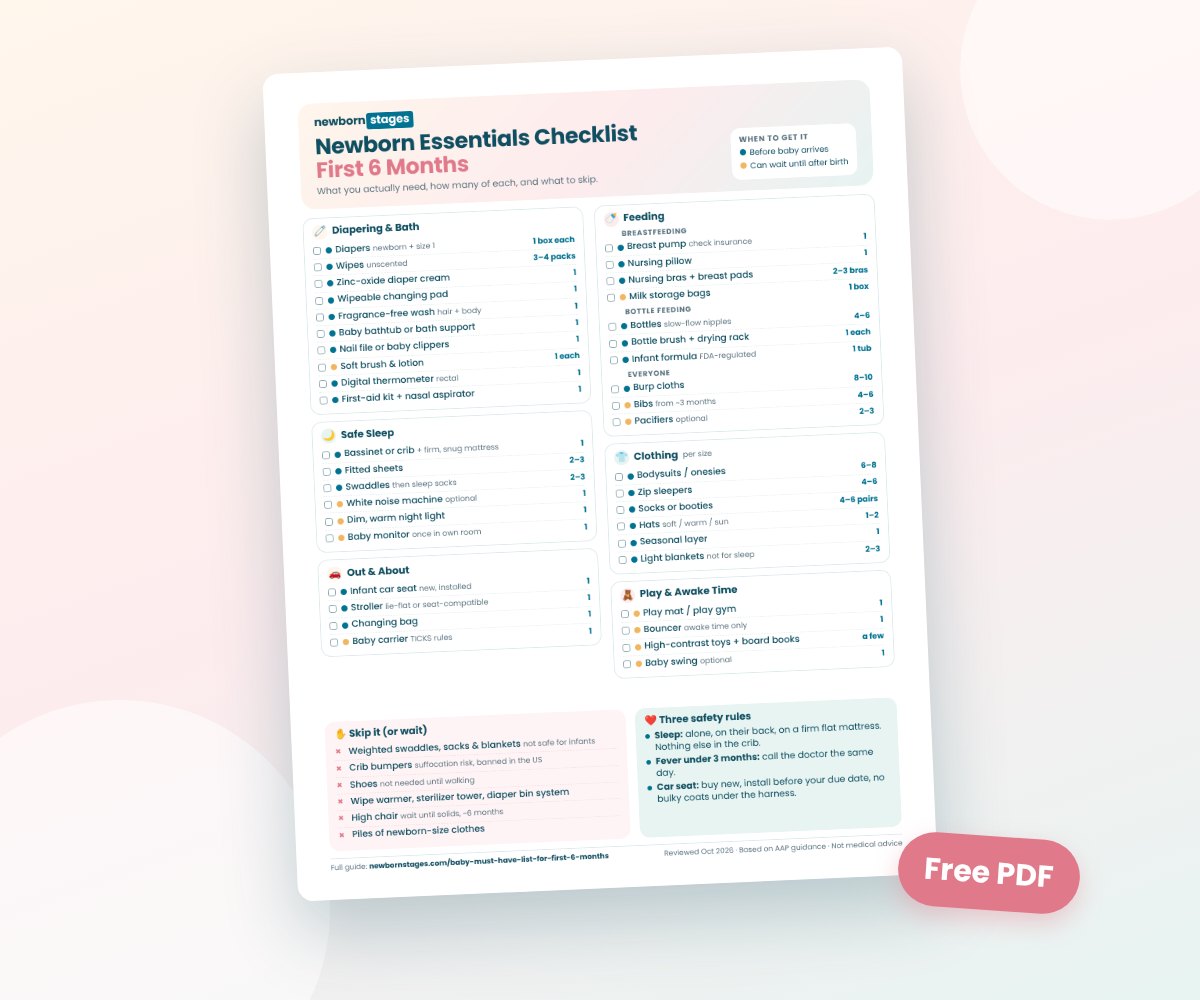
    Preview of the newborn shopping list checklistFree toolBuild your newborn shopping listMark what you have and need, then save your own list as a PDF.Start my list →
  • General Parenting
No Result
View All Result
Newborn Stages
No Result
View All Result

Home » Newborn (0–4 Weeks) » Newborn Won’t Sleep At Night? 13 Tips and Tricks

Newborn Won’t Sleep At Night? 13 Tips and Tricks

Written by: Danis
November 6, 2026
in Newborn (0–4 Weeks), Sleep Problems
Newborn Won't Sleep At Night? 13 Tips and Tricks
Key Takeaways
  • Newborns naturally wake often to feed and aren't expected to sleep through the night, but calm evenings without bright lights, loud noises, active play or screens can help them settle.
  • A simple, consistent bedtime routine, such as a bath or book at the same time each night, plus regular naps when signs like yawning or eye rubbing appear, helps prevent overtiredness.
  • Always place your baby on their back on a firm, flat surface for every sleep, and move them out of swings, bouncers, car seats or inclined sleepers if they fall asleep there.
  • A gentle, unscented massage in a dark, quiet room and a comfortable temperature, with no more than one layer more than an adult wears, help the baby relax.

Last reviewed: November 6, 2026. Checked against current guidance from the American Academy of Pediatrics (HealthyChildren.org), the U.S. Consumer Product Safety Commission and Nemours KidsHealth.

Many parents struggle with getting their newborns to sleep through the night. In this article, we will discuss 13 tips and tricks that may help get your little one on a good sleep schedule! Keep in mind that newborns are not expected to sleep through the night yet. They wake often to feed, and that is normal.

Keep Your Baby Upright

After a feeding, holding your baby upright for a little while can help with burping and spit-up. When your baby is awake during the day, give them plenty of time to move and play, including tummy time while you watch. When it is time to sleep, always lay your baby down flat on their back. The position of the baby is very important when you are putting them to sleep.

Avoid Stimulation

In the evening hours, try to avoid any type of stimulation. This includes bright lights, loud noises, and active play. Keep things calm and quiet in the house so that your baby can relax and fall asleep more easily. It is also important to avoid screen time before bed. The blue light from screens can be very stimulating and keep your baby awake.

Create a Bedtime Routine

Having a bedtime routine is important for both you and your baby. A bedtime routine will help signal to your baby that it is time to sleep. It can be something as simple as reading a book or taking a bath. It is also important to keep a consistent bedtime. Try to put your baby down at the same time every night. This will help their little bodies get into a sleep rhythm.

Always Use the Back Sleep Position

If you are struggling to get your baby to sleep through the night, it can be tempting to try different sleep positions. Don’t. Always place your baby on their back for every nap and at night. Stomach and side sleeping raise the risk of SIDS. Swings, bouncers, car seats and inclined sleepers are not safe for sleep. If your baby falls asleep in one, move them to a firm, flat sleep surface on their back as soon as you can.

Don’t Let Your Baby Get Overtired

If your baby gets overtired, it will be much harder for them to fall asleep. Try to put them down for a nap at the same time each day and make sure they get enough sleep during the day. It is also important to watch for signs of fatigue in your baby. If they are rubbing their eyes or yawning, it is time for a nap.

Give Them a Massage

A calming massage can help your baby to relax before bedtime. You can use a little gentle baby lotion, but you don’t need anything scented. It is also important to make sure the room is dark and quiet when you are giving your baby a massage.


baby sleeping3sa 1

Make Sure They Are Comfortable

It is important to make sure your baby is comfortable when they are trying to sleep. This means making sure the room temperature is not too hot or too cold. Dress your baby in no more than one layer more than you would wear. Use a firm, flat mattress with a fitted sheet, and keep everything else out of the crib, including blankets, pillows, bumpers and toys. Keep your baby’s crib or bassinet in your room, but don’t share a bed. You want your baby to be as comfortable and safe as possible when they are sleeping so that they can get a good night’s rest.

Turn Off the Lights

When it is time for your baby to go to sleep, turn off the lights in the room; this will help them to relax and fall asleep faster. You can use a nightlight if you need to have some light in the room. But try to keep it as dim as possible so that your baby’s body can start producing melatonin and they can fall asleep more easily.

Use White Noise

White noise can be helpful in getting your baby to sleep. It can help block out any distractions and create a calm environment. You can buy white noise machines or use apps on your phone. It is important to find a sound that your baby enjoys and that isn’t too loud. Keep the machine or phone well away from the crib, outside of it, and keep the volume low to protect your baby’s hearing.

Put Your Baby to Bed Drowsy, But Awake

If you put your baby to bed while they are still awake, they will learn how to fall asleep on their own. This will help them get more restful sleep at night. It may take a few nights for them to get used to going to bed without being asleep. But eventually, they will learn how to fall asleep on their own.

Play the Same Music Every Night

If you play the same music every night before bed, your baby will start to associate it with sleep. This can help them to relax and fall asleep more easily. You can use calming classical music or nature sounds. Experiment until you find a type of music that your baby enjoys and that helps them to sleep better at night.

Use a Pacifier

If your baby is having trouble sleeping, a pacifier can help. It can provide them with a sense of security and comfort. It is important to make sure that the pacifier is clean and in good condition. You don’t want your baby to choke on it or get an infection. If you are breastfeeding, wait until breastfeeding is going well before offering one. Never hang a pacifier around your baby’s neck or clip it to their clothes while they sleep.

Swaddle your Baby

Swaddling can help your baby to feel secure and comfortable. It will remind them of being in the womb and can help them to fall asleep more easily. Make sure you use a lightweight blanket so that your baby doesn’t get too hot. Always place a swaddled baby on their back, and leave room for their hips and legs to move. Stop swaddling as soon as your baby looks like they are trying to roll over. Never use a weighted swaddle or sleep sack.

These are just a few tips and tricks that can help your baby to sleep better at night. Experiment and see what works best for your little one (Read here also: Common infant sleep disorders signs). And don’t be afraid to ask for help from a doctor or sleep specialist if you are having trouble getting your baby to sleep through the night. With a little persistence, you will find a method that works for you and your baby.

This article is for general information and isn’t a substitute for medical advice. Always contact your pediatrician with questions about your baby’s health.

3 Sources

Newborn Stages uses trusted sources, including government health agencies, children’s hospitals and pediatric organizations, to support the facts in our articles. Read our editorial policy to learn how we research, fact-check and keep our content accurate.

  1. American Academy of Pediatrics, HealthyChildren.org. How to Keep Your Sleeping Baby Safe: AAP Policy Explained.
  2. U.S. Consumer Product Safety Commission. CPSC Approves Rules Implementing Bans on Inclined Sleepers for Infants and Crib Bumpers.
  3. Nemours KidsHealth. Sleep and Your 1- to 3-Month-Old.

ShareTweetPinSend

Follow Newborn Stages on Google News

Danis

Father of two (a 9-year-old boy and a 5-year-old girl) and the founder of Newborn Stages. I've been researching and writing about baby and toddler development since 2016, and I started this site in 2020 because I couldn't find the clear, honest answers I needed as a new dad. I'm a parent, not a doctor. Every health article here is checked against guidance from the AAP, CDC, NHS and other trusted medical sources, with those sources linked in the article, and re-checked whenever that guidance changes.

Preview of the newborn shopping list checklistFree toolBuild your newborn shopping listMark what you have and need, then save your own list as a PDF.Start my list →
Previous Post

Is It Safe To Do Intermittent Fasting While Breastfeeding?  

Next Post

When Does The Newborn Immune System Get Stronger?

You Might Also Like

Tired 18 month old toddler sitting awake in a crib at night rubbing one eye
13-18 Months

18 Month Sleep Regression (and 2 Year Old): Signs, How Long It Lasts & What Helps

November 3, 2026
8 month old baby in a sleep sack standing in the crib at night during a sleep regression
Sleep Problems

8 Month Sleep Regression (and 9–10 Months): Signs, How Long It Lasts & a Sample Sleep Schedule

November 3, 2026
Newborn Hiccups: Why They Happen So Often and How to Stop Them
Everyday Wellness

Newborn Hiccups: Why They Happen So Often and How to Stop Them

November 6, 2026
What Does a Newborn See in the First Week?
Newborn Daily Care

What Does a Newborn See in the First Week?

November 6, 2026
4 Month Sleep Regression: What No One Tells You
Sleep Problems

4 Month Sleep Regression: What No One Tells You

November 6, 2026
How Often a Newborn Eats: A Complete Guide for New Parents!
General Parenting

How Often a Newborn Eats: A Complete Guide for New Parents!

November 6, 2026

Leave a Reply Cancel reply

Your email address will not be published. Required fields are marked *

I agree to the Terms & Conditions and Privacy Policy.

Newborn Stages offers clear, well-sourced parenting information from a parent who has been there. Our mission is to help new parents find answers they can trust.

  • About us
  • Contact us
  • Advertise
  • Write for us
  • Sitemap
  • Privacy Policy
  • Terms & Conditions
  • Disclaimer
  • Editorial Policy
  • Affiliate Disclosure
Facebook-f Instagram

Kindly take note that all the information is for educational purposes only and not a substitute for professional health services.

  • Essentials
  • Development Stages
  • Feeding
  • Sleeping
  • Health & Safety
  • Product Reviews
©2026 www.newbornstages.com. All Rights Reserved.
No Result
View All Result
  • Home
  • Baby
    • Baby Development
      • Newborn (0–4 Weeks)
      • 1-2 Months
      • 3-6 Months
      • 7-9 Months
      • 10-12 Months
    • Baby Feeding
      • Breastfeeding
      • Bottle Feeding
      • Baby Food Recipes
    • Baby Sleep
      • Sleep Problems
      • Bedtime Routines & Sleep Basics
    • Baby Basics
      • Newborn Daily Care
      • Activities & Playtime
  • Toddler
    • Toddler Development
      • 13-18 Months
      • 19-24 Months
      • 2-3 Years
    • Toddler Sleep
      • Basics & Bedtime Routines
      • Problems & Concerns
    • Toddler Feeding
      • Healthy Food Recipes
      • Eating & Nutrition
      • Toddler Breastfeeding
    • Toddler Care & Training
      • Everyday Care & Training
      • Playtime & Education
  • Essentials
  • Health & Safety
    • Common Health Concerns
    • Disabilities and Chronic Conditions
    • Everyday Wellness
    • Mental Health
    • Safety & First Aid
  • Gear & Products
    • Parenting Books – Courses
    • Infant & Toddler Beds & Sleep products
    • Toys
    • Nursing & Feeding
    • Health & Safety
    • Strollers & Accessories
    • Car Seats & Accessories
  • General Parenting

© 2026 www.newbornstages.com. All Rights Reserved.