

Newborn Stages
  • Home
  • Baby

    Development & Growth

    Newborn icon

    Newborn (0–4 Weeks)

    Feeding, sleep & first-week care

    1-2 months baby icon

    1-2 Months

    First smiles & tummy time

    3-6 months baby icon

    3-6 Months

    Rolling, giggles & grabbing

    7-9 months baby icon

    7-9 Months

    Sitting, crawling & first foods

    10-12 months baby icon

    10-12 Months

    Standing & first steps

    VIEW ALL
    Baby feeding icon
    Baby Feeding
    Breastfeeding
    Baby Food Recipes
    Bottle Feeding
    VIEW ALL
    Baby sleep icon
    Baby Sleep
    Sleep Problems
    Basics & Bedtime Routines
    VIEW ALL
    Baby basics icon
    Baby Basics
    Newborn Daily Care
    Essentials
    Activities & Playtime
    VIEW ALL
  • Toddler

    Development & Growth

    13-18 months toddler icon

    13-18 Months

    Walking & first words

    19-24 months toddler icon

    19-24 Months

    Talking & pretend play

    2-3 years toddler icon

    2-3 Years

    Big feelings & potty training

    VIEW ALL
    Toddler feeding icon
    Toddler Feeding
    Eating & Nutrition
    Healthy Food Recipes
    Toddler Breastfeeding
    VIEW ALL
    Toddler sleep icon
    Toddler Sleep
    Problems & Concerns
    Basics & Bedtime Routines
    VIEW ALL
    Toddler care and training icon
    Care & Training
    Playtime & Education
    Everyday Care & Training
    VIEW ALL
  • Free Tools
    • Newborn Checklist
    • Baby Handover Sheet
  • Health & Safety
    • Everyday Wellness
    • Common Health Concerns
    • Disabilities and Chronic Conditions
    • Mental Health
    • Playtime
    • Safety & First Aid
  • Gear & ProductsReviews

    Gear & product reviews

    • Parenting books & courses
    • Beds & sleep products
    • Toys
    • Nursing & feeding
    • Strollers & accessories
    • Car seats & accessories
    • Health & safety products

    Latest reviews

    Dad/Partner Picks: Baby Products Men Actually Love (and Use)

    Best Under $30 Baby Toys That Feel Premium!

    Top 5 Travel Strollers of 2026 — Lightweight, Foldable & Airline-Approved!

    See all gear reviews →

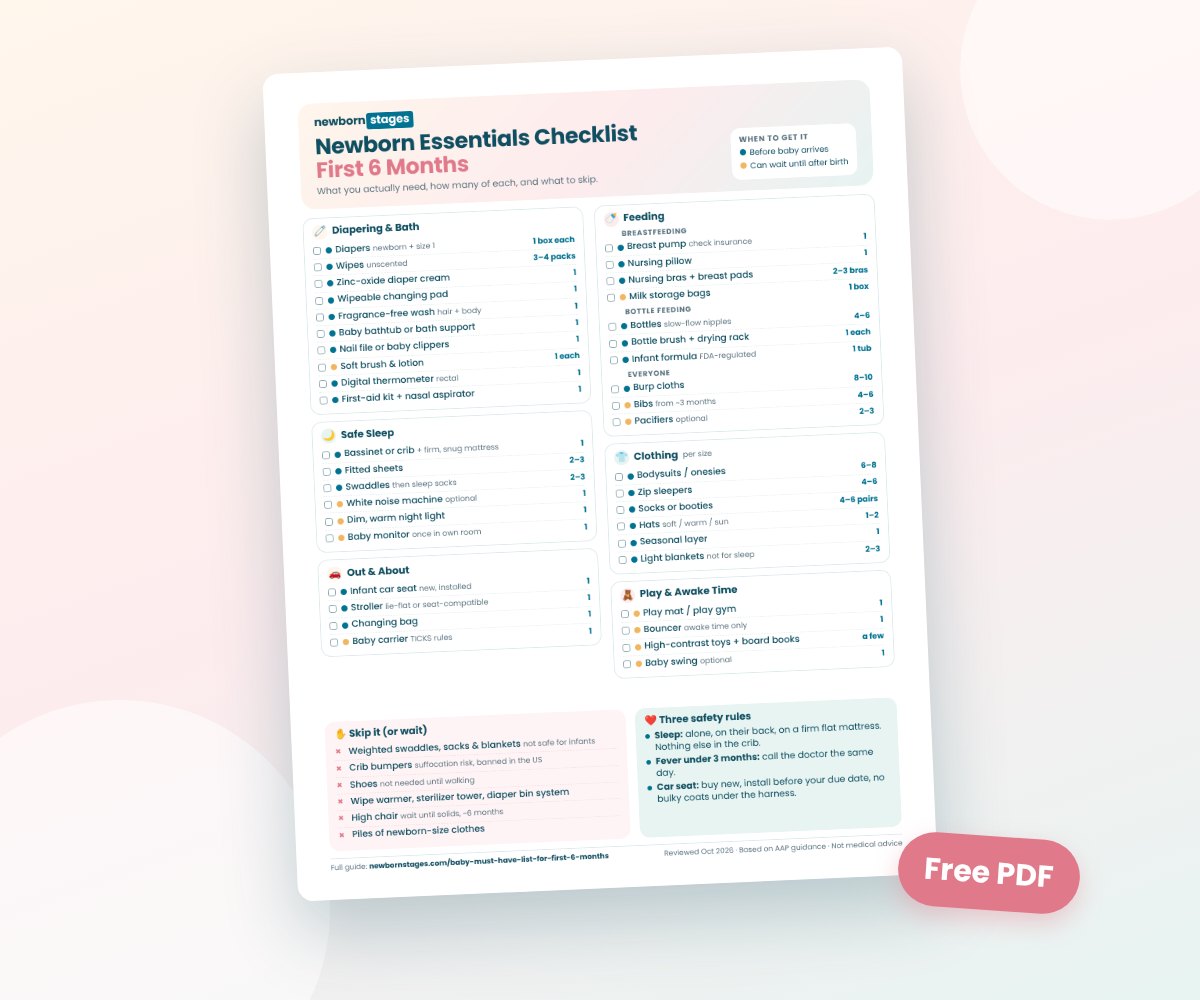
    Preview of the newborn shopping list checklistFree toolBuild your newborn shopping listMark what you have and need, then save your own list as a PDF.Start my list →
  • General Parenting
No Result
View All Result
Newborn Stages
No Result
View All Result

Home » Baby Sleep » How to Get Baby to Sleep in Bassinet at Night?

How to Get Baby to Sleep in Bassinet at Night?

Written by: Danis
November 6, 2026
in Baby Sleep
How to Get Baby to Sleep in Bassinet at Night?

Last reviewed: November 6, 2026. Checked against current guidance from the American Academy of Pediatrics (HealthyChildren.org) and the U.S. Consumer Product Safety Commission.

Are you planning on introducing your baby to the bassinet for sleeping at night? Well, it might take some time for them to get used to their new surroundings. But don’t lose hope.

Helping your baby adapt to the bassinet requires patience and consistency. So, let’s not say it’s going to be an easy ride.

While some parents are lucky, most have to go through a tough time getting their baby to sleep in the bassinet. If you’re one of them, find out how you can make things easier over here.

Simple Steps to Get Your Baby to Sleep in a Bassinet at Night

Helping your baby sleep in the bassinet is more than just placing them in and cooing them to sleep. You need to be persistent and follow a routine.

Let’s have a look at the simple steps that will help you put your baby to sleep in a bassinet.

Step 1: Establish a Strict Bedtime Routine

It might not seem like it, but babies are prone to following a specific pattern. So, if you mold their pattern in a way that keeps them up all night crying, you might want to see where you’re going wrong.

Follow a bedtime routine that would include bathing your baby, giving them a light massage, reading to them, or swaddling. You can easily add and subtract elements from the routine based on your preference.

After establishing a routine, your baby will get used to the process and know that it’s time to sleep soon. Don’t undermine how effective a good bedtime routine is for your baby to be able to sleep in a bassinet with ease.

Step 2: Place Your Baby in the Bassinet When They’re Awake

Having to rock your baby to sleep is quite a normal act. However, if you wish to help them sleep in a bassinet, you need to change your techniques. Make sure that you don’t let your baby sleep in your arms while you’re rocking them.

Wait just till the time that they’re sleepy, and then place them in the bassinet on their back. Allowing your baby to remain awake but on the verge of sleeping is essential to this process.

Doing so allows your baby to sleep on their own. Not only will this help them sleep longer at night, but they will also be able to soothe themselves.

Step 3: Swaddle Them in So They Feel Secure

Let’s not forget one of the most important things that you’ll need to do- swaddle. Your newborn is surely going to feel safer when they’re swaddled in the bassinet.

However, this will require you to ensure that all safety measures have been considered. Always place a swaddled baby on their back. Keep the swaddle snug around the chest but loose around the hips so the legs can bend up and out. Never use a weighted swaddle.

Why should you swaddle your baby when putting them in the bassinet? Well, swaddling helps your baby to relax and feel secure as it gives them a similar feeling to when they were in the womb.

Along with this, swaddling helps keep the startle reflex at bay that wakes babies up at night due to changes in their surroundings. Swaddling keeps them in place and secure throughout.

Stop swaddling as soon as your baby shows any signs of trying to roll over, which can happen as early as 2 months. A swaddled baby who rolls onto their tummy is at risk of suffocation.

Step 4: Stay by Their Side and Read a Book or Sing to Them

You can’t just put your baby in the bassinet while they’re sleepy and leave. They need to feel your presence to remain calm and fall asleep. Once you place your sleepy baby in the bassinet, make it a habit to read to them or sing a lullaby.

In doing so, you’ll make your baby feel that you’re still close which will make them feel safe. Keep your voice soft and calm when reading out or singing to them. It’ll help them sleep peacefully.

Safety Rules to Follow When Putting Your Baby in a Bassinet

When you’re putting your baby to sleep in a bassinet, you will need to ensure all safety measures are in place. The first thing and the most important one is that you should keep the bassinet empty. Use only a firm, flat mattress with a fitted sheet. Take out all the stuffed toys, pillows, cushions, bumpers, loose blankets and anything that can be a potential suffocation risk.

Always put your baby to sleep on their back, for naps and at night. Choose a bassinet that meets CPSC safety standards, and follow the maker’s weight and age limits. Keep the bassinet in your room, close to your bed, for at least the first 6 months, but don’t share your bed with your baby. Never let your baby sleep in an inclined product, swing or car seat.

A fitted swaddle or wearable blanket and a pacifier are all your baby needs. Offering a pacifier at sleep time may lower the risk of SIDS, but never hang it around your baby’s neck or attach it with a string. Along with this, keep the room at a comfortable temperature and avoid overheating. Dress your baby in no more than one layer more than you would wear, and skip hats indoors.

Is Your Newborn Having a Difficult Time Sleeping in the Bassinet?

If your baby is having a difficult time adjusting in the bassinet, you should look out for possible causes of discomfort. These include, but aren’t limited to:

  • Room temperature discomfort
  • Daylight peeking in
  • Loud sounds in the area
  • Hunger or a wet diaper

Try to keep an eye out for these issues so that you can help your baby have a seamless sleep in their bassinet. Never use pillows, wedges or positioners to prop your baby. Back on a flat surface is always the safest position.

This article is for general information and isn’t a substitute for medical advice. Always contact your pediatrician with questions about your baby’s health.

3 Sources

Newborn Stages uses trusted sources, including government health agencies, children’s hospitals and pediatric organizations, to support the facts in our articles. Read our editorial policy to learn how we research, fact-check and keep our content accurate.

  1. HealthyChildren.org (American Academy of Pediatrics). How to Keep Your Sleeping Baby Safe: AAP Policy Explained.
  2. HealthyChildren.org (American Academy of Pediatrics). Swaddling: Is it Safe for Your Baby?.
  3. U.S. Consumer Product Safety Commission. Safe Sleep: Cribs and Infant Products.

Danis

Father of two (a 9-year-old boy and a 5-year-old girl) and the founder of Newborn Stages. I've been researching and writing about baby and toddler development since 2016, and I started this site in 2020 because I couldn't find the clear, honest answers I needed as a new dad. I'm a parent, not a doctor. Every health article here is checked against guidance from the AAP, CDC, NHS and other trusted medical sources, with those sources linked in the article, and re-checked whenever that guidance changes.

Preview of the newborn shopping list checklistFree toolBuild your newborn shopping listMark what you have and need, then save your own list as a PDF.Start my list →
Previous Post

Homemade Food Recipes For 12-18 Months Baby

Next Post

How to Get Toddler Back On Sleep Schedule after Vacation

You Might Also Like

Tired 18 month old toddler sitting awake in a crib at night rubbing one eye
13-18 Months

18 Month Sleep Regression (and 2 Year Old): Signs, How Long It Lasts & What Helps

November 12, 2026
8 month old baby in a sleep sack standing in the crib at night during a sleep regression
Sleep Problems

8 Month Sleep Regression (and 9–10 Months): Signs, How Long It Lasts & a Sample Sleep Schedule

November 12, 2026
Baby sleeping safely on their back in a sleep sack in a winter nursery, with a room thermometer on the shelf
Baby Sleep

How to Dress a Baby for Sleep in Winter: Safe Layers, TOG Chart & Room Temperature

November 12, 2026
Close-up of a sleeping newborn with a slight smile, hands tucked under one cheek
Newborn Daily Care

Why Does My Baby Smile in Their Sleep? The Science Behind Newborn Sleep Smiles

November 6, 2026
Mother reclining on a sofa with a newborn asleep on her chest
Newborn Daily Care

Why Does My Baby Only Sleep When Held? (And How to Break the Habit)

November 6, 2026
Mother lying on a sofa lifting a wide-awake baby with a pacifier above her
Sleep Problems

4 Month Sleep Regression: What No One Tells You

November 6, 2026

Newborn Stages offers clear, well-sourced parenting information from a parent who has been there. Our mission is to help new parents find answers they can trust.

  • About us
  • Contact us
  • Advertise
  • Sitemap
  • Privacy Policy
  • Terms & Conditions
  • Disclaimer
  • Editorial Policy
  • Affiliate Disclosure
Facebook-f Instagram

Kindly take note that all the information is for educational purposes only and not a substitute for professional health services.

  • Checklist
  • Handover Sheet
  • Development Stages
  • Feeding
  • Sleeping
  • Health & Safety
  • Product Reviews
©2026 www.newbornstages.com. All Rights Reserved.
No Result
View All Result
  • Home
  • Baby
    • Baby Development
      • Newborn (0–4 Weeks)
      • 1-2 Months
      • 3-6 Months
      • 7-9 Months
      • 10-12 Months
    • Baby Feeding
      • Breastfeeding
      • Bottle Feeding
      • Baby Food Recipes
    • Baby Sleep
      • Sleep Problems
      • Bedtime Routines & Sleep Basics
    • Baby Basics
      • Newborn Daily Care
      • Activities & Playtime
  • Toddler
    • Toddler Development
      • 13-18 Months
      • 19-24 Months
      • 2-3 Years
    • Toddler Sleep
      • Basics & Bedtime Routines
      • Problems & Concerns
    • Toddler Feeding
      • Healthy Food Recipes
      • Eating & Nutrition
      • Toddler Breastfeeding
    • Toddler Care & Training
      • Everyday Care & Training
      • Playtime & Education
  • Free Tools
    • Newborn Checklist
    • Baby Handover Sheet
  • Health & Safety
    • Common Health Concerns
    • Disabilities and Chronic Conditions
    • Everyday Wellness
    • Mental Health
    • Safety & First Aid
  • Gear & Products
    • Parenting Books – Courses
    • Infant & Toddler Beds & Sleep products
    • Toys
    • Nursing & Feeding
    • Health & Safety
    • Strollers & Accessories
    • Car Seats & Accessories
  • General Parenting

© 2026 www.newbornstages.com. All Rights Reserved.