

Newborn Stages
  • Home
  • Baby

    Development & Growth

    Newborn icon

    Newborn (0–4 Weeks)

    Feeding, sleep & first-week care

    1-2 months baby icon

    1-2 Months

    First smiles & tummy time

    3-6 months baby icon

    3-6 Months

    Rolling, giggles & grabbing

    7-9 months baby icon

    7-9 Months

    Sitting, crawling & first foods

    10-12 months baby icon

    10-12 Months

    Standing & first steps

    VIEW ALL
    Baby feeding icon
    Baby Feeding
    Breastfeeding
    Baby Food Recipes
    Bottle Feeding
    VIEW ALL
    Baby sleep icon
    Baby Sleep
    Sleep Problems
    Basics & Bedtime Routines
    VIEW ALL
    Baby basics icon
    Baby Basics
    Newborn Daily Care
    Essentials
    Activities & Playtime
    VIEW ALL
  • Toddler

    Development & Growth

    13-18 months toddler icon

    13-18 Months

    Walking & first words

    19-24 months toddler icon

    19-24 Months

    Talking & pretend play

    2-3 years toddler icon

    2-3 Years

    Big feelings & potty training

    VIEW ALL
    Toddler feeding icon
    Toddler Feeding
    Eating & Nutrition
    Healthy Food Recipes
    Toddler Breastfeeding
    VIEW ALL
    Toddler sleep icon
    Toddler Sleep
    Problems & Concerns
    Basics & Bedtime Routines
    VIEW ALL
    Toddler care and training icon
    Care & Training
    Playtime & Education
    Everyday Care & Training
    VIEW ALL
  • Free Tools
    • Newborn Checklist
    • Baby Handover Sheet
    • Baby Food Checker
    • Baby Sleep Schedule
    • Why Is My Baby Crying?
  • Health & Safety
    • Everyday Wellness
    • Common Health Concerns
    • Disabilities and Chronic Conditions
    • Mental Health
    • Playtime
    • Safety & First Aid
  • Gear & ProductsReviews

    Gear & product reviews

    • Parenting books & courses
    • Beds & sleep products
    • Toys
    • Nursing & feeding
    • Strollers & accessories
    • Car seats & accessories
    • Health & safety products

    Latest reviews

    Best Baby Food Maker (2026): 4 Steamer-Blenders Compared, Including the One We Used

    Best Humidifier for Baby (2026): 5 Cool-Mist Picks + Safe Nursery Setup

    Dad/Partner Picks: Baby Products Men Actually Love (and Use)

    Best Under $30 Baby Toys That Feel Premium!

    Top 5 Travel Strollers of 2026 — Lightweight, Foldable & Airline-Approved!

    See all gear reviews →

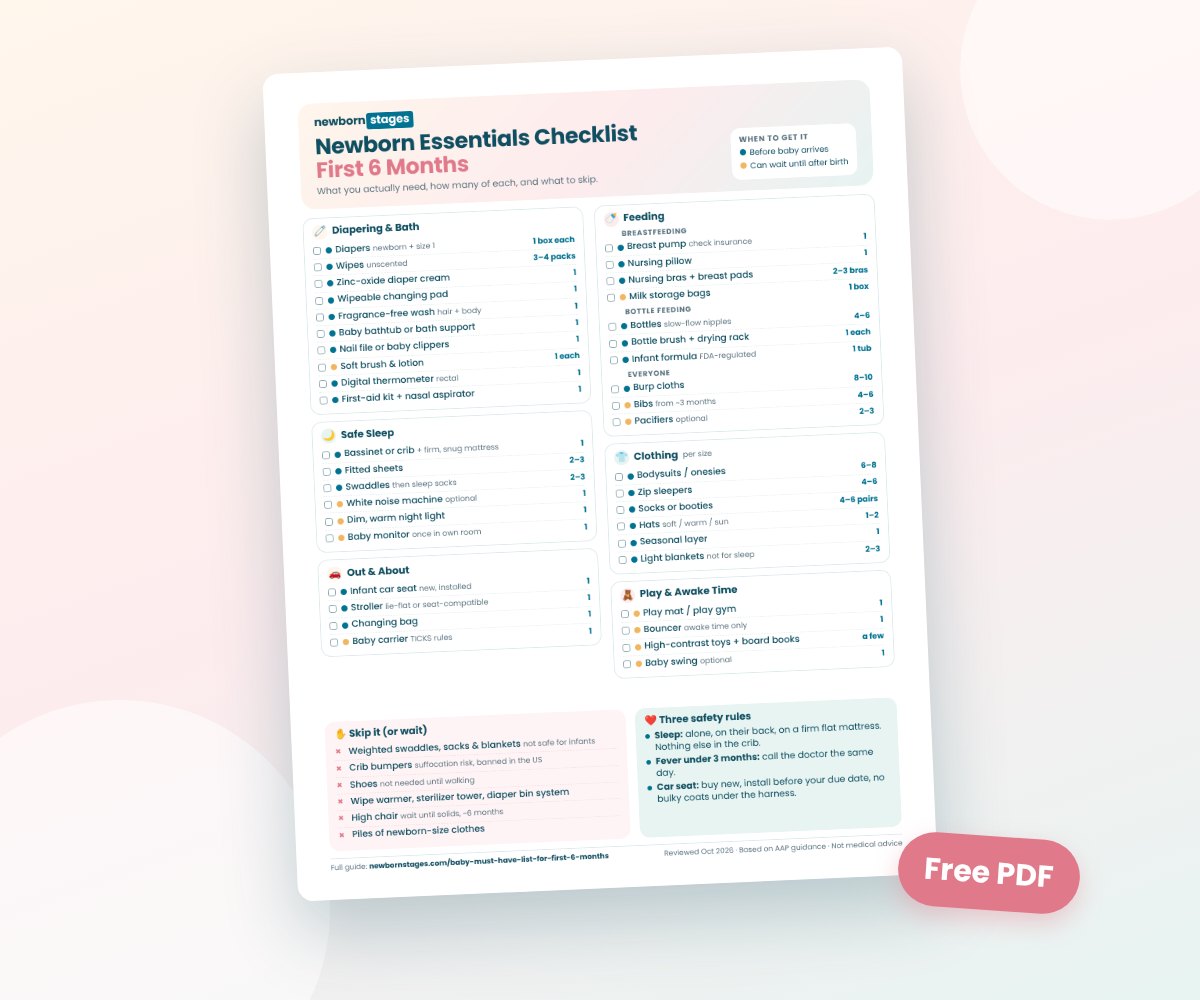
    Preview of the newborn shopping list checklistFree toolBuild your newborn shopping listMark what you have and need, then save your own list as a PDF.Start my list →
  • General Parenting
No Result
View All Result
Newborn Stages
No Result
View All Result

Home » 7-9 Months » 8 Month Old Infant Milestones: Development and Care Tips 

8 Month Old Infant Milestones: Development and Care Tips 

Written by: Iordanis Konstantilakis
November 14, 2026
in 7-9 Months
8 Month Old Infant Milestones
Key Takeaways
  • This article reviews infant development and care by age, and it was checked against CDC and American Academy of Pediatrics guidance.
  • From 0 to 2 months, babies start lifting their head during tummy time, following you with their eyes, and smiling at you, so care centers on cuddling, feeding, and a calm, nurturing environment.
  • From 3 to 4 months, babies hold their head steady, push up on their elbows, grasp toys, and coo back, so they need plenty of playtime, stimulation, and chances to explore.
  • From 5 to 6 months, babies reach for objects, roll from tummy to back, push up on straight arms, mouth toys, and recognize familiar people, so they need patience, love, and support, with stranger anxiety often appearing around 8 to 9 months.

Last reviewed: November 6, 2026. Checked against current guidance from the CDC and the American Academy of Pediatrics.

In article, we will discuss the various stages of development your child will go through in this age group, as well as tips for caring for them during each stage. Keep reading to learn more!

Development and Care for Infants: (0 – 2 Months)

During the first two months of life, your infant will be growing and developing at an amazing rate. They will go from being completely dependent on you for their needs, to starting to develop some basic skills and abilities. Here are some key milestones to look for in your child during this age group:

  • Your infant will start to gain control over their head and neck, and will be able to lift their head up while lying on their stomach.
  • They will begin to follow you with their eyes and focus on a toy for a few seconds. Swinging an arm at toys usually comes a little later, around 4 months.
  • Your infant may also start to smile when you talk to them or smile at them. The CDC says soft laughs usually come by about 4 months.

Caring for your child during these early months will involve a lot of cuddling, feeding, and diaper changes! Make sure to create a calm and nurturing environment for your child, as this is essential for their development.

Development and Care for Infants: (3 – 4)

As your infant starts to grow and develop, there are some key milestones you should be aware of. Here are some key milestones to look for in your child during this age group:

  • Your infant will become more active. They will hold their head steady without support, push up onto their elbows during tummy time, and grasp a toy you put in their hand. Rolling, sitting and crawling come later.
  • Your infant may also start to show signs of vocalization, such as cooing and making sounds back when you talk to them.

Caring for your child during these months will involve a lot of stimulation and playtime! Make sure to provide plenty of opportunities for your child to explore their environment, and to engage in physical activity.

Development and Care for Infants: (5 to 6 months)

As your infant starts to grow and develop, there are some key milestones you should be aware of. Here are some key milestones to look for in your child during this age group:

  • Your infant will start to show an interest in their surroundings, and will begin to reach out for objects.
  • They will also roll from tummy to back, push up on straight arms during tummy time, and put toys in their mouth to explore them.
  • Your infant will recognize people they know well. Stranger anxiety often shows up a little later, around 8 to 9 months.

Caring for your child during these months will involve a lot of patience and understanding! Make sure to provide plenty of love and support for your child, as they adjust to their new surroundings and experiences.

8 Month Old Infant Milestones & Care Tips

As your infant continues to grow and develop, there are some key milestones you should be aware of:

  • Your infant will start to show more independence. Many babies sit without support around this age, and some start to crawl.
  • They will also start to develop more complex fine motor skills, such as passing toys from one hand to the other and raking food toward themselves with their fingers.
  • As the CDC notes, your infant may babble sounds like “mamamama,” turn when you call their name, and feel shy or clingy around strangers.
  • Most babies do not walk yet at 8 months. Some start pulling up to stand closer to their first birthday. Once your baby is on the move, make sure to provide plenty of support and supervision.

Caring for your child during these months will involve a lot of exploration and discovery! Make sure to provide plenty of opportunities for your child to learn and grow, as they continue to develop their skills and abilities.

Tips for Care and Development of 8 Months Old babies:

Let’s have a look at some tips that will help you in the development and care of your eight-month-old baby.

Support Them in Doing Physical Activities

Your infant is becoming more and more active as they grow, so it’s important to provide them with plenty of opportunities to move around and explore. This can be done through activities such as tummy time, playing on a mat, or being held while you walk. Make sure to always supervise your child during these activities, in order to prevent any accidents. Skip baby walkers. The American Academy of Pediatrics does not recommend them because they cause many injuries, including falls down stairs.

Encourage Them to Eat Solid Foods

The AAP says most babies start solid foods at about 6 months, so by 8 months your baby is likely eating a range of foods. It’s important to introduce them to a variety of healthy and nutritious foods, in order to ensure that they’re getting all the nutrients they need. The AAP also advises including iron-rich foods like meat or iron-fortified infant cereal. Common allergens like egg and peanut products (in a soft, baby-safe form) can be offered too. Check with your pediatrician first if your baby has severe eczema or an egg allergy. Breast milk or formula is still their main drink, and small sips of water from a cup are fine. Don’t give honey, cow’s milk as a drink or juice before 12 months. Make sure to always supervise your child during mealtimes, in order to prevent any choking hazards. Avoid whole grapes, nuts, popcorn, hot dogs and hard raw vegetables.

Wondering whether your 8 month old should be crawling yet? Our guide to when babies start crawling covers the normal age range, the different types of crawling and how to help.

Provide Them With Plenty Of Stimulation

Your infant’s brain is continuing to develop at a rapid pace, so it’s important to provide them with plenty of stimulation. This can be done through activities such as reading books, singing songs, or playing with toys. Make sure to vary the activities, in order to keep your child’s attention focused.

You will be Overwhelmed with an 8 Month Old Infant

At this age, your infant will start to show more independence. However, they will still need plenty of love and support from you. It’s important to spend quality time with your child, in order to bond and create a strong relationship. Make sure to also take some time for yourself, in order to avoid burnout.

Join Parenting Groups For Help and Support And For Getting Information Regarding Development Of Infants

There are many parenting groups available, both online and offline. These groups can provide you with plenty of information and support, which can be invaluable during this stage of your child’s life. Make sure to research the different groups available, in order to find one that best suits your needs.

Parenting an eight-month-old infant can be both challenging and rewarding. By following the tips above, you can help your child to reach their full potential. Make sure to enjoy this special time with your little one, as they continue to grow and develop!

Consult Your Child’s Pediatrician If You Have Concerns About Your Child’s Development:

If you have any concerns about your child’s development, it’s important to consult their pediatrician. They will be able to provide you with advice and guidance, and can help to ensure that your child is on track developmentally.

These are just a few of the many things to keep in mind as your infant grows and develops.

This article is for general information and isn’t a substitute for medical advice. Always contact your pediatrician with questions about your baby’s health.

6 Sources

Newborn Stages uses trusted sources, including government health agencies, children’s hospitals and pediatric organizations, to support the facts in our articles. Read our editorial policy to learn how we research, fact-check and keep our content accurate.

  1. Centers for Disease Control and Prevention. Milestones by 4 Months.
  2. Centers for Disease Control and Prevention. Milestones by 6 Months.
  3. Centers for Disease Control and Prevention. Milestones by 9 Months.
  4. American Academy of Pediatrics, HealthyChildren.org. When Can Babies Start Solid Foods?.
  5. Centers for Disease Control and Prevention. Foods and Drinks to Avoid or Limit.
  6. American Academy of Pediatrics, HealthyChildren.org. Baby Walkers: A Dangerous Choice.

Iordanis Konstantilakis

Iordanis "Danis" Konstantilakis is a dad of two (a 9-year-old boy and a 5-year-old girl) and the founder of Newborn Stages. He has been reading and writing about baby and toddler development since 2016, and started this site in 2020 to give new parents the clear answers he couldn't find at 2am. By day he builds websites at weDigitalPLUS. He's a parent, not a doctor: every health article here is checked against the AAP, CDC, NHS and other trusted medical sources, linked in the article, and re-checked when guidance changes.

Preview of the newborn shopping list checklistFree toolBuild your newborn shopping listMark what you have and need, then save your own list as a PDF.Start my list →
Previous Post

2 Months Old Sleep Regression: Signs and Tips to Help

Next Post

9 Month Baby Milestones: Development and Care Tips 

You Might Also Like

Smiling baby crawling on hands and knees on a rug toward a wooden toy as a parent encourages them
7-9 Months

When Do Babies Start Crawling? Average Age, Types of Crawling & How to Help

November 12, 2026
Mother leaning toward a smiling baby doing tummy time on a rug
3-6 Months

When Do Babies Recognize Their Name?

November 6, 2026
Sensory Development in the First Year of Life!
1-2 Months

Sensory Development in the First Year of Life!

November 14, 2026
Nurturing Your Baby’s Mind: Creative Stimulation Ideas for 3-7 Months Old
3-6 Months

Nurturing Your Baby’s Mind: Creative Stimulation Ideas for 3-7 Months Old

November 18, 2026
How To Encourage Baby To Walk
10-12 Months

How To Encourage Baby To Walk? 5 Helpful Activities

November 6, 2026
Which Sense is Developed First In Newborns? Full Guide for the 5 Senses
1-2 Months

Which Sense is Developed First In Newborns? Full Guide for the 5 Senses

November 14, 2026

Newborn Stages offers clear, well-sourced parenting information from a parent who has been there. Our mission is to help new parents find answers they can trust.

  • About us
  • Contact us
  • Advertise
  • Sitemap
  • Privacy Policy
  • Terms & Conditions
  • Disclaimer
  • Editorial Policy
  • Affiliate Disclosure
Facebook-f Instagram

Kindly take note that all the information is for educational purposes only and not a substitute for professional health services.

  • Checklist
  • Handover Sheet
  • Food Checker
  • Sleep Schedule
  • Crying Helper
  • All Free Tools
  • Development Stages
  • Feeding
  • Sleeping
  • Health & Safety
  • Product Reviews
©2026 www.newbornstages.com. All Rights Reserved.
No Result
View All Result
  • Home
  • Baby
    • Baby Development
      • Newborn (0–4 Weeks)
      • 1-2 Months
      • 3-6 Months
      • 7-9 Months
      • 10-12 Months
    • Baby Feeding
      • Breastfeeding
      • Bottle Feeding
      • Baby Food Recipes
    • Baby Sleep
      • Sleep Problems
      • Bedtime Routines & Sleep Basics
    • Baby Basics
      • Newborn Daily Care
      • Activities & Playtime
  • Toddler
    • Toddler Development
      • 13-18 Months
      • 19-24 Months
      • 2-3 Years
    • Toddler Sleep
      • Basics & Bedtime Routines
      • Problems & Concerns
    • Toddler Feeding
      • Healthy Food Recipes
      • Eating & Nutrition
      • Toddler Breastfeeding
    • Toddler Care & Training
      • Everyday Care & Training
      • Playtime & Education
  • Free Tools
    • Newborn Checklist
    • Baby Handover Sheet
    • Baby Food Checker
    • Baby Sleep Schedule
    • Why Is My Baby Crying?
  • Health & Safety
    • Common Health Concerns
    • Disabilities and Chronic Conditions
    • Everyday Wellness
    • Mental Health
    • Safety & First Aid
  • Gear & Products
    • Parenting Books – Courses
    • Infant & Toddler Beds & Sleep products
    • Toys
    • Nursing & Feeding
    • Health & Safety
    • Strollers & Accessories
    • Car Seats & Accessories
  • General Parenting

© 2026 www.newbornstages.com. All Rights Reserved.