

Newborn Stages
  • Home
  • Baby

    Development & Growth

    Newborn icon

    Newborn (0–4 Weeks)

    Feeding, sleep & first-week care

    1-2 months baby icon

    1-2 Months

    First smiles & tummy time

    3-6 months baby icon

    3-6 Months

    Rolling, giggles & grabbing

    7-9 months baby icon

    7-9 Months

    Sitting, crawling & first foods

    10-12 months baby icon

    10-12 Months

    Standing & first steps

    VIEW ALL
    Baby feeding icon
    Baby Feeding
    Breastfeeding
    Baby Food Recipes
    Bottle Feeding
    VIEW ALL
    Baby sleep icon
    Baby Sleep
    Sleep Problems
    Basics & Bedtime Routines
    VIEW ALL
    Baby basics icon
    Baby Basics
    Newborn Daily Care
    Essentials
    Activities & Playtime
    VIEW ALL
  • Toddler

    Development & Growth

    13-18 months toddler icon

    13-18 Months

    Walking & first words

    19-24 months toddler icon

    19-24 Months

    Talking & pretend play

    2-3 years toddler icon

    2-3 Years

    Big feelings & potty training

    VIEW ALL
    Toddler feeding icon
    Toddler Feeding
    Eating & Nutrition
    Healthy Food Recipes
    Toddler Breastfeeding
    VIEW ALL
    Toddler sleep icon
    Toddler Sleep
    Problems & Concerns
    Basics & Bedtime Routines
    VIEW ALL
    Toddler care and training icon
    Care & Training
    Playtime & Education
    Everyday Care & Training
    VIEW ALL
  • Essentials
  • Health & Safety
    • Everyday Wellness
    • Common Health Concerns
    • Disabilities and Chronic Conditions
    • Mental Health
    • Playtime
    • Safety & First Aid
  • Gear & ProductsReviews

    Gear & product reviews

    • Parenting books & courses
    • Beds & sleep products
    • Toys
    • Nursing & feeding
    • Strollers & accessories
    • Car seats & accessories
    • Health & safety products

    Latest reviews

    Dad/Partner Picks: Baby Products Men Actually Love (and Use)

    Best Under $30 Baby Toys That Feel Premium!

    Top 5 Travel Strollers of 2026 — Lightweight, Foldable & Airline-Approved!

    See all gear reviews →

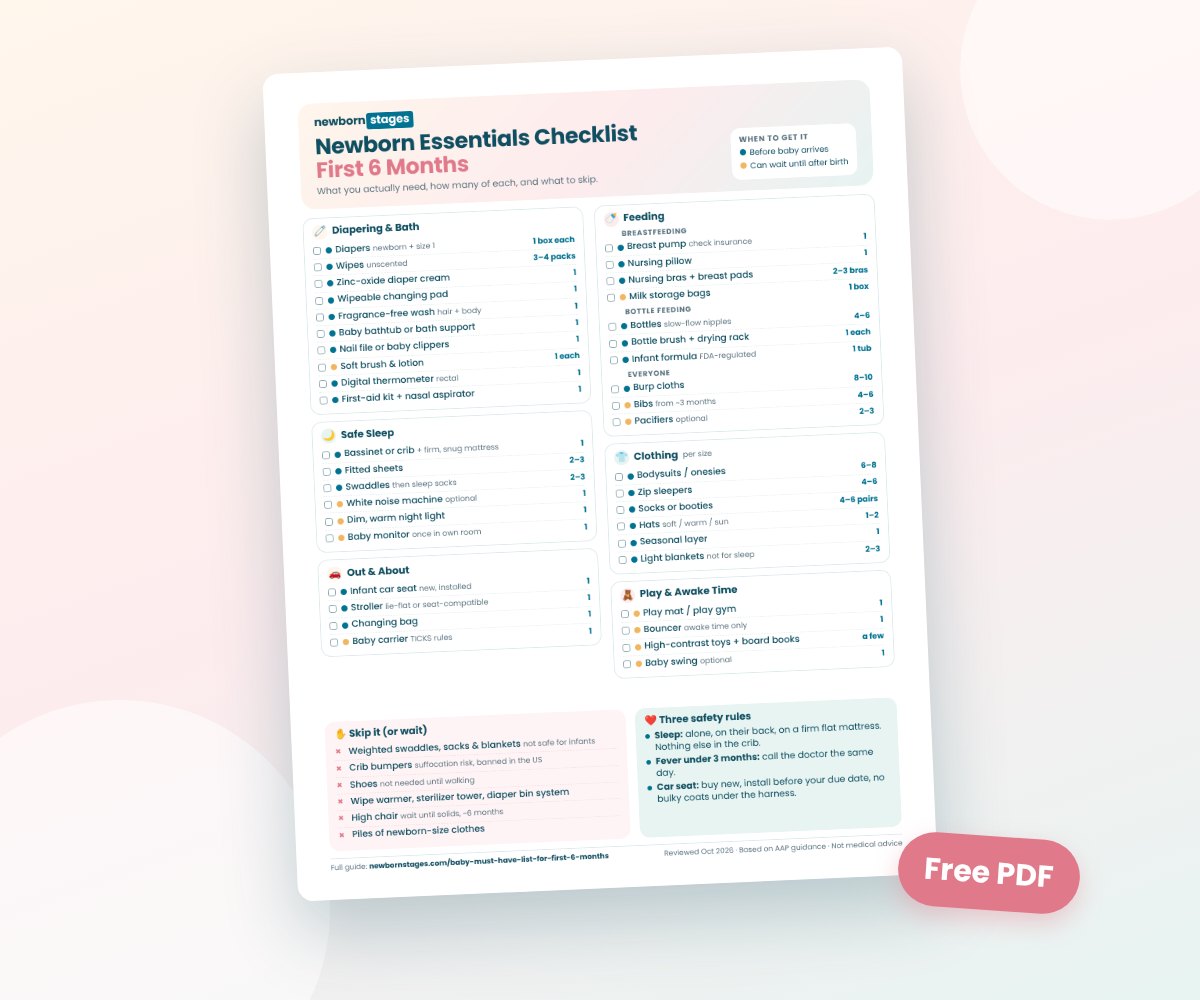
    Preview of the newborn shopping list checklistFree toolBuild your newborn shopping listMark what you have and need, then save your own list as a PDF.Start my list →
  • General Parenting
No Result
View All Result
Newborn Stages
No Result
View All Result

Home » Newborn (0–4 Weeks) » Why Is My Newborn Not Gaining Weight?

Why Is My Newborn Not Gaining Weight?

Written by: Danis
November 6, 2026
in Newborn (0–4 Weeks), Uncategorized
Why Is My Newborn Not Gaining Weight?
Key Takeaways
  • Newborns typically lose about 7% of birth weight (usually no more than 8 to 10%) in the first days and regain it by around 2 weeks, with a doctor's weight check due within 48 hours of leaving the hospital.
  • Low calorie intake is a key cause; breastfed babies need 8 to 12 feeds per 24 hours, while formula-fed newborns take about 1 to 2 ounces per feed in the first week, rising to 3 to 4 ounces by the end of the first month.
  • Latching problems, excessive sleep (wake to feed after about 4 hours), and still-developing feeding skills can limit intake, so seek help from a doctor or lactation consultant; 6 or more wet diapers daily by 5 to 7 days is a good sign.
  • Some newborns burn more calories, such as those with breathing difficulties, which need prompt medical attention, or premature babies, who require more calories than full-term infants.

Last reviewed: November 6, 2026. Checked against current guidance from the American Academy of Pediatrics and Children’s Hospital of Philadelphia.

Being a new mom can be nerve-wracking. You keep checking the health of your baby, read endless books, and do your best to ensure they are healthy and happy. You can watch the newborn lose some of its birth weight during this time.

Before you panic, let us tell you that this is normal. During the first few days, a newborn will lose on average about 7% of its birth weight, and usually no more than about 8 to 10%. Most of the babies gain the weight back by about 2 weeks old, and then it begins increasing. Your baby should have a checkup within 48 hours of leaving the hospital so the doctor can check their weight.

However, if your newborn is not gaining weight, here are some of the reasons behind this.

1. Intake Of Calories Is Low

It is important to understand the calorie needs of your baby. For example, a breastfed baby will need feeding at least 8 to 12 times every 24 hours, or about every two to three hours. If you are feeding formula, newborns usually take about 1 to 2 ounces per feed in the first week, every 2 to 3 hours. This slowly increases to about 3 to 4 ounces per feed by the end of the first month.

Even if you are doing this, some newborns might still not be getting enough calories to gain weight.

The reasons for this include the following:

  • Issues with latching: Make sure that your baby is latching on correctly so that they are getting all the nutrients they need. If the issue persists, you can opt for a lactation consultant
  • Sleeping a lot: Many newborns sleep a lot, which means they will not be getting calories. In the first few weeks, gently wake your baby to feed if they sleep longer than about 4 hours, unless your doctor tells you otherwise
  • Still learning: Babies are still learning how to breathe, swallow, and suck. Many babies get better at feeding within a few days, but don’t just wait it out. Ask your doctor or a lactation consultant for help, and keep your baby’s weight checks

These are the top three reasons that the calorie intake of your newborn baby might be low. Be sure to keep a check and see if it is because of any of these issues. If that is the case, then work towards rectifying the issue. A good sign your baby is getting enough is 6 or more wet diapers a day with pale yellow urine by 5 to 7 days old, and regular yellow stools.

2. Burning Calories

All newborns have different calorie needs in the beginning. That is because some of the babies will quickly metabolize all the calories that they intake. There are many reasons why some newborns might burn more calories than others, which include:

  • Difficulty with breathing: If your newborn is facing difficulty breathing, they are probably exerting more effort, which means burning more calories. Fast or hard breathing needs a doctor’s check right away
  • Premature newborn: A premature newborn will need more calories than a full-term newborn. Breast milk is still best, but some preemies need extra calories added to breast milk or a special formula. Follow your baby’s doctor’s feeding plan
  • Heart issues: If your newborn has any heart problems, it will probably expend more energy and struggle to gain weight. Be sure to consult a professional to rule this possibility out

These are the top three reasons your newborn might be burning more calories, which means they don’t have enough in their system for weight gain. Your baby’s doctor can find and treat these problems so that they can have enough calories to gain a healthy weight.

3. Lower Calorie Absorption

Finally, another reason why your newborn might not be gaining weight is that they are not absorbing enough calories from the food they take in. There could be many reasons for a low-calorie absorption rate.

These include:

  • Sensitive or allergic to certain foods: Babies can be intolerant, sensitive, or allergic to certain foods, such as the cow’s milk protein in formula or in a breastfeeding mother’s diet. If you think your newborn has an allergy, you must seek care as soon as possible
  • GERD: All babies spit up, and spit-up on its own is normal. When reflux comes with poor weight gain, refusing feeds, arching or crying during feeds, or green or bloody spit-up, it may be GERD. Talk to your pediatrician about this problem
  • Other medical conditions: Less often, problems with the gut, such as cystic fibrosis, can make it hard to absorb nutrients. Your doctor can check for these. (Celiac disease is not a cause in newborns, since it is triggered by gluten in solid foods later on.)

These are the top three reasons that your newborn baby might not be absorbing as many calories as possible for them to thrive.

If you suspect any of these issues, we recommend that you seek medical care. It will enable you to give immediate care to your newborn baby.

Keep in mind that feeding problems and jaundice are linked. Babies who aren’t feeding well can become more jaundiced, and very jaundiced babies can be sleepy and feed poorly. If your baby’s skin or eyes look yellow, call your doctor.

So, visit the medical practitioner to rule this possibility out and help your baby gain weight without any issues.

Final Words

That was your complete guide to why your newborn baby might not be gaining weight. Don’t wait a month if you are concerned. Call your newborn baby’s healthcare practitioner if your baby is not back to birth weight by about 2 weeks, has fewer wet diapers than expected, is very sleepy or hard to wake for feeds, or you are worried for any reason. Call right away or get emergency care if your baby has a rectal temperature of 100.4°F (38°C) or higher, has no wet diaper in 6 to 8 hours, or seems limp or very unwell.

It will help you rule out any serious issues, and you can follow the doctor’s order to ensure healthy weight gain for the newborn.

Read also:

2 Week Old Baby Development: Milestones and Care Tips

4 Weeks Old Baby Development; Milestones & Care Tips

This article is for general information and isn’t a substitute for medical advice. Always contact your pediatrician with questions about your baby’s health.

4 Sources

Newborn Stages uses trusted sources, including government health agencies, children’s hospitals and pediatric organizations, to support the facts in our articles. Read our editorial policy to learn how we research, fact-check and keep our content accurate.

  1. American Academy of Pediatrics, HealthyChildren.org. How to Tell if Your Breastfed Baby is Getting Enough Milk.
  2. American Academy of Pediatrics, HealthyChildren.org. Amount and Schedule of Baby Formula Feedings.
  3. American Academy of Pediatrics, HealthyChildren.org. Gastroesophageal Reflux (GER) & Gastroesophageal Reflux Disease (GERD).
  4. Children’s Hospital of Philadelphia. Slow or Poor Infant Weight Gain.

ShareTweetPinSend

Follow Newborn Stages on Google News

Danis

Father of two (a 9-year-old boy and a 5-year-old girl) and the founder of Newborn Stages. I've been researching and writing about baby and toddler development since 2016, and I started this site in 2020 because I couldn't find the clear, honest answers I needed as a new dad. I'm a parent, not a doctor. Every health article here is checked against guidance from the AAP, CDC, NHS and other trusted medical sources, with those sources linked in the article, and re-checked whenever that guidance changes.

Preview of the newborn shopping list checklistFree toolBuild your newborn shopping listMark what you have and need, then save your own list as a PDF.Start my list →
Previous Post

Baby Wipes: The Reason Why You Should Keep Them Handy During Summer

Next Post

Which Sense is Developed First In Newborns? Full Guide for the 5 Senses

You Might Also Like

Newborn Hiccups: Why They Happen So Often and How to Stop Them
Everyday Wellness

Newborn Hiccups: Why They Happen So Often and How to Stop Them

November 6, 2026
What Does a Newborn See in the First Week?
Newborn Daily Care

What Does a Newborn See in the First Week?

November 6, 2026
How Often a Newborn Eats: A Complete Guide for New Parents!
General Parenting

How Often a Newborn Eats: A Complete Guide for New Parents!

November 6, 2026
Skin-to-Skin and Breastfeeding: What Every New Mom Should Know
Breastfeeding

Skin-to-Skin and Breastfeeding: What Every New Mom Should Know

November 6, 2026
prds21a
Newborn Daily Care

How Soon Until I Can Take My Newborn for a Walk Outside?

November 6, 2026
Baby’s First Days at Home: A Comprehensive Step-by-Step Guide for Parents
Essentials

Baby’s First Days at Home: A Comprehensive Step-by-Step Guide for Parents

November 6, 2026

Leave a Reply Cancel reply

Your email address will not be published. Required fields are marked *

I agree to the Terms & Conditions and Privacy Policy.

Newborn Stages offers clear, well-sourced parenting information from a parent who has been there. Our mission is to help new parents find answers they can trust.

  • About us
  • Contact us
  • Advertise
  • Write for us
  • Sitemap
  • Privacy Policy
  • Terms & Conditions
  • Disclaimer
  • Editorial Policy
  • Affiliate Disclosure
Facebook-f Instagram

Kindly take note that all the information is for educational purposes only and not a substitute for professional health services.

  • Essentials
  • Development Stages
  • Feeding
  • Sleeping
  • Health & Safety
  • Product Reviews
©2026 www.newbornstages.com. All Rights Reserved.
No Result
View All Result
  • Home
  • Baby
    • Baby Development
      • Newborn (0–4 Weeks)
      • 1-2 Months
      • 3-6 Months
      • 7-9 Months
      • 10-12 Months
    • Baby Feeding
      • Breastfeeding
      • Bottle Feeding
      • Baby Food Recipes
    • Baby Sleep
      • Sleep Problems
      • Bedtime Routines & Sleep Basics
    • Baby Basics
      • Newborn Daily Care
      • Activities & Playtime
  • Toddler
    • Toddler Development
      • 13-18 Months
      • 19-24 Months
      • 2-3 Years
    • Toddler Sleep
      • Basics & Bedtime Routines
      • Problems & Concerns
    • Toddler Feeding
      • Healthy Food Recipes
      • Eating & Nutrition
      • Toddler Breastfeeding
    • Toddler Care & Training
      • Everyday Care & Training
      • Playtime & Education
  • Essentials
  • Health & Safety
    • Common Health Concerns
    • Disabilities and Chronic Conditions
    • Everyday Wellness
    • Mental Health
    • Safety & First Aid
  • Gear & Products
    • Parenting Books – Courses
    • Infant & Toddler Beds & Sleep products
    • Toys
    • Nursing & Feeding
    • Health & Safety
    • Strollers & Accessories
    • Car Seats & Accessories
  • General Parenting

© 2026 www.newbornstages.com. All Rights Reserved.