










There is something genuinely magical about the first time your baby turns their head when you call their name.
It is a small, quiet moment – but it signals something significant: your baby is beginning to understand that sounds carry meaning, and that one particular sound refers specifically to them.
So when does this happen, what does it look like, and what can you do to help it along?
When Do Babies Typically Recognize Their Name?
Most babies begin consistently recognizing and responding to their name between 5 and 7 months of age.
As with most developmental milestones, there is a normal range of variation:
- 4 to 5 months: Some babies begin turning toward familiar voices, but consistent name recognition has not yet developed
- 6 to 7 months: Most babies will reliably turn toward you when you call their name in a quiet environment
- 9 months: The CDC considers responding to their own name a key developmental checkpoint by this age
The CDC’s developmental milestones checklist lists responding to their own name as an important social and communication milestone to watch for around 6 months.
Signs Your Baby Is Recognizing Their Name
Name recognition does not always look like the clear, immediate head-turn you might expect. Here is what to look for:
- Turns their head or shifts their gaze toward you when you call their name
- Pauses what they are doing when they hear their name — even if they do not look up
- Makes eye contact in response to hearing their name called from nearby
- Responds differently to their own name than to other words or background sounds
It is also completely normal for babies to seem inconsistent at first.
They may respond reliably in a quiet room but ignore you entirely when they are deeply focused on a toy or activity.
This selective attention is normal and does not indicate a problem.
For a full picture of communication and social development at this age, see our 7 to 9 month baby milestones guide.
Why Does Name Recognition Matter?
Recognizing their own name is one of the earliest and most important signs of language comprehension – the understanding that specific sounds carry specific meanings.
It is a building block for several important developments that follow:
- Understanding simple words and instructions in the second half of the first year
- Producing first words, which typically emerge around 12 months
- Joint attention — the ability to share focus on an object or event with another person — which is a cornerstone of social and language development
Early name recognition is also one of the early indicators that language development is on track, which is why paediatricians typically ask about it at the 6 and 9 month well-child visits.
How to Encourage Name Recognition
Use Their Name Constantly in Everyday Interactions
The single most effective thing you can do is simply use your baby’s name all the time.
During nappy changes, feeds, bath time, play – narrate everything using their name naturally.
‘Let’s get your nappy changed, Mia.’ ‘Look at what you found, Mia!’ Babies learn through repetition, and the more they hear their name in warm, engaging contexts, the faster they will connect it to themselves.
Get Down to Their Level
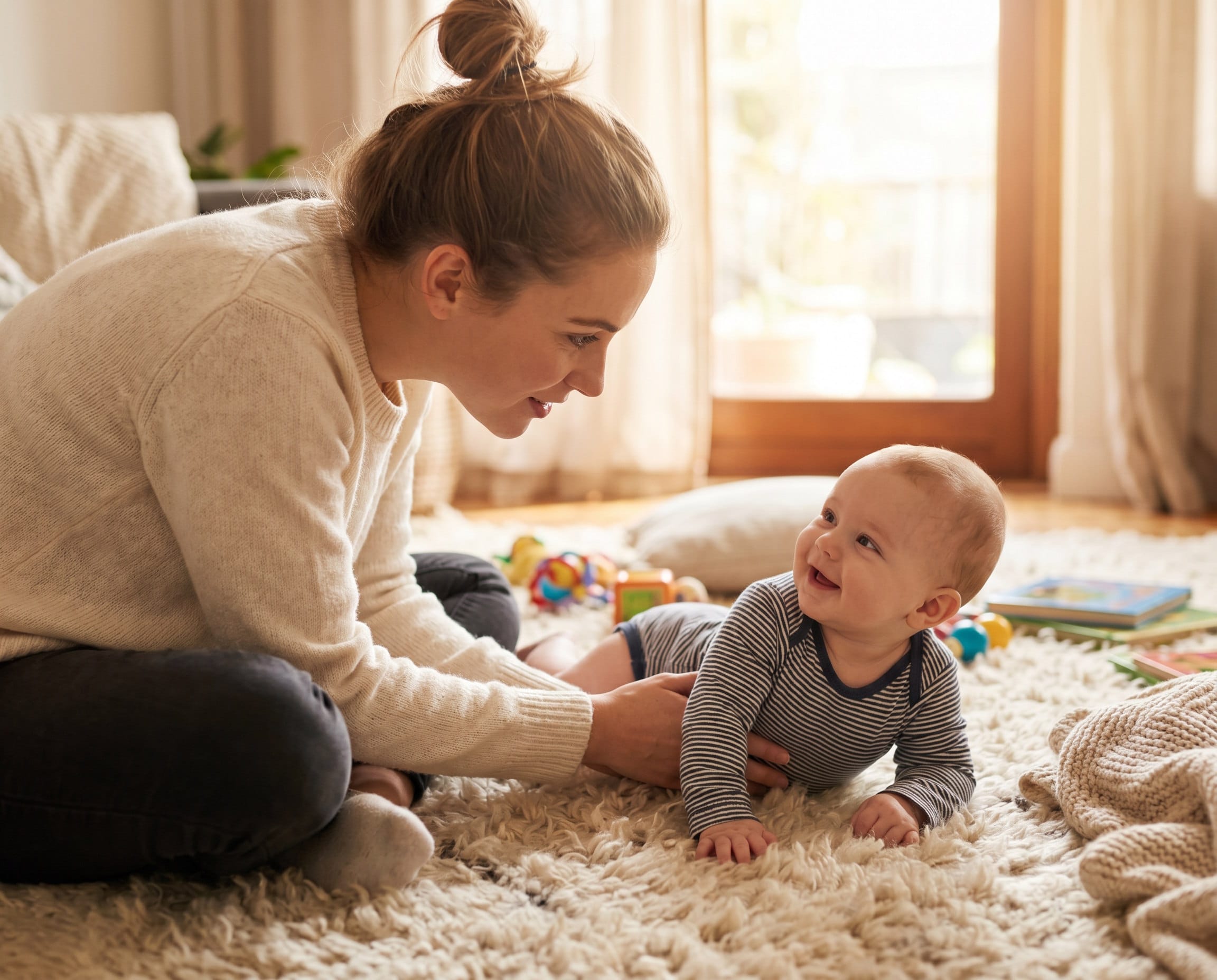
When you call your baby’s name, get down to their eye level and make sure your face is visible.
Babies are far more likely to respond to a name when they can see the social cues that come with it – your expression, your eye contact, your smile.
This also teaches them that responding to their name leads to positive interaction, which reinforces the behaviour.
Make It a Game
Call your baby’s name from different parts of the room and respond with big, enthusiastic praise when they turn toward you.
Clap, smile, reach out to them. Positive reinforcement makes the lesson stick.
This does not need to be a structured activity – weave it into ordinary moments throughout the day.
Read Books That Use Their Name
Personalised books that feature your baby’s name are wonderful for this developmental stage.
Even without a personalised book, pointing to images and narrating – ‘Where is Mia? There she is!’ – builds the connection between the name and the self.
For more activity ideas to support development at this stage, see our baby activities and playtime section.
When Should I Be Concerned?
Talk to your paediatrician if, by 9 months, your baby consistently does not respond to their name across different situations – not just when distracted, but in quiet, calm environments where you have their attention.
Consistent non-response to their name by this age can sometimes indicate hearing difficulties or a developmental difference that benefits from early evaluation.
The CDC’s Learn the Signs, Act Early campaign provides clear, parent-friendly guidance on developmental milestones and when to seek evaluation.
Early intervention, where needed, makes a meaningful difference – and seeking an evaluation early is never a mistake.
Trust your instincts as a parent. If something feels off, bring it up with your doctor sooner rather than later.
A concern that turns out to be nothing is always preferable to a missed opportunity for early support.
Frequently Asked Questions
My baby responds to their nickname but not their full name. Is that normal?
Completely normal. Babies respond to the sounds they hear most often.
If they have grown up hearing a nickname, that is the sound they will recognise first. Both are valid – use whichever you use most consistently at home.
Could a hearing problem be preventing my baby from recognising their name?
Possibly, if they also do not startle at loud sounds and do not seem to respond to voices in general.
If you have any concerns about your baby’s hearing, ask your paediatrician for a referral for a formal hearing assessment. It is quick, painless, and worth doing.
My baby is 5 months and already turns to their name. Is that early?
Yes, and that is a wonderful sign. Early name recognition simply means your baby’s language and social development is progressing at the faster end of the normal range. Enjoy it.
The Bottom Line
Most babies recognise their name reliably by 6 to 7 months, with some doing so a little earlier or later.
The best thing you can do is use their name warmly and consistently throughout every ordinary day.
For more on language and social development, browse our baby development section.
Sources:
CDC — Developmental Milestones: 6 Months