


Last reviewed: November 6, 2026 · Updated to match current American Academy of Pediatrics (AAP) guidance.
Quick answer: No method can promise to put every baby to sleep in 40 seconds, but a calm routine helps many babies settle fast: feed and burp, dim the lights, use soft white noise at a low volume, rock or shush until your baby is drowsy, then lay them on their back in their own crib or bassinet with nothing else in it. Avoid loose blankets, and don’t let your baby sleep in a swing, hammock or bouncer.
Getting a newborn to sleep can feel like the hardest part of new parenthood. The tips below are quick, gentle ways to help your baby relax, and they’re all safe to use every night.
7 Ways to Help Your Baby Fall Asleep Fast
1. Set Up a Safe, Comfortable Sleep Space
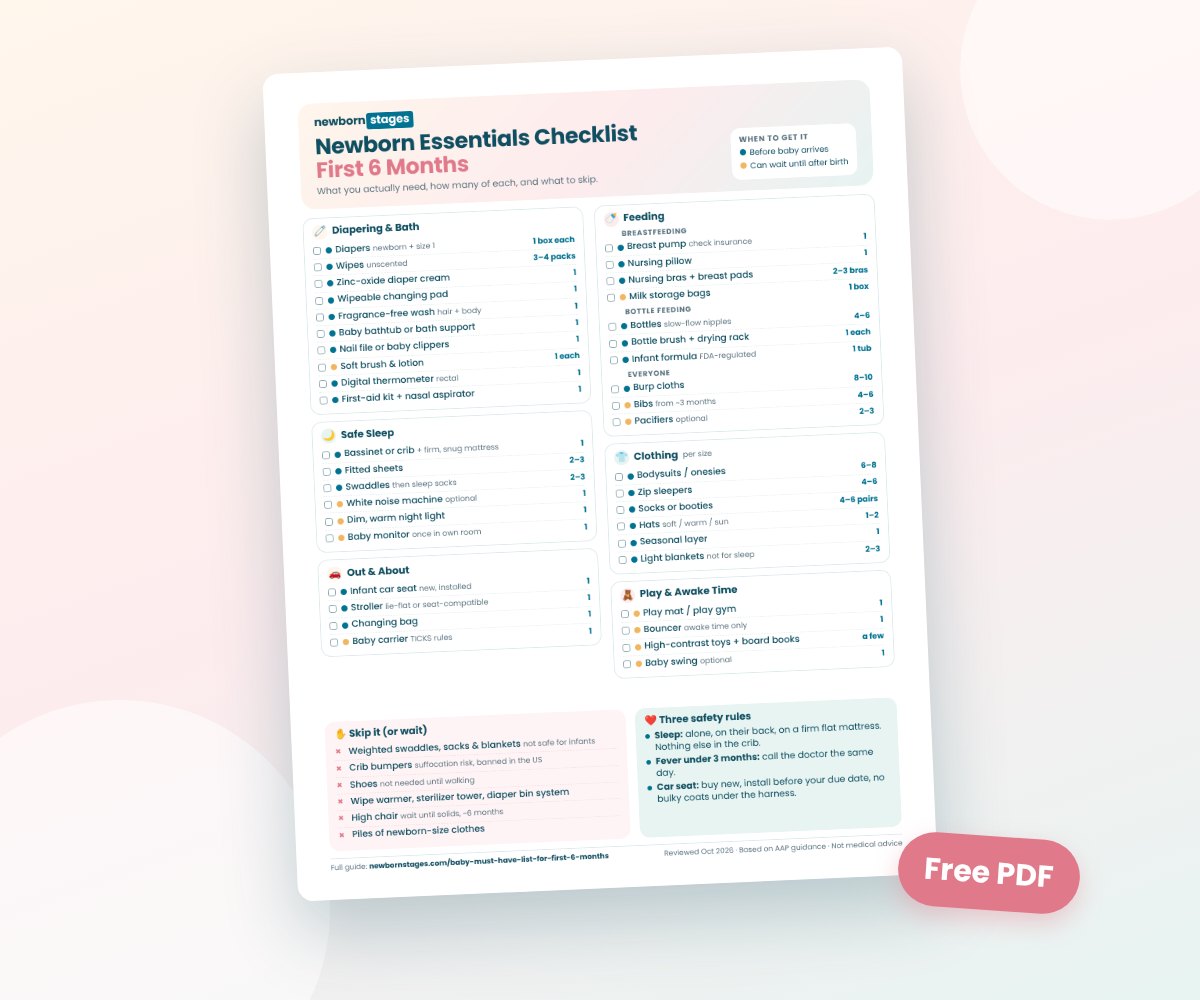
Babies settle better in a space that’s always the same. The AAP recommends:
- Placing your baby on their back for every sleep
- A firm, flat, non-inclined mattress with a tight fitted sheet
- Nothing else in the crib: no pillows, bumpers, toys or loose blankets
- Keeping the crib or bassinet in your room for at least the first 6 months
Dress your baby in one more layer than you’d be comfortable in, or use a wearable blanket or sleep sack, so they’re warm without loose bedding.
2. Feed, Burp and Change First
A baby who’s hungry, gassy or wet won’t settle. Offer a feed, burp them well, and put on a clean diaper before you start winding down.
3. Dim the Lights
Darkness helps your baby’s body make melatonin, the hormone that makes them sleepy. Keep night feeds and changes quiet, with as little light as possible. A small, dim night light is fine if you need to see.
4. Use White Noise, Safely
Steady white noise can remind babies of the sounds they heard in the womb and mask household noise. If you use a white noise machine or app, the AAP suggests:
- Placing it at least 7 feet (about 2 meters) from your baby’s crib
- Keeping the volume low, about as loud as a soft shower
- Never putting it inside or on the crib
Don’t place the crib next to a washing machine, hairdryer or other appliance. They can get hot, be too loud for a baby’s hearing, and aren’t safe to leave running near a sleeping baby.
5. Rock, Sway or Shush
Gently rocking your baby in your arms, swaying or shushing near their ear can calm them quickly. When they’re drowsy but still a little awake, lay them down on their back in their crib. If you feel sleepy while holding your baby, put them down first. Falling asleep with a baby on a sofa or armchair is very risky.
Swings, hammocks, bouncers and car seats are not safe places for sleep. If your baby falls asleep in one, move them to their crib or bassinet.
6. Swaddle Young Babies
Swaddling in a thin blanket or swaddle can help young babies feel secure and stop the startle reflex from waking them. Always place a swaddled baby on their back, keep the swaddle loose around the hips, and stop swaddling as soon as your baby shows signs of trying to roll, usually around 2 to 3 months.
7. Read, Sing or Use a Gentle Touch
Your voice is one of the most soothing sounds for your baby. A short story or lullaby can become a cue that it’s time to sleep. Gently stroking your baby’s forehead or face, with your hand or a soft, dry cloth, can help them relax too.
Build a Simple Bedtime Routine
Doing the same few steps in the same order every night, such as a bath, a feed, a song and lights out, helps your baby learn when it’s time to sleep. Over time, a routine can help them fall asleep faster than any single trick.
For more help, see our guide on how to get your baby to sleep without being held and our tips for soothing a fussy baby.
When to Call the Doctor
Call your pediatrician if your baby is very hard to wake, feeds poorly, cries in a way that’s different from usual, or has a fever of 100.4°F (38°C) or higher under 3 months of age.
The Bottom Line
There’s no guaranteed 40-second trick, but feeding, dim lights, soft white noise, rocking and a steady routine help most babies drift off quickly. Once your baby is drowsy, always lay them on their back, in their own crib or bassinet, with nothing else in it.
This article is for general information and isn’t a substitute for medical advice. Always contact your pediatrician with questions about your baby’s sleep.
2 Sources
Newborn Stages uses trusted sources, including government health agencies, children’s hospitals and pediatric organizations, to support the facts in our articles. Read our editorial policy to learn how we research, fact-check and keep our content accurate.
- HealthyChildren.org, American Academy of Pediatrics. How to keep your sleeping baby safe: AAP policy explained.
- Safe to Sleep, National Institutes of Health (NICHD). Safe to Sleep campaign.