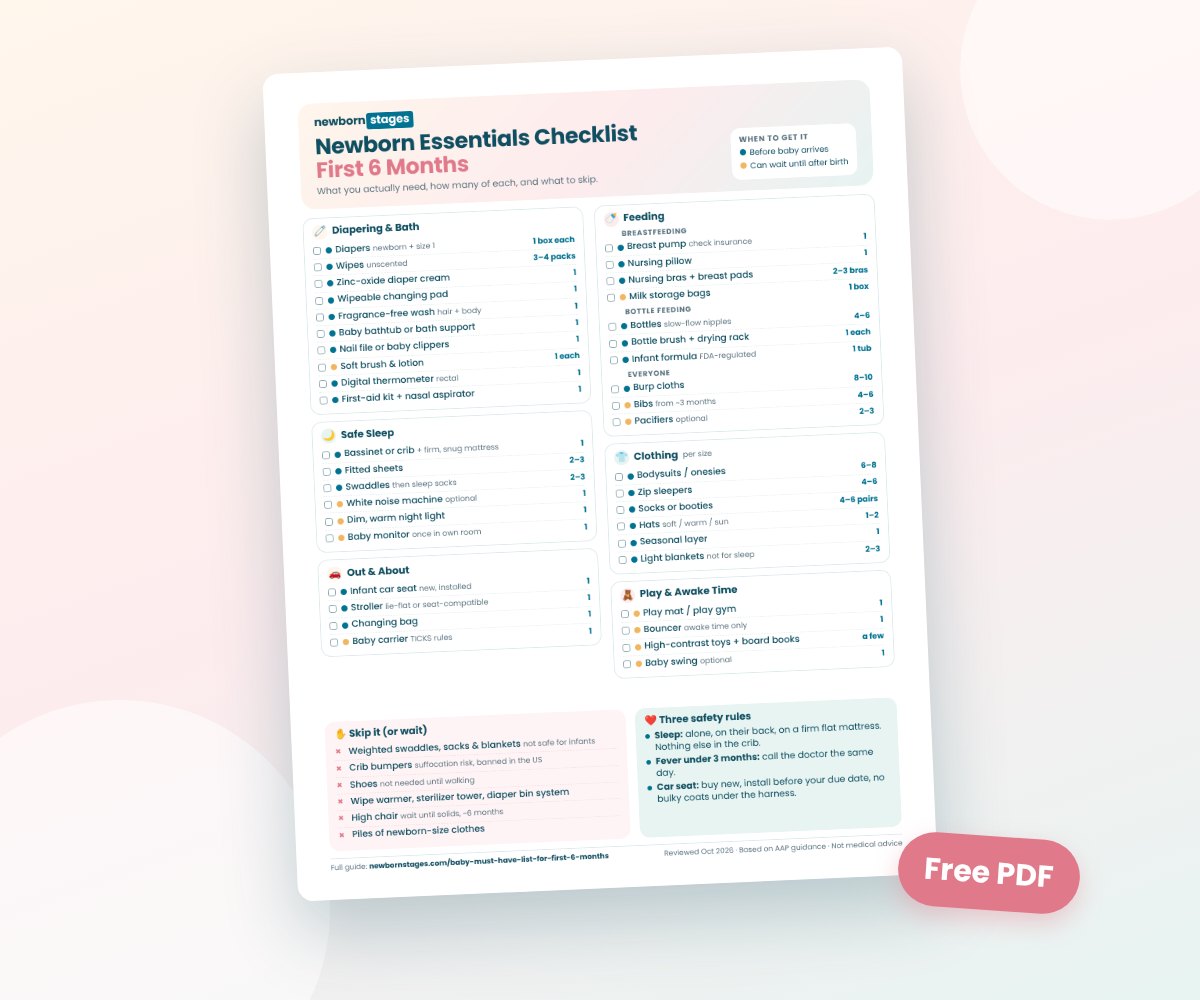



Last reviewed: November 6, 2026. Checked against current guidance from the American Academy of Pediatrics (HealthyChildren.org) and the CDC.
The birth of a newborn is a beautiful event filled with joy and wonder, but it also comes with the burden of parental responsibility.
As a parent, you have the vital role of caring for someone whose well-being depends entirely on you. Your actions and choices bear significant weight as you navigate these early days.
Thankfully, you won’t have to navigate through parenthood alone. There are a myriad of resources out there that can answer any urgent inquiries you may have.
This thorough guide is one of them. It will help you appreciate the joys and trials of your baby’s early days at home by providing insightful, practical advice and step-by-step instructions.
10 Things to Prepare Before Bringing Your Baby Home
Before bringing your child home, there are some things you need to prepare first to ensure a smoother transition. Here are essential preparations to consider:
1. Nursery essentials
Make it safe and comfortable for your little one. Set up a crib or bassinet with a firm, flat mattress that fits snugly and a tight fitted sheet. Skip the soft bedding. Pillows, blankets, quilts, bumpers and stuffed toys can cause suffocation, so keep them out of the sleep space. A bare crib is the safest crib.
Put the crib or bassinet in your room. The AAP recommends sharing a room, but not a bed, with your baby for at least the first 6 months. Keep the room at a comfortable temperature and avoid overdressing your baby. A baby monitor can add peace of mind.
2. Feeding supplies
Regardless of whether you’re nursing or using a bottle, you still need to stock up on the necessities. To make your journey smoother, nursing moms should get ready with nursing bras, pads, and a cozy chair.
If not, get ready with an iron-fortified infant formula suited to your baby’s developmental stage (your pediatrician can help you choose), multiple bottles, and a method for routinely sterilizing your bottles.
3. Diapering gear
You’ll go through a lot of diapers, so you better stock up on various sizes, wipes, diaper rash cream, changing mats, and a diaper pail for your convenience.
4. Clothing and swaddles
Babies grow shockingly quickly, so have a mix of clothing sizes from newborn to a few months ahead. Prioritize soft, comfortable clothing, swaddles, and mittens to keep your little one snug and picture-ready.
Always place a swaddled baby on their back, and stop swaddling as soon as your baby shows signs of trying to roll. Once you’re home, skip hats indoors, especially for sleep. The AAP notes that overheating raises the risk of SIDS, so dress your baby in about one more layer than you’d wear.
Soft, breathable fabrics like cotton are a good choice, especially if your baby has sensitive skin.
5. Health and safety essentials
Although moving to a new house can be frightening, you can take the necessary precautions to make sure it’s as secure as possible.
Make sure your home is cleaned and disinfected before bringing your child home.
Additionally, stock a baby first-aid kit that includes a digital thermometer, nasal aspirator, and baby-safe nail clippers. You can keep infant acetaminophen on hand, but only give it after your pediatrician tells you the right dose for your baby’s weight. Don’t give ibuprofen to babies under 6 months, and never give aspirin to children.
If your baby is under 3 months old and has a rectal temperature of 100.4°F (38°C) or higher, call your doctor right away, as the AAP advises. Don’t give any fever medicine before your baby is seen.
6. Baby gear
Even before bringing your little one home, make sure you have a rear-facing car seat installed correctly, as the AAP advises. Your baby will need it for the ride home from the hospital. Keep your baby rear-facing for as long as the seat allows. Dress them in thin layers under the harness, not a bulky coat. Car seats are for travel, so don’t let your baby sleep in one outside the car.
Consider a stroller, baby carrier, or sling for outings. In a carrier or sling, keep your baby’s face visible and their chin off their chest. A bouncer or swing can help soothe your baby while they’re awake and watched, but these are not safe for sleep. If your baby dozes off, move them onto their back in their crib or bassinet.
7. Feeding chair and supplies
This one can wait. Most babies are ready for solid foods around 6 months. When that time comes, a highchair can keep the mess in an easily cleaned area. Bowls, spoons, and bibs are also handy for feeding times.
8. Comfort for you
Don’t forget to keep yourself comfortable, too! Some postpartum essentials include nursing pads, comfortable clothing, maternity bras, and toiletries for yourself.
9. Support network
It truly takes a village to raise a child, thankfully not literally. Ask for the help of trusted friends and family during these challenging times.
As much as it’s essential to care for your baby, don’t forget to look out for your well-being as well.
10. Knowledge and information
Equip yourself with reliable resources like books, online communities, contact details for healthcare providers, and even your friends and family for any questions or concerns.
Double-check that your info comes from trustworthy sources and applies to your baby’s unique needs and situation.
When the Baby Arrives
Here’s how to safely make it through the adjustment period of your little one’s first days.
1. Bonding time
Cherish these early moments by spending skin-to-skin time with your baby. Engage in gentle touch and speak in soothing tones. Besides the emotional fulfillment, physical touch has beneficial effects for both you and your child.
2. Feeding routine
Establishing feeding times will be confusing, even for parents with experience. However, don’t be discouraged, as you will get the hang of your baby’s schedule sooner or later.
You can start a feeding routine by following your baby’s cues for hunger. Most newborns feed about every 2 to 3 hours, or 8 to 12 times in 24 hours. Breast milk or formula is all your newborn needs to eat and drink.
Keep track of feedings and diapers. After the first 4 to 5 days, expect at least 5 to 6 wet diapers a day. If you’re breastfeeding, ask your pediatrician about vitamin D drops (400 IU a day).
3. Sleeping patterns
Newborns sleep a lot but in short bursts. You’ll need to adjust to their sleep schedule—meaning you should nap when your baby does and try to keep their environment conducive to sleep.
Dim lights and quiet rooms are the best for keeping you and your baby rested. For every sleep, including naps, place your baby on their back on a firm, flat surface in their own crib or bassinet.
4. Diaper changing and care
Change diapers frequently to ensure your baby stays clean and comfy. Use gentle, alcohol-free wipes and apply diaper cream as needed. It’s best to keep the diaper area dry and clean to minimize rashes. Keep the umbilical cord stump clean and dry, too. It usually falls off in 1 to 3 weeks.
5. Understanding cues
Babies have limited communication options. So, pay attention to their calls, movements, and facial expressions.
Given enough time, learning how to decipher the signs of hunger, discomfort, and drowsiness will help you respond appropriately.
6. Visitors and boundaries
Manage visitors respectfully. There’s often plenty of excitement when a baby enters a family, but set boundaries that let you and your baby have ample rest and bonding time without feeling overwhelmed. Ask visitors to wash their hands before holding the baby and to stay home if they’re sick.
7. Doctor’s appointments
Your baby’s first checkup should happen within the first week after birth. After that, visit your pediatrician regularly to monitor your baby’s health and growth. Ask as many questions as you need and mention any concerns you have. This is especially important for first-time parents.
Your doctor can clarify the internal processes that occur as your baby grows and may explain some of your baby’s behaviors and habits.
8. Capture memories
Take plenty of pictures and jot down memorable moments in a journal. These early days are fleeting, and capturing memories creates a treasure trove to look back on these hectic but enjoyable days.
The Start of Something Extraordinary
As you prepare for or wrap up these whirlwind first days with your newborn, remember: there’s nothing quite like it in the world. Amidst the chaos and adjustments, you’ve begun something filled with immense love and wonder.
Even though taking on responsibility can initially seem too much, every day, it becomes fulfilling as new experiences fill your days.
Savor the calm times, revel in the beautiful chaos, and find solace in the knowledge that you are doing an excellent job.
Remember that it’s okay to seek support, trust your instincts, and savor every precious moment.
Your dedication and care today lay the foundation for a lifetime of love and growth with your little one.
Once again, congratulations on starting the extraordinary experience of parenthood!
This article is for general information and isn’t a substitute for medical advice. Always contact your pediatrician with questions about your baby’s health.
6 Sources
Newborn Stages uses trusted sources, including government health agencies, children’s hospitals and pediatric organizations, to support the facts in our articles. Read our editorial policy to learn how we research, fact-check and keep our content accurate.
- American Academy of Pediatrics (HealthyChildren.org). How to Keep Your Sleeping Baby Safe: AAP Policy Explained.
- American Academy of Pediatrics (HealthyChildren.org). Baby Products to Avoid: Unsafe Registry Picks & Secondhand Gear.
- American Academy of Pediatrics (HealthyChildren.org). A Parent’s Guide to Over-the-Counter Medicines for Children.
- American Academy of Pediatrics (HealthyChildren.org). Fever (0-12 Months).
- American Academy of Pediatrics (HealthyChildren.org). Car Seats: Information for Families.
- Centers for Disease Control and Prevention. Vitamin D.