

Last reviewed: November 2, 2026 · Based on guidance from MedlinePlus (US National Library of Medicine) and pediatrician-reviewed KidsHealth.
Quick answer: Most children are ready to start potty training somewhere between 18 and 30 months. Before 18 months, most toddlers can’t fully control their bladder and bowel muscles yet. Age matters less than readiness: look for signs like staying dry for 2 hours, telling you when their diaper is wet or dirty, showing interest in the toilet, and being able to pull their pants up and down. Once a child is ready, daytime training usually takes about 3 to 6 months, and staying dry at night often takes longer.
Potty training is one of those milestones every parent gets opinions about, from grandparents, friends and the internet. The truth is simple: children who start when they’re ready usually learn faster and with fewer battles, while starting too early tends to make the whole process take longer. This guide covers the signs your toddler is ready, the typical age, how long it takes, how to get started, and when to check in with your pediatrician.
When to Start Potty Training
Most children show signs of readiness between 18 and 30 months, according to MedlinePlus (US National Library of Medicine). KidsHealth notes that many children show these signs between 18 and 24 months, while others aren’t ready until later, and that boys often start a little later and take a little longer than girls.
There’s no prize for starting early. Starting before your child is ready often makes training take longer, according to KidsHealth. Many children are still in diapers until somewhere between 2 and 3 years old, and that’s completely normal.
Can You Potty Train at 18 Months?
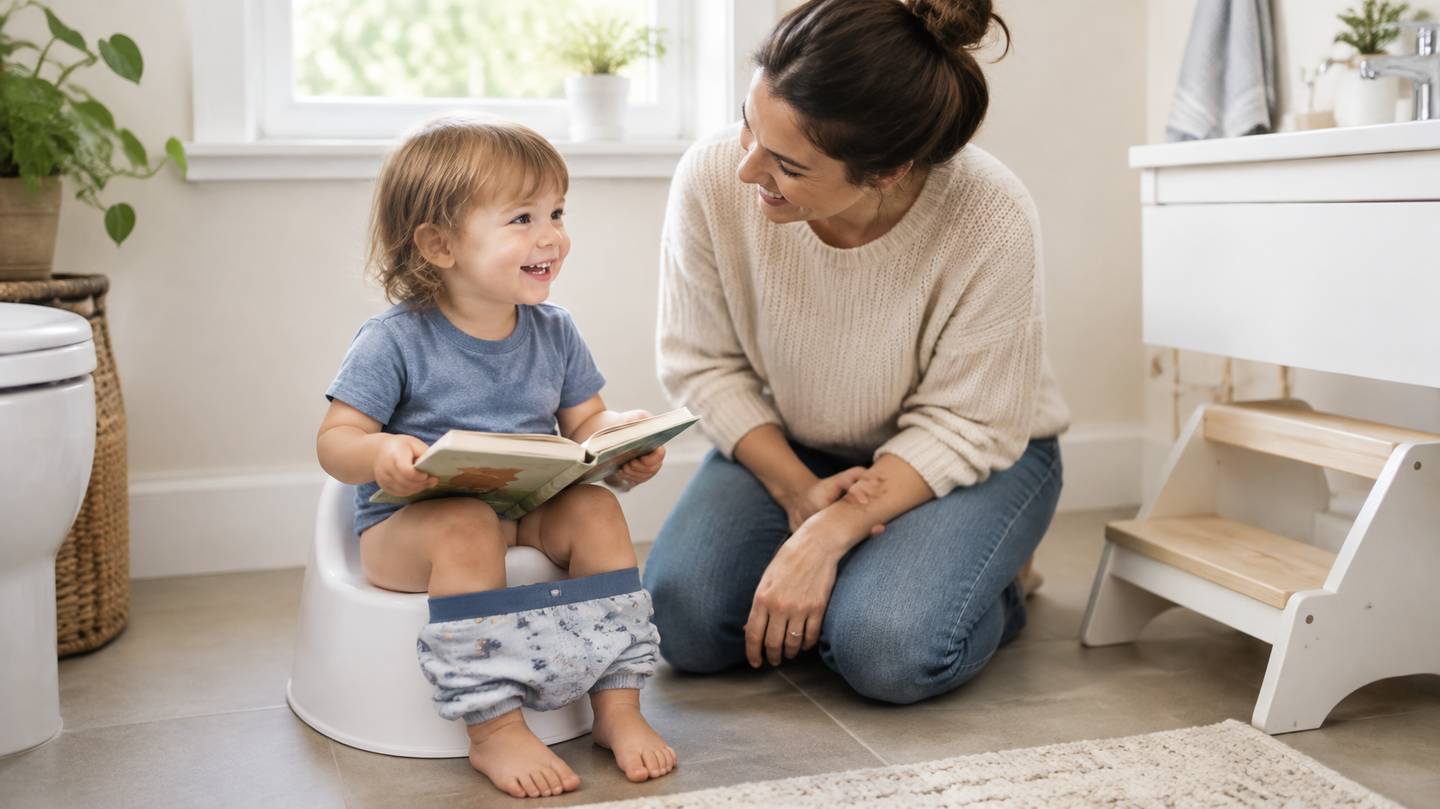
Some children are ready at 18 months, but many aren’t. If your 18 month old shows several of the readiness signs below, you can gently start introducing the potty: let them sit on it fully clothed, read books about it, and see how they respond. If they resist, put it away for a few weeks and try again later.
10 Signs Your Toddler Is Ready for Potty Training
Your child doesn’t need to show every sign, but the more of these you see, the more likely they’re ready:
- Stays dry for at least 2 hours during the day, or wakes up dry from naps
- Tells you or shows you when their diaper is wet or dirty
- Tries to take off a dirty diaper or seems bothered by it
- Uses words or expressions to say they need to go, or hides to poop
- Shows interest in the toilet or in watching family members use it
- Wants to wear “big kid” underwear
- Can pull their pants down and up on their own
- Can walk to the potty and sit down and get up without help
- Understands and follows simple instructions, like “go get your shoes”
- Understands potty words like “pee” and “poop” and links the feeling with needing to go
These signs come from MedlinePlus and KidsHealth guidance. They’re about physical control (staying dry), skills (pulling pants down) and understanding (knowing what the potty is for). All three need to be there for training to go smoothly.
When to Wait
Even if your child seems ready, it’s usually better to hold off during big changes, according to KidsHealth and MedlinePlus, such as:
- A new baby in the family
- Moving house or going on a trip
- Moving from a crib to a bed (see our 18 month sleep regression guide on why big changes are best spaced out)
- Starting daycare
- Illness, especially diarrhea
How Long Does Potty Training Take?
Once a child is ready, daytime potty training usually takes about 3 to 6 months, according to MedlinePlus and KidsHealth. Some children pick it up in a few weeks, others take longer, and girls often learn a little faster than boys.
Nighttime dryness usually comes last. Night control often lags months or even years behind daytime control, so it’s normal for a child who’s fully trained during the day to still need a diaper or pull-up at night. A waterproof mattress protector helps during this stage.
Accidents are part of the process, even after your child is “trained.” Setbacks are especially common during stressful times, like when a new sibling arrives.
How to Start Potty Training
- Get a potty chair and put it somewhere easy to reach. Let your child get used to it by sitting on it fully clothed first.
- Use simple words for pee and poop, and use the same words every time.
- Let them watch and learn. Toddlers learn by copying, so let them see parents or older siblings use the toilet and practice flushing.
- Build a routine. Encourage sitting on the potty when they wake up, before bath and bed, and 15 to 30 minutes after meals, when poops are more likely. Keep it short.
- Never force them to sit. Let them get off when they want. Pressure usually backfires.
- Praise every effort, even just sitting. A sticker chart works well for many toddlers.
- Dress for success with clothes they can easily pull down themselves.
- Get everyone on the same page. Grandparents, daycare and other caregivers should use the same words and routine.
- Handle accidents calmly. Clean up, gently remind them to use the potty next time, and reassure them. Avoid scolding or punishment.
- Teach hygiene from the start, including handwashing every time and, for girls, wiping front to back.
If your toddler resists, it’s fine to stop for a few weeks and try again. Pushing too soon can slow learning. For more hands-on strategies, see our 9 helpful potty training techniques for toddlers.
Watch Out for Constipation
Hard, painful poops can make a toddler afraid to go, and holding it in makes constipation worse. Offer plenty of water, fruit, vegetables and fiber, and talk to your pediatrician if your child is straining or in pain. Our guide to constipation in babies and young children has more.
When to Talk to Your Pediatrician
Every child learns at their own pace, but check in with your pediatrician if your child:
- Is 4 years old or older and still not using the toilet
- Was trained but has started having frequent accidents again
- Has pain when peeing or pooping
- Wets themselves often, which can be a sign of a urinary tract infection
- Has ongoing constipation or blood in their poop
For everything else your toddler is learning at this stage, see our guide to developmental milestones for 2 to 3 year olds.
Frequently Asked Questions About Starting Potty Training
What age should you start potty training?
Most children are ready between 18 and 30 months. Readiness matters more than age, so watch for signs like staying dry for 2 hours and showing interest in the toilet.
What are the signs a toddler is ready for potty training?
Staying dry for 2 hours, telling you when their diaper is wet or dirty, interest in the toilet or underwear, pulling pants up and down, and following simple instructions.
How long does potty training take?
Daytime potty training usually takes about 3 to 6 months once a child is ready. Staying dry at night often takes longer.
Can you potty train an 18 month old?
Some 18 month olds are ready, but many aren’t. If your child shows several readiness signs, introduce the potty gently and wait a few weeks if they resist.
Are girls faster to potty train than boys?
On average, girls often learn a little faster, and boys often start slightly later. Every child is different, though.
When should I worry about potty training?
Talk to your pediatrician if your child isn’t trained by age 4, starts having frequent accidents after being trained, or has pain when peeing or pooping.
The Bottom Line
Most children are ready to start potty training between 18 and 30 months, but readiness matters more than age. Watch for signs like staying dry for 2 hours, telling you about a wet diaper and showing interest in the toilet. Start when life is calm, keep it positive and pressure-free, expect accidents, and know that daytime training usually takes 3 to 6 months, with nighttime dryness coming later. Talk to your pediatrician if your child isn’t trained by age 4 or has pain or frequent accidents.
This article is for general information and isn’t a substitute for medical advice. Always contact your pediatrician with questions about your child’s health and development.