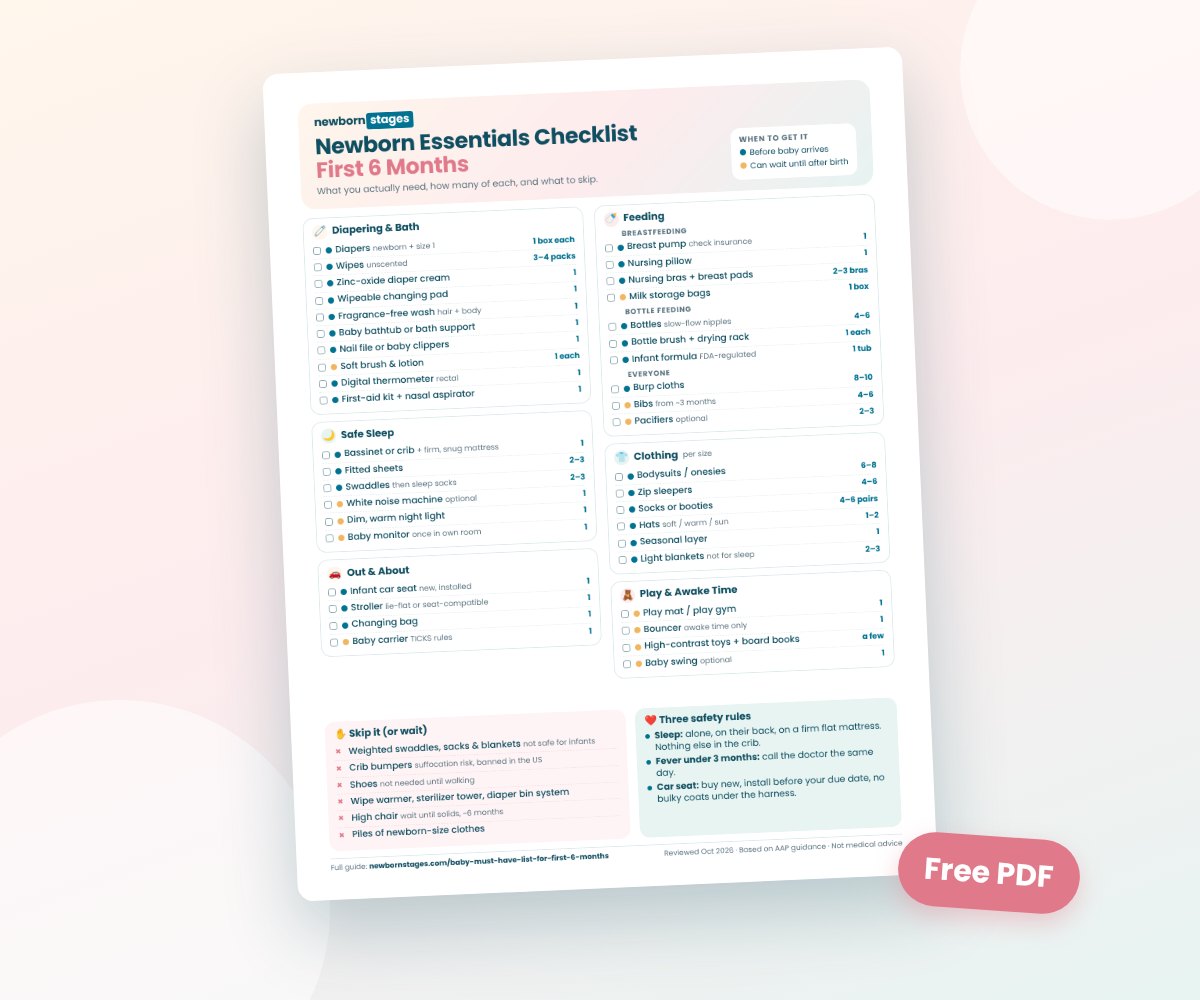



Last reviewed: November 6, 2026. Checked against current guidance from the CDC, the American Academy of Pediatrics (HealthyChildren.org), the U.S. Consumer Product Safety Commission (CPSC) and Cleveland Clinic.
Pregnancy is a beautiful phase for first – time mothers. Although they are experiencing all the body and hormonal changes for the first time, therefore they might feel a bit nervous, stressed, and challenged to cope and ensure that they can take care of the little in the womb.
Because of hormonal changes, they might also experience mood swings and feel tired and agitated. But these changes even carry on after the birth, and still, the mother might feel even more tired and get more mood swings.
But over and above, having a little in her arms can bring them the maximum happiness.
For first-time mothers, the transition from carrying life within the womb to nurturing that life through breastfeeding is a journey filled with excitement, challenges, and a plethora of emotions.
This post will go through the road map from baby bump to breastfeeding.
Pregnancy: The Foundation of Breastfeeding Success
1. Exercise and Prenatal Yoga:
Engaging in prenatal exercises and yoga not only helps maintain physical fitness but also promotes relaxation and prepares the body for the challenges of childbirth.
Gentle exercise and stretching can ease common pregnancy aches and help you feel stronger as you recover after birth. Ask your doctor or midwife which kinds of exercise are right for you.
2. Healthy Pregnancy Diet:
During pregnancy, nutrition plays a pivotal role in the mother’s health and the baby’s development.
A well-balanced diet rich in essential nutrients like folic acid, iron, and calcium lays the groundwork for a healthy breastfeeding journey.
3. Pregnancy Pillow:
A pregnancy pillow becomes an invaluable companion during this stage, supporting the growing belly and alleviating discomfort during sleep.
These specially designed pillows come in various shapes and sizes, offering targeted support to different body areas.
- U-shaped full-body pillow: This U-shaped pillow provides support to the back, hips, knees, neck, and head simultaneously. Its versatile design accommodates various sleeping positions, ensuring comfort during all stages of pregnancy.
- Boppy Pregnancy Body Pillow: The Boppy Pregnancy Pillow is a wedge-shaped option that provides targeted support to the belly and lower back. Its compact size makes it easy to maneuver, and the slipcover is machine-washable for convenience.
- Pregnancy Total Body Pillow: The unique C-shape supports the back, hips, knees, and neck, promoting more restful sleep. Its removable cover makes maintenance easy, an essential feature during pregnancy.
The Transition to Breastfeeding
Once the mother delivers the baby, there are no limits to her happiness. She is overjoyed by holding her little one for the first time.
But along with it comes some challenges and discomforts, like breastfeeding for the first couple of times. But the sooner mother and child get used to it.
- Attending Breastfeeding Classes: Prenatal education is crucial to preparing for breastfeeding. Attending breastfeeding classes equips expectant mothers with the knowledge and techniques needed for successful breastfeeding. These classes cover latching, positioning, and common challenges, empowering mothers to approach breastfeeding confidently.
- Assembling a Breastfeeding Toolkit: Create a toolkit of essential items to have on hand for the breastfeeding journey, like nursing bras and pads, nipple and breast cream. Also, the best breastfeeding pillow becomes comfortable for the mother to hold her baby with much comfort as she is breastfeeding her baby.
The Postpartum Period: Navigating the First Days and Weeks
The emotional challenges and body and hormonal changes can make the mother tiring and difficult for her to feed every time. These tricks will help the mother to build a strong bond with the baby immediately.
- Early Skin-to-Skin Contact: Immediately after birth, prioritize skin-to-skin contact with your baby. This touch fosters a strong emotional bond and encourages the baby to initiate breastfeeding within the first hour of life. Skin-to-skin also helps keep your baby warm and steadies their heartbeat and breathing. Stay awake while you hold your baby skin-to-skin. If you feel sleepy, place your baby on their back in their own crib or bassinet.
- Frequency and Duration of Feeds: In the initial weeks, breastfeed frequently to establish a robust milk supply. Newborns typically feed 8-12 times per day, and the duration of feeds may vary. Feed on cue, as often as your baby is willing, rather than by the clock. Early hunger cues include rooting, lip smacking and sucking motions. Crying is a late sign of hunger. Let your baby feed until satisfied.
- Establishing a Good Latch: A proper latch is essential for effective breastfeeding. Ensure that the baby’s mouth covers a significant portion of the areola, not just the nipple. A deep latch reduces discomfort for the mother and ensures the baby receives enough milk.
- Milk Supply and Demand: Breast milk operates on a supply-and-demand basis. The more the baby nurses, the more milk the body produces. Adequate hydration and a balanced diet contribute to a healthy milk supply.
- Vitamin D for Your Baby: Babies who are exclusively or partly breastfed need a vitamin D supplement of 400 IU a day, starting soon after birth. Ask your pediatrician about vitamin D drops.
Choosing the Right Breastfeeding Pillow:
A quality breastfeeding pillow provides essential support for the mother and the baby during breastfeeding sessions.
These pillows elevate the baby to the correct height, promoting a comfortable latch and reducing strain on the mother’s back and arms.
- Boppy Nursing Pillow: The Boppy pillow’s crescent shape fits around the mother’s waist, supporting the baby during feeds.
- Bosom Baby Nursing Pillow: The Bosom Baby pillow has a unique, asymmetrical shape that accommodates different nursing positions. Its generous size provides ample support, and the pillow is machine washable for easy maintenance.
- Nursing Posture Pillow: This pillow wraps around the body, providing firm support and a flat surface for the baby. The adjustable strap secures the pillow, allowing the mother to maintain good posture during feeds.
Nursing pillow safety: Use a nursing pillow only for feeding, while you are awake. Never use it for your baby to sleep or lounge on, and never leave your baby alone on one on a bed, sofa or other raised surface. Keep nursing pillows out of the crib or bassinet. If your baby dozes off during a feed, or you feel drowsy, move your baby onto their back on a firm, flat, bare sleep surface.
Celebrating the Breastfeeding Journey: Reflections and Achievements
- Documenting the Experience: Consider registering your breastfeeding journey through journals, photos, or scrapbooks. Capturing memories and milestones provides a tangible way to cherish and share this transformative period in your life and your baby’s.
- Connecting with Supportive Communities: Joining breastfeeding support communities or online forums can be an excellent way to share experiences, seek advice, and support others. Connecting with a community of like-minded individuals creates a sense of camaraderie and understanding. If feeding hurts or you worry your baby isn’t getting enough milk, talk to your pediatrician or a lactation consultant.
- Reflecting on the Journey: Take time to reflect on the breastfeeding journey—the challenges, the triumphs, and the precious moments shared. Acknowledge the dedication and resilience that characterized your breastfeeding experience.
Final Thought
It is the most precious and beautiful period in a mother’s life, from learning about pregnancy to carrying your child in your arms for a lifetime.
Indeed, the joy is beyond any explanation, and yet there are some challenges that a woman experiences.
With the help of this blog, a new mother can learn about the road map from pregnancy to breastfeeding and how she can tackle it beautifully and happily.
Incorporating a pregnancy pillow or the best breastfeeding pillow, like a boppy or full-body pillow, can help her get some rest and help her learn to feed her little one.
This article is for general information and isn’t a substitute for medical advice. Always contact your pediatrician with questions about your baby’s health.
5 Sources
Newborn Stages uses trusted sources, including government health agencies, children’s hospitals and pediatric organizations, to support the facts in our articles. Read our editorial policy to learn how we research, fact-check and keep our content accurate.
- Centers for Disease Control and Prevention. How Much and How Often to Breastfeed.
- HealthyChildren.org, American Academy of Pediatrics. How Often To Breastfeed.
- U.S. Consumer Product Safety Commission. CPSC Approves New Federal Safety Standard for Nursing Pillows to Prevent Infant Deaths and Serious Injuries.
- HealthyChildren.org, American Academy of Pediatrics. How to Keep Your Sleeping Baby Safe: AAP Policy Explained.
- Cleveland Clinic. Kangaroo Care (Skin to Skin Contact) Benefits.