


Last reviewed: November 6, 2026. Checked against current guidance from the CDC and the American Academy of Pediatrics (AAP).
At six months old, your baby is undergoing an exciting period of growth and change. From rolling over and sitting with support to squeals and early babbling, this stage is packed with important developmental milestones.
Understanding what to expect and how to support your baby’s development can help you navigate this crucial time with confidence.
Physical Development Milestones
At six months, many babies begin showing signs of improved mobility, strength, and coordination. According to the CDC developmental milestones, by 6 months most babies roll from tummy to back, push up on straight arms during tummy time, and lean on their hands for support when sitting. Most babies sit without support by about 9 months.
1. Improved Head and Neck Control
By now, your baby should have strong head and neck control. They can turn their head to follow movement, which helps them explore and engage with their surroundings.
2. Sitting with or Without Support
Many 6-month-old babies can sit while leaning on their hands for support. Sitting steadily without support usually comes by about 9 months. This milestone helps develop balance and core strength, giving them a whole new perspective of the world.
3. Rolling Over
Most babies roll from tummy to back by 6 months, and many are starting to roll from back to tummy too. Rolling is an essential skill that helps build strength and prepares them for crawling.
4. Beginning to Crawl or Scoot
Not all babies crawl at this age, but some start rocking on hands and knees or scooting. These are early signs of mobility and muscle development.
5. Reaching and Grasping
Improved hand-eye coordination means your baby can reach out and grab toys they want. Many start passing toys from one hand to the other, and most do this by about 9 months. Offer safe, textured toys to enhance tactile learning.
Cognitive Development Milestones
1. Improved Memory and Recognition
Your baby now recognizes familiar faces and voices. They may smile or become excited when you enter the room or speak to them.
2. Understanding Cause and Effect
Dropping a toy to see you pick it up? That’s your baby exploring cause and effect! Interactive play helps reinforce this understanding.
3. Exploratory Play
Babies begin to play more intentionally by shaking, banging, or mouthing objects. This helps them understand texture, sound, and shape.
4. Early Object Permanence
Though still developing, your baby may start to look around for toys that disappear, showing an early understanding of object permanence.
Social and Emotional Milestones
1. Attachment to Caregivers
Babies know familiar people and show a strong preference for their primary caregivers. Many become shy, clingy or fearful around strangers a little later, often by about 9 months. This is a normal sign of attachment forming.
2. Expressing a Wider Range of Emotions
Expect giggles, squeals, frowns, and tears—your baby is learning to express how they feel more clearly.
3. Enjoying Social Interaction
Games like peek-a-boo or mirror play are big hits. Your baby might mimic facial expressions or laugh in response to funny faces.
Language and Communication Milestones
1. Babbling Begins
At 6 months, most babies take turns making sounds with you, blow raspberries and make squealing noises. Repeated syllables like “ba-ba-ba” or “ma-ma-ma” usually follow by about 9 months. While not actual words yet, this is a big step toward speaking.
2. Responding to Name
Some babies start to turn toward their name around this age, and most look when you call their name by about 9 months. This shows growing attention and recognition.
3. Responding to Tone of Voice
Babies can distinguish between tones. A soothing tone calms them, while a firm one may surprise or alert them.
Feeding and Nutrition Milestones
1. Starting Solid Foods
Most babies are ready to begin solids around six months. Look for signs like interest in food, good head control, and the ability to sit upright.
Begin with single-ingredient purees like:
- Mashed sweet potatoes
- Iron-fortified baby cereal
- Pureed carrots or apples
Include iron-rich foods, such as iron-fortified cereal and pureed meats. Introduce common allergens like egg and peanut (smooth peanut butter thinned with water or mixed into food, never whole nuts) along with other first foods. If your baby has severe eczema or an egg allergy, ask your doctor how and when to start peanut. Don’t give honey or juice before 12 months.
2. Continued Breastfeeding or Formula
Breast milk or formula remains your baby’s main source of nutrition. Formula-fed babies often take 6 to 8 ounces at each of 4 or 5 feeds a day, and usually no more than about 32 ounces in 24 hours. Breastfed babies should keep nursing on cue, even as you introduce solids.
3. Sippy Cup Introduction
You can introduce small amounts of water in a sippy or open cup during meals to help develop sipping skills. Avoid replacing milk feeds with water.
Sleep Milestones
1. Longer Nighttime Sleep
Many babies sleep 6–8 hours at night at this age. However, don’t be surprised by occasional night waking or sleep regression.
2. Napping Schedule
Expect 2–3 naps daily, totaling about 3–4 hours of daytime sleep. Babies this age need about 12 to 16 hours of sleep in 24 hours, including naps.
3. Establishing a Bedtime Routine
A consistent bedtime routine (bath, lullaby, feeding) helps your baby understand when it’s time to sleep and can promote better rest.
4. Keeping Sleep Safe
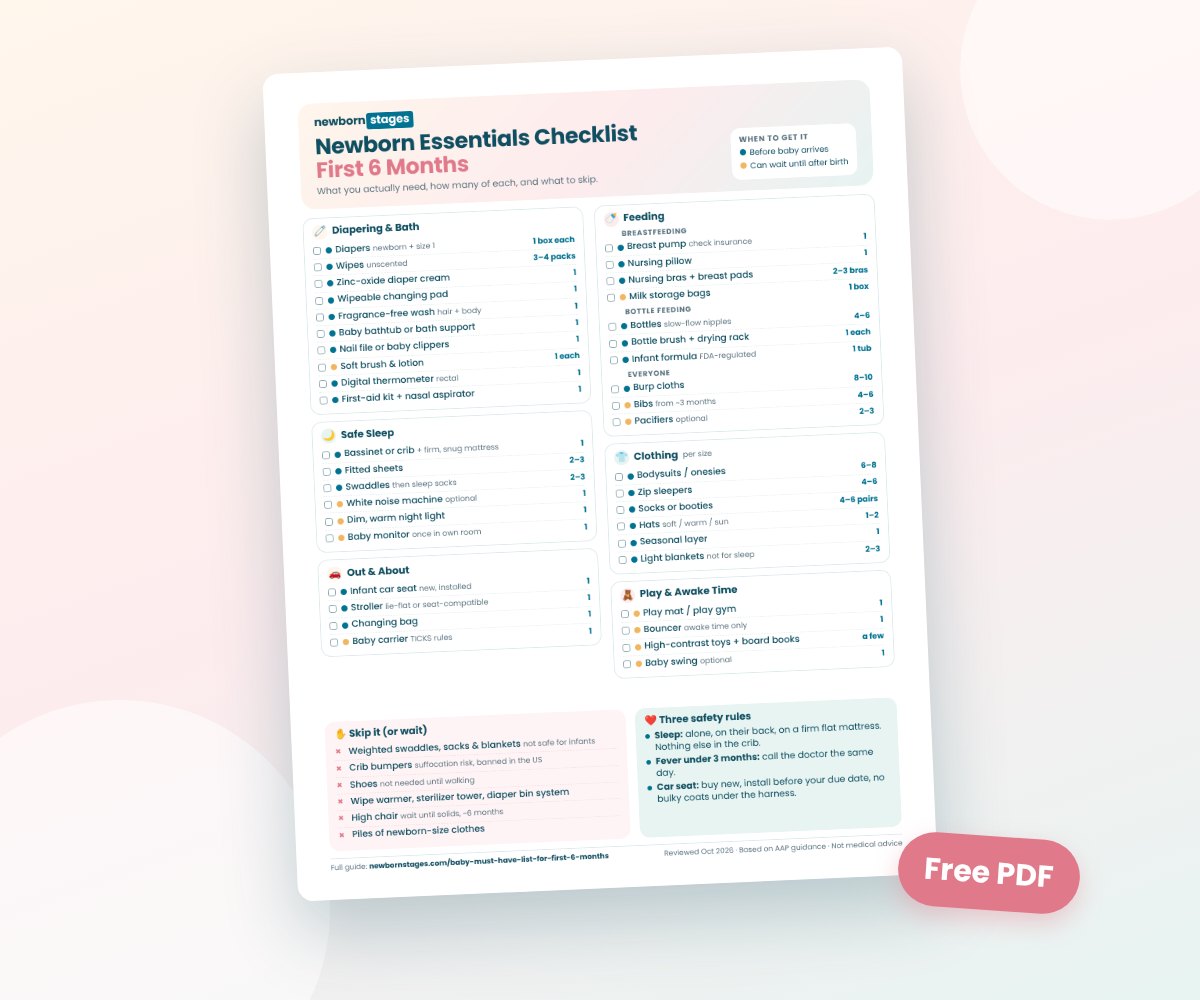
Always place your baby on their back to sleep in their own crib or bassinet, on a firm, flat surface with no pillows, blankets, bumpers or toys. Share a room, not a bed. Stop swaddling once your baby shows signs of trying to roll. If your baby can roll both ways on their own, you don’t need to turn them back over.
How to Support Your Baby’s Development
- Interactive Play: Play with your baby using colorful, soft toys to support their learning and curiosity.
- Talk and Read: Narrate your actions and read books daily to promote language development.
- Tummy Time: Continue supervised tummy time to strengthen upper body muscles.
- Safe Environment: Babyproof your home as they become more mobile.
- Respond to Cues: Watch and respond to your baby’s signals for sleep, hunger, or stimulation.
When to Contact a Pediatrician
Every baby develops differently, but talk to your pediatrician if your baby:
- Shows no affection or social smile
- Cannot sit with support
- Doesn’t respond to sounds or visual cues
- Has poor head control
- Isn’t babbling or showing vocal interest
- Doesn’t reach for or grasp objects
- Has lost skills they once had
Early evaluation can ensure timely support if any developmental delays are present. Don’t wait to ask. You can also contact your state’s early intervention program (find it at cdc.gov/FindEI) to see if your baby can get a free evaluation.
Final Thoughts
Your six-month-old is blossoming into a curious, expressive, and increasingly mobile little person. This phase is filled with delightful discoveries, emerging skills, and important connections.
While every baby’s journey is unique, celebrating each milestone, big or small, fosters confidence—for both baby and parent.
Continue to provide love, stimulation, and safety as your baby learns and grows.
Missed the last stage? Read about 5 month old baby development.
For more expert-backed guides and parenting support, explore our full archive on NewbornStages.com.
This article is for general information and isn’t a substitute for medical advice. Always contact your pediatrician with questions about your baby’s health.
6 Sources
Newborn Stages uses trusted sources, including government health agencies, children’s hospitals and pediatric organizations, to support the facts in our articles. Read our editorial policy to learn how we research, fact-check and keep our content accurate.
- Centers for Disease Control and Prevention. Milestones by 6 Months.
- Centers for Disease Control and Prevention. When, What, and How to Introduce Solid Foods.
- American Academy of Pediatrics (HealthyChildren.org). Starting Solid Foods.
- American Academy of Pediatrics (HealthyChildren.org). Amount and Schedule of Baby Formula Feedings.
- Centers for Disease Control and Prevention. About Sleep.
- American Academy of Pediatrics (HealthyChildren.org). How to Keep Your Sleeping Baby Safe: AAP Policy Explained.