

Newborn Stages
  • Home
  • Baby

    Development & Growth

    Newborn icon

    Newborn (0–4 Weeks)

    Feeding, sleep & first-week care

    1-2 months baby icon

    1-2 Months

    First smiles & tummy time

    3-6 months baby icon

    3-6 Months

    Rolling, giggles & grabbing

    7-9 months baby icon

    7-9 Months

    Sitting, crawling & first foods

    10-12 months baby icon

    10-12 Months

    Standing & first steps

    VIEW ALL
    Baby feeding icon
    Baby Feeding
    Breastfeeding
    Baby Food Recipes
    Bottle Feeding
    VIEW ALL
    Baby sleep icon
    Baby Sleep
    Sleep Problems
    Basics & Bedtime Routines
    VIEW ALL
    Baby basics icon
    Baby Basics
    Newborn Daily Care
    Essentials
    Activities & Playtime
    VIEW ALL
  • Toddler

    Development & Growth

    13-18 months toddler icon

    13-18 Months

    Walking & first words

    19-24 months toddler icon

    19-24 Months

    Talking & pretend play

    2-3 years toddler icon

    2-3 Years

    Big feelings & potty training

    VIEW ALL
    Toddler feeding icon
    Toddler Feeding
    Eating & Nutrition
    Healthy Food Recipes
    Toddler Breastfeeding
    VIEW ALL
    Toddler sleep icon
    Toddler Sleep
    Problems & Concerns
    Basics & Bedtime Routines
    VIEW ALL
    Toddler care and training icon
    Care & Training
    Playtime & Education
    Everyday Care & Training
    VIEW ALL
  • Free Tools
    • Newborn Checklist
    • Baby Handover Sheet
    • Baby Food Checker
    • Baby Sleep Schedule
    • Why Is My Baby Crying?
  • Health & Safety
    • Everyday Wellness
    • Common Health Concerns
    • Disabilities and Chronic Conditions
    • Mental Health
    • Playtime
    • Safety & First Aid
  • Gear & ProductsReviews

    Gear & product reviews

    • Parenting books & courses
    • Beds & sleep products
    • Toys
    • Nursing & feeding
    • Strollers & accessories
    • Car seats & accessories
    • Health & safety products

    Latest reviews

    Best Baby Food Maker (2026): 4 Steamer-Blenders Compared, Including the One We Used

    Best Humidifier for Baby (2026): 5 Cool-Mist Picks + Safe Nursery Setup

    Dad/Partner Picks: Baby Products Men Actually Love (and Use)

    Best Under $30 Baby Toys That Feel Premium!

    Top 5 Travel Strollers of 2026 — Lightweight, Foldable & Airline-Approved!

    See all gear reviews →

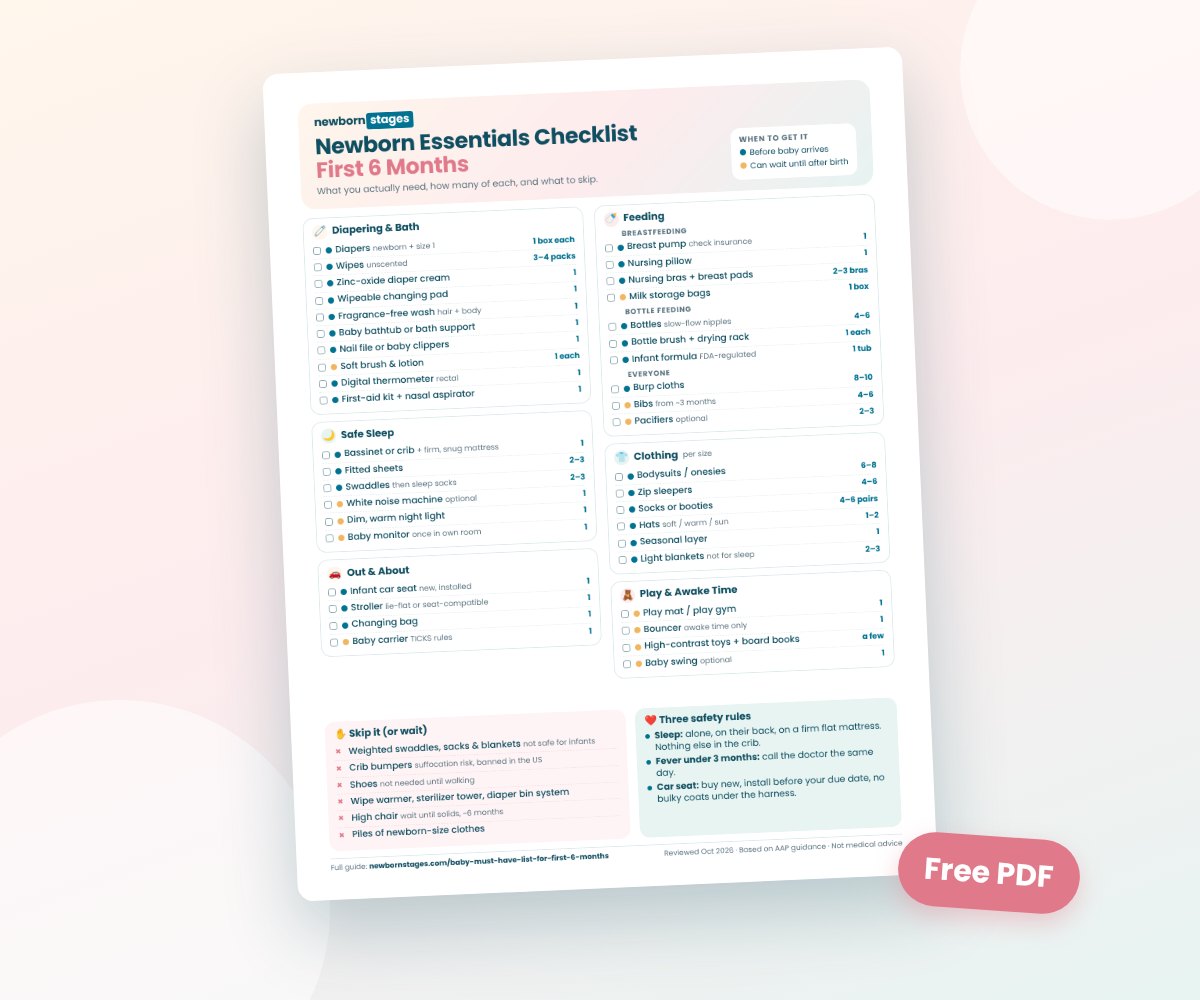
    Preview of the newborn shopping list checklistFree toolBuild your newborn shopping listMark what you have and need, then save your own list as a PDF.Start my list →
  • General Parenting
No Result
View All Result
Newborn Stages
No Result
View All Result

Home » Breastfeeding » 7 Best Breastfeeding Positions after C Section

7 Best Breastfeeding Positions after C Section

Written by: Iordanis Konstantilakis
November 12, 2026
in Breastfeeding
Best Breastfeeding Positions after C Section
Key Takeaways
  • Right breastfeeding positions after a C-section matter because they help the uterus contract, stimulate milk production, and avoid pain that could make nursing difficult.
  • The surgery cuts through the belly and uterus, which limits mobility and makes lifting your legs or bending hard, so the traditional hold often feels uncomfortable.
  • The football hold tucks the baby under your arm along your side, with a pillow for support, which keeps their weight off the incision.
  • The cross-cradle hold and the side-lying position are also good options, using a pillow or blanket to protect the incision, and finding the best fit may take some trial and error.

Last reviewed: November 6, 2026. Checked against current guidance from La Leche League Canada, the HSE (Ireland’s health service), NHS, Michigan Medicine and the U.S. Consumer Product Safety Commission (CPSC).

After a C-section, new mothers want to get back to their old selves as soon as possible. This means resuming regular activities, including breastfeeding.

While breastfeeding is a natural process, it can be difficult for some women who have just had surgery. In this article, we will discuss the seven best breastfeeding positions after a C section for a smooth and easy recovery!

Why Is It Important to Have the Right Breastfeeding Position After a C- Section?

There are many benefits to breastfeeding your baby after a C-section. For starters, breastfeeding helps your uterus contract back toward its normal size. Feeding early and often also helps stimulate milk production, which is important for newborns. Breastfeeding has long-term health benefits for moms too, including a lower risk of some cancers and other health problems.

That said, it’s important to find a position that is comfortable for both you and your baby. The wrong position can cause pain or discomfort, which can make breastfeeding difficult or even impossible. That’s why we’ve put together this list of the best breastfeeding positions after a C-section.

C Section Can Have an Effect on the Mother’s mobility

C-sections can have a big effect on a mother’s mobility. This is because the surgery involves an incision through the belly and the uterus. This can make it difficult to lift your legs or bend over. As a result, many mothers find it difficult to breastfeed in the traditional position. If this is the case for you, don’t worry – there are plenty of other positions that will work just as well. It may take some trial and error to find the position that is most comfortable for you, but it will be worth it in the end.

7 Best Breastfeeding Positions after C Section

Football Hold

pic1a
Image Source: https://raisingchildren.net.au/

The football hold is one of the best positions for women who have had a C-section. To do this, tuck your baby under your arm on the side you are feeding from, with their body along your side and their head in your hand. Place a pillow under your arm and baby for support. Because your baby lies beside you and not across your belly, this keeps their weight off your incision.

Cross-Cradle Hold

pic2d
Image Source: https://raisingchildren.net.au/

The cross-cradle hold is another position many moms use after a C-section. To do this, hold your baby tummy to tummy with you, using the arm opposite the breast you are feeding from to support their head and neck. Your other hand can support your breast. Since your baby lies across your lap, place a pillow or folded blanket over your belly to protect your incision.

Side-Lying Position

pic4s
Image Source: https://raisingchildren.net.au/

The side-lying position is a great option for women who are recovering from a C-section. To do this, simply lie down on your side with your baby facing you. This position will help to keep the baby close to you and prevent them from putting too much pressure on your incision. It can also be helpful for women who are still feeling tired after surgery. If you feel sleepy, ask someone to move your baby back to their own crib or bassinet, on their back, when the feed is done. Your bed is not a safe sleep space for your baby.

Cradle Hold

The cradle hold is a common position for nursing once you feel ready. To do this, hold your baby across your lap with their head resting in the bend of your elbow on the same side as the breast you are feeding from. Because your baby lies across your belly, use a pillow or folded blanket to protect your incision.

Nursing in a sling

If you are nursing in a sling, it is important to make sure that the baby is in a safe position. Keep your baby’s chin off their chest and make sure you can always see their face. A curled, chin-to-chest position can make it hard for a baby to breathe. After the feed, move your baby back to an upright position with their face clear of fabric and your body. Check on your baby often. A sling also rests on your belly, so wait until your incision feels comfortable before trying this.

Laid Back Breast Feeding

back2a
Image Source: https://milkology.org/

Laid back breastfeeding is a great position for nursing after a C-section. To do this, recline with good support behind your back and let your baby lie tummy down on you. To keep their weight off your incision, angle your baby across your chest or toward one shoulder, or lie them alongside you. It can also be helpful for women who are still feeling tired after surgery.

Dancer hand nursing position

Dancer hand position for feeding
Image Source: https://www.researchgate.net/

The dancer hand position is a way of holding your hand, not a body position. It is often used for babies who need extra help staying latched. Hold your breast with your hand cupped underneath, then bring your thumb and index finger forward to gently support your baby’s chin and cheeks while they feed. You can use it with the football or cross-cradle hold. A lactation consultant can show you how.

Here are some general tips on how to make breastfeeding easier:

  • Make sure you have a comfortable place to sit or recline in.
  • Use pillows for support – both behind your back and under your baby.
  • Try different positions until you find one that is comfortable for you and your baby.
  • Take it slow and be patient; it may take time to get used to breastfeeding after a c section.
  • Ask for help if you need it. There are plenty of people who can offer support, including your doctor, lactation consultant, and friends and family.

Does Having a C-Section Impact your Milk Supply?

Most moms who have a C-section can breastfeed fully. But your milk may take a little longer to come in, often by a day or so. Skin-to-skin contact and breastfeeding as soon as you can after surgery help. It is also important to eat well and drink to thirst (Read here: Foods for Breastfeeding Mothers to Eat and Avoid).

This will help to ensure that your body has the resources it needs to produce milk for your baby. It is also important to nurse frequently in the early days after having a C-section. This will help to stimulate your milk production and ensure that your baby is getting enough to eat.

What to Do If You Are Suffering from Thrush or yeast Infection after a C-Section

Antibiotics, which are often given around a C-section, can make thrush (a yeast infection) more likely. If you think you have thrush, see your doctor. Thrush can pass easily between you and your baby, so you will both usually need treatment at the same time. You can keep breastfeeding while you are both treated.

Wound infections can also happen after a C-section, and there are steps you can take to lower the risk. First, keep your incision clean and dry, and follow your doctor’s care instructions. Call your doctor if the incision becomes red, swollen or painful, leaks fluid, or if you get a fever.

Second, wear loose fitting clothes and avoid putting pressure on your incision site. 

If you are nursing your baby after having a C-section, it is important to use the correct position. The football hold, side-lying position and laid back breastfeeding are all good positions to try after a C-section. These positions will help to keep the baby’s weight off your incision. If you think you have an infection after having a C-section, it is important to seek treatment right away.

Final Thoughts

Having a C-section is a major surgery and it is important to take care of yourself afterwards. Make sure that you are drinking enough fluids and eating a healthy diet.

Also, be sure to nurse frequently in the early days. This will help to stimulate your milk production and ensure that your baby is getting enough to eat. If you think you have an infection, be sure to seek treatment right away.

This article is for general information and isn’t a substitute for medical advice. Always contact your pediatrician with questions about your baby’s health.

6 Sources

Newborn Stages uses trusted sources, including government health agencies, children’s hospitals and pediatric organizations, to support the facts in our articles. Read our editorial policy to learn how we research, fact-check and keep our content accurate.

  1. La Leche League Canada. Cesarean Birth (C-Section) and Breastfeeding.
  2. HSE (Health Service Executive, Ireland). Breastfeeding after a caesarean.
  3. Michigan Medicine. Breastfeeding Positions.
  4. U.S. Consumer Product Safety Commission. CPSC Educates New Parents on Safe Babywearing.
  5. NHS 111 Wales. Breastfeeding and thrush.
  6. Mayo Clinic. C-section.

Iordanis Konstantilakis

Iordanis "Danis" Konstantilakis is a dad of two (a 9-year-old boy and a 5-year-old girl) and the founder of Newborn Stages. He has been reading and writing about baby and toddler development since 2016, and started this site in 2020 to give new parents the clear answers he couldn't find at 2am. By day he builds websites at weDigitalPLUS. He's a parent, not a doctor: every health article here is checked against the AAP, CDC, NHS and other trusted medical sources, linked in the article, and re-checked when guidance changes.

Preview of the newborn shopping list checklistFree toolBuild your newborn shopping listMark what you have and need, then save your own list as a PDF.Start my list →
Previous Post

3 Month Old Baby Feeding and Sleeping Schedule 

Next Post

7 Months Infant Development: Milestones and Care Tips

You Might Also Like

Mother breastfeeding her newborn in an armchair by a window
Breastfeeding

Why Does My Baby Make Clicking Sounds When Breastfeeding? Causes and Fixes

November 20, 2026
Baby asleep on their back in a sleep sack in a bare crib at night, with a bottle and a night light on a shelf beside it
Newborn Daily Care

How to Drop the Dream Feed: When and How to Stop

November 12, 2026
Skin-to-Skin and Breastfeeding: What Every New Mom Should Know
Breastfeeding

Skin-to-Skin and Breastfeeding: What Every New Mom Should Know

November 12, 2026
breastfeeding3sa
Breastfeeding

11 Useful Breastfeeding Tips for Producing More Milk!

November 12, 2026
Signs of Returning Fertility While Breastfeeding
Breastfeeding

Signs of Returning Fertility While Breastfeeding

November 12, 2026
How Breast Milk Boosts Baby Brain Development | Benefits for IQ & Cognition!
Breastfeeding

How Breast Milk Boosts Baby Brain Development | Benefits for IQ & Cognition!

November 12, 2026

Newborn Stages offers clear, well-sourced parenting information from a parent who has been there. Our mission is to help new parents find answers they can trust.

  • About us
  • Contact us
  • Advertise
  • Sitemap
  • Privacy Policy
  • Terms & Conditions
  • Disclaimer
  • Editorial Policy
  • Affiliate Disclosure
Facebook-f Instagram

Kindly take note that all the information is for educational purposes only and not a substitute for professional health services.

  • Checklist
  • Handover Sheet
  • Food Checker
  • Sleep Schedule
  • Crying Helper
  • All Free Tools
  • Development Stages
  • Feeding
  • Sleeping
  • Health & Safety
  • Product Reviews
©2026 www.newbornstages.com. All Rights Reserved.
No Result
View All Result
  • Home
  • Baby
    • Baby Development
      • Newborn (0–4 Weeks)
      • 1-2 Months
      • 3-6 Months
      • 7-9 Months
      • 10-12 Months
    • Baby Feeding
      • Breastfeeding
      • Bottle Feeding
      • Baby Food Recipes
    • Baby Sleep
      • Sleep Problems
      • Bedtime Routines & Sleep Basics
    • Baby Basics
      • Newborn Daily Care
      • Activities & Playtime
  • Toddler
    • Toddler Development
      • 13-18 Months
      • 19-24 Months
      • 2-3 Years
    • Toddler Sleep
      • Basics & Bedtime Routines
      • Problems & Concerns
    • Toddler Feeding
      • Healthy Food Recipes
      • Eating & Nutrition
      • Toddler Breastfeeding
    • Toddler Care & Training
      • Everyday Care & Training
      • Playtime & Education
  • Free Tools
    • Newborn Checklist
    • Baby Handover Sheet
    • Baby Food Checker
    • Baby Sleep Schedule
    • Why Is My Baby Crying?
  • Health & Safety
    • Common Health Concerns
    • Disabilities and Chronic Conditions
    • Everyday Wellness
    • Mental Health
    • Safety & First Aid
  • Gear & Products
    • Parenting Books – Courses
    • Infant & Toddler Beds & Sleep products
    • Toys
    • Nursing & Feeding
    • Health & Safety
    • Strollers & Accessories
    • Car Seats & Accessories
  • General Parenting

© 2026 www.newbornstages.com. All Rights Reserved.